Style guide · Japanese & Asian tattoos
Japanese & Asian tattoos in Da Nang
Hannya masks, koi climbing waterfalls, foo dogs guarding peonies, geishas, cranes and lion dancers. Japanese irezumi and the wider Asian tradition it belongs to have given tattooing some of its most powerful images, and they feel at home in a studio called Dragon City. This is our guide to the style, with the Japanese and Asian pieces tattooed at our studio in An Thượng.
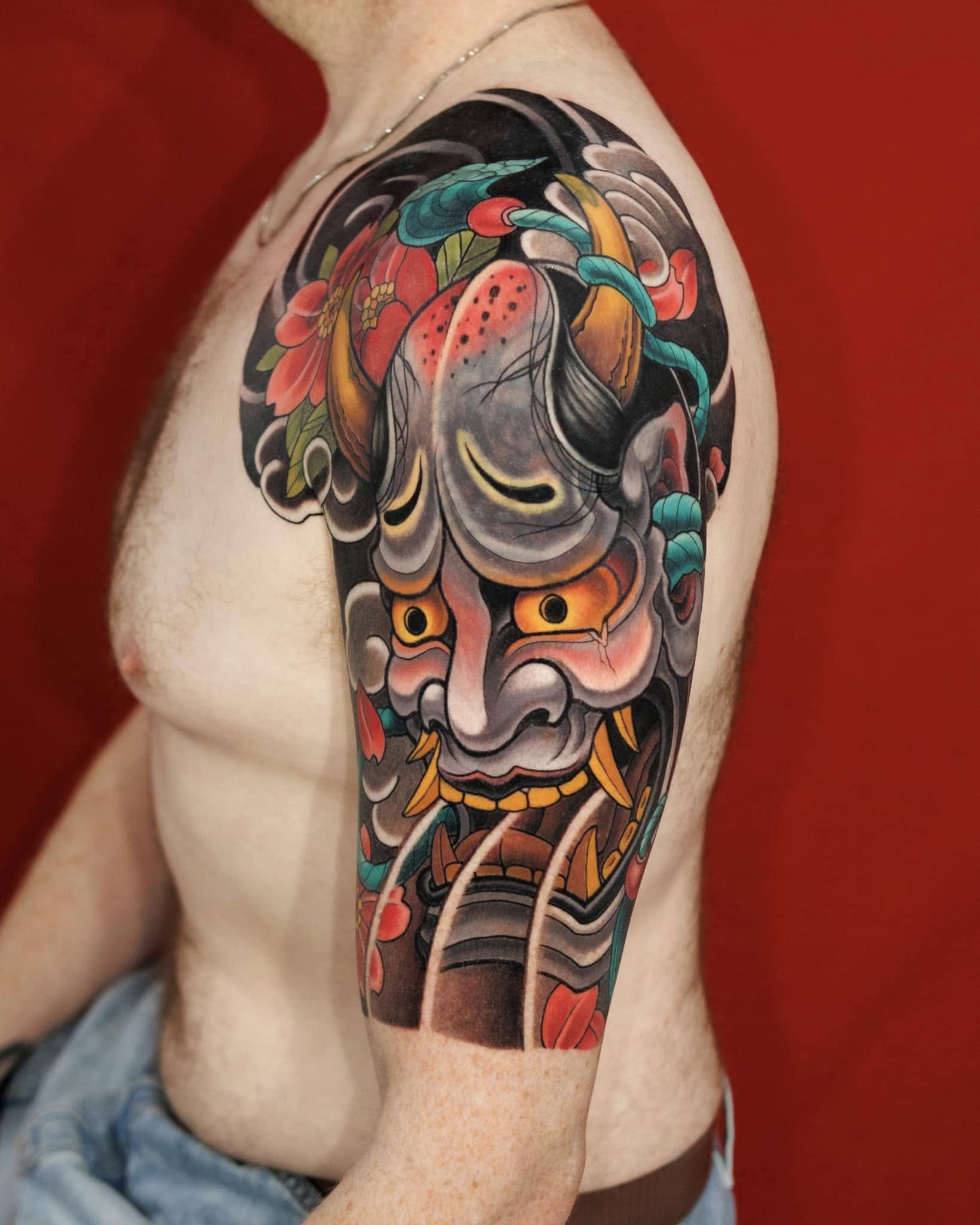
Hannya mask · colour shoulder piece
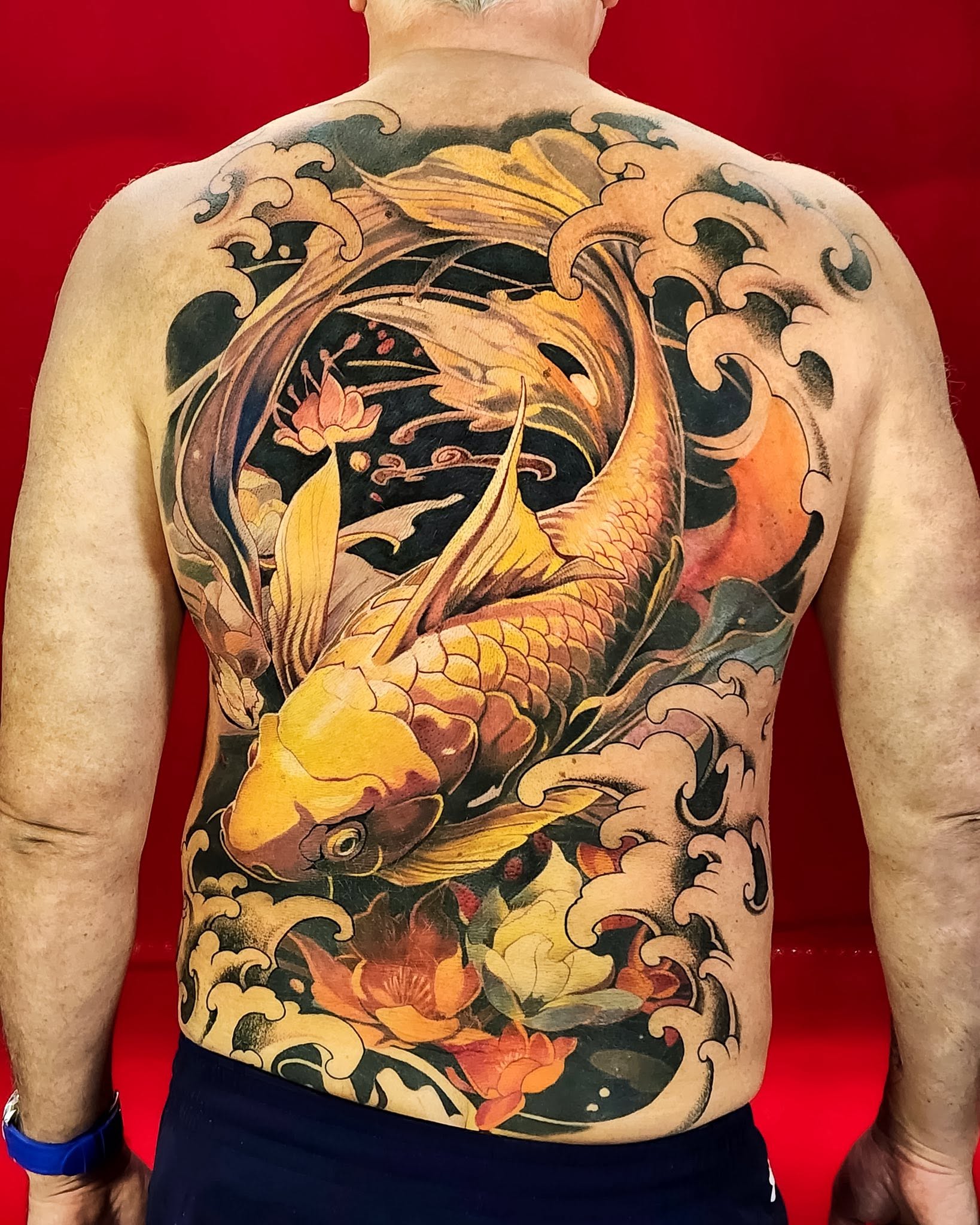
Sasha Tattoo Artists Dragon City Ink Da Nang Vietnam (10)
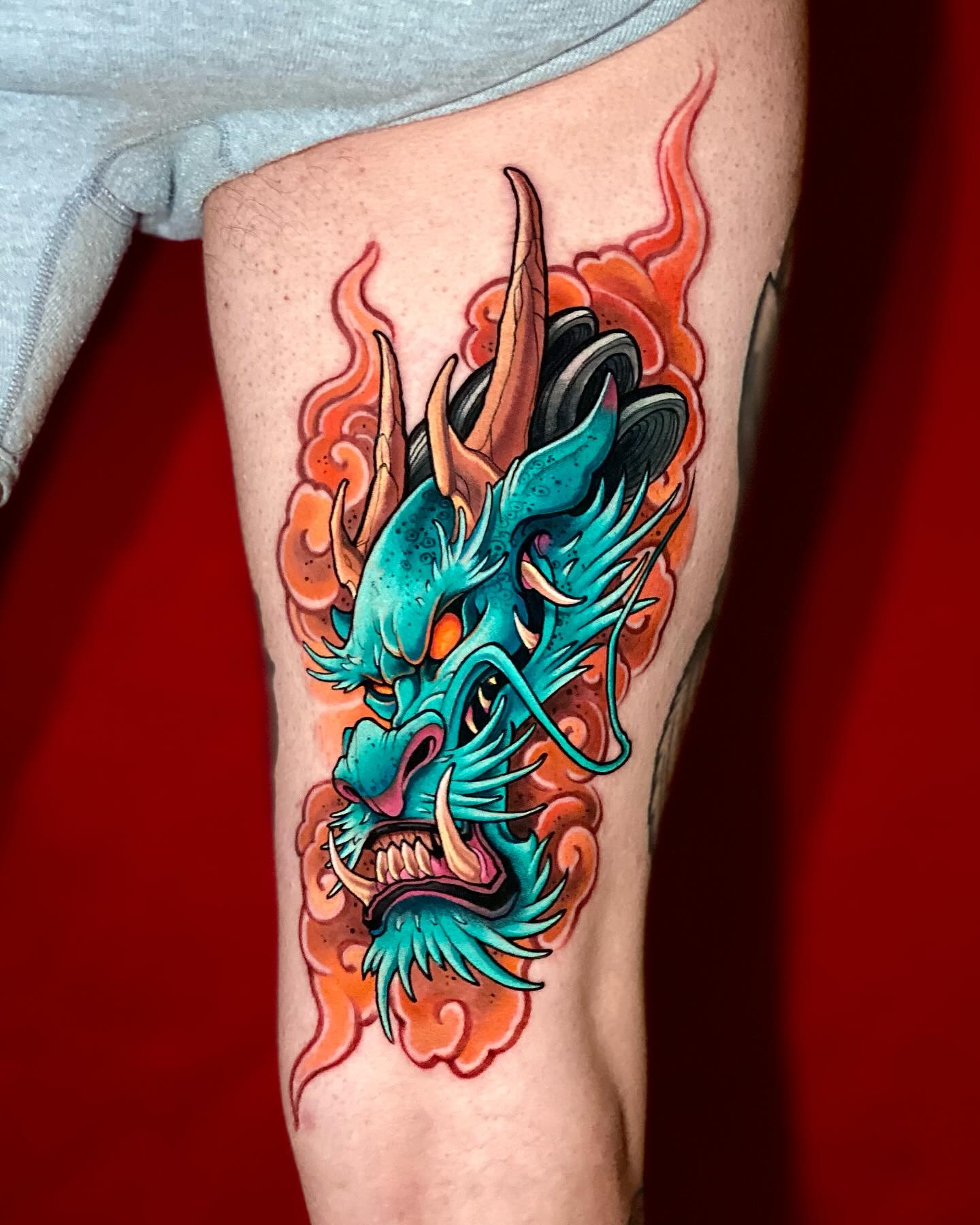
Teal dragon head in flames · thigh

Phan Loi Tattoo Da Nang
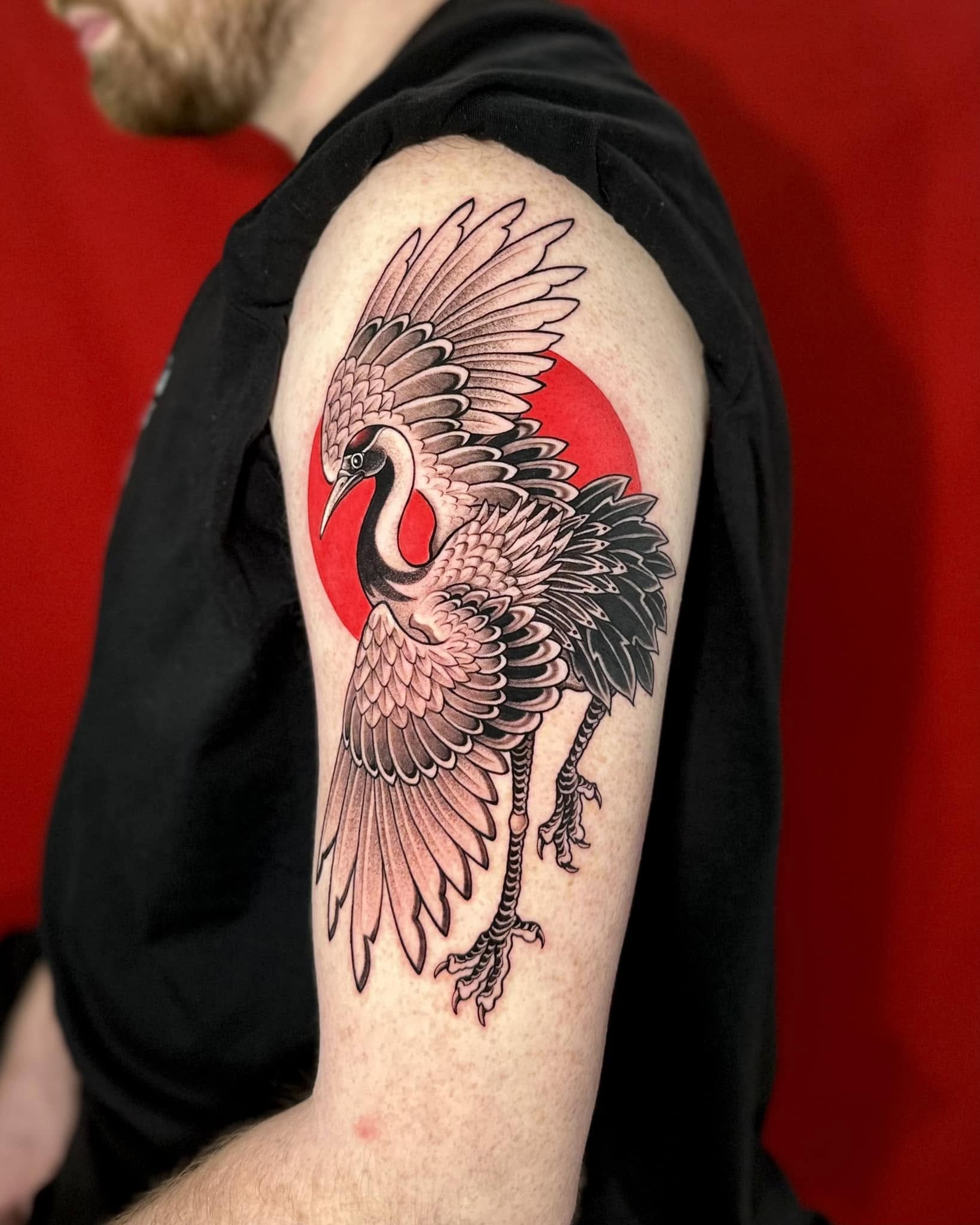
Crane and red sun
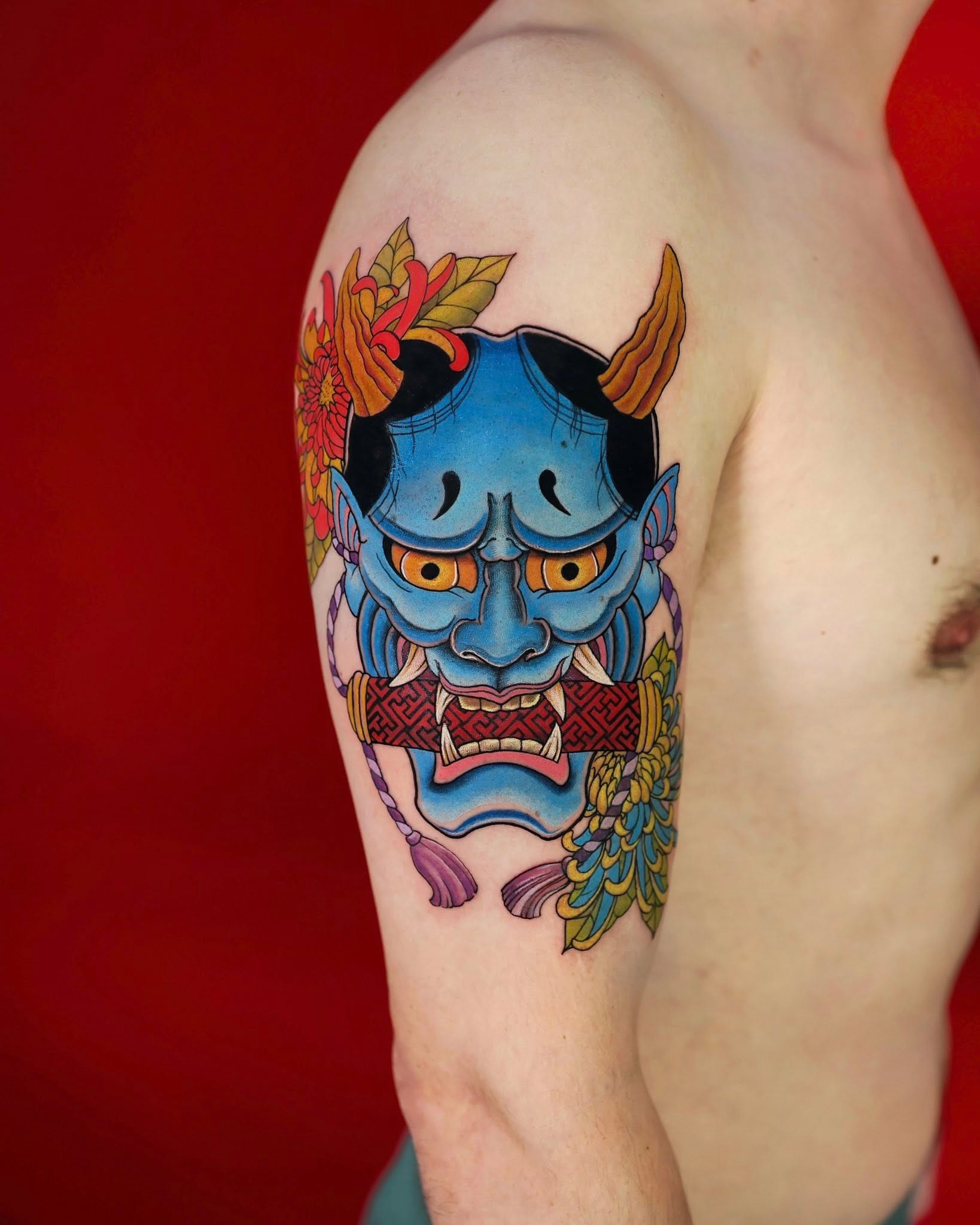
Blue hannya · Japanese traditional
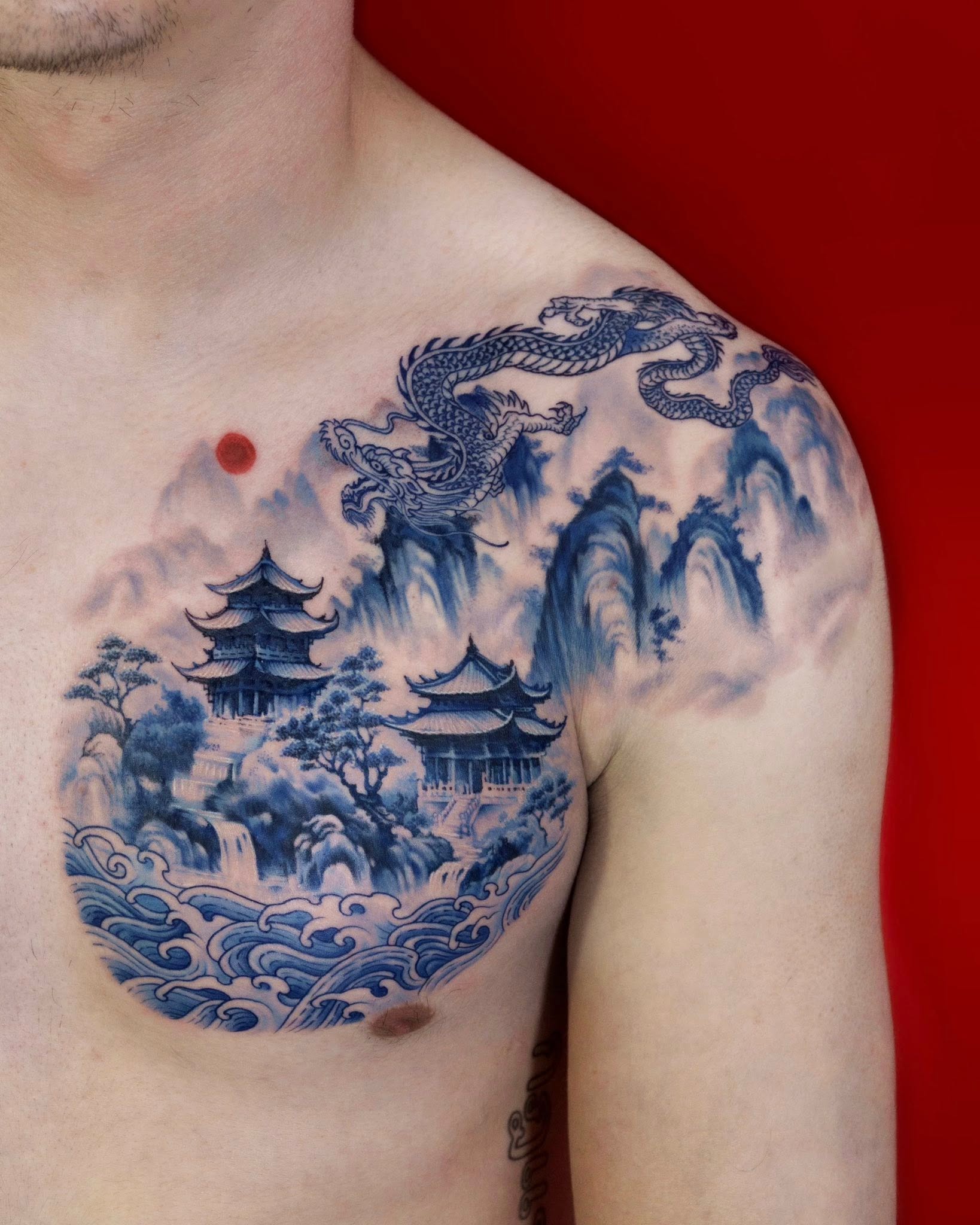
Blue ink-wash dragon and pagodas
The idea
What makes a tattoo Japanese
Irezumi, the Japanese word for tattooing, is less a list of images than a way of composing. A Japanese piece is not a picture placed on the skin. It is a scene designed around the muscles it sits on, with a main figure, a background and often a season.
Four things set it apart from almost every other style.
One strong main figure
A koi, a hannya, a foo dog or a geisha carries the whole piece. Everything else on the skin is there to make that figure stronger.
A background that holds it together
Waves, wind bars, clouds and falling petals, called gakubori, fill the space between the figures. They join a sleeve, a back or a whole body into one flowing composition.
Symbols that belong together
Old rules pair motifs with each other and with the seasons: the foo dog with the peony, the tiger with bamboo, the koi with water and maple leaves, the dragon with clouds.
Planned for the body
Japanese work follows the flow of the arm, the back and the legs. It is designed to read from across the room and to keep its shape for decades.
Most of all, Japanese tattooing rewards patience. The biggest pieces are planned once and tattooed over many sessions, and they are worth every one of them.
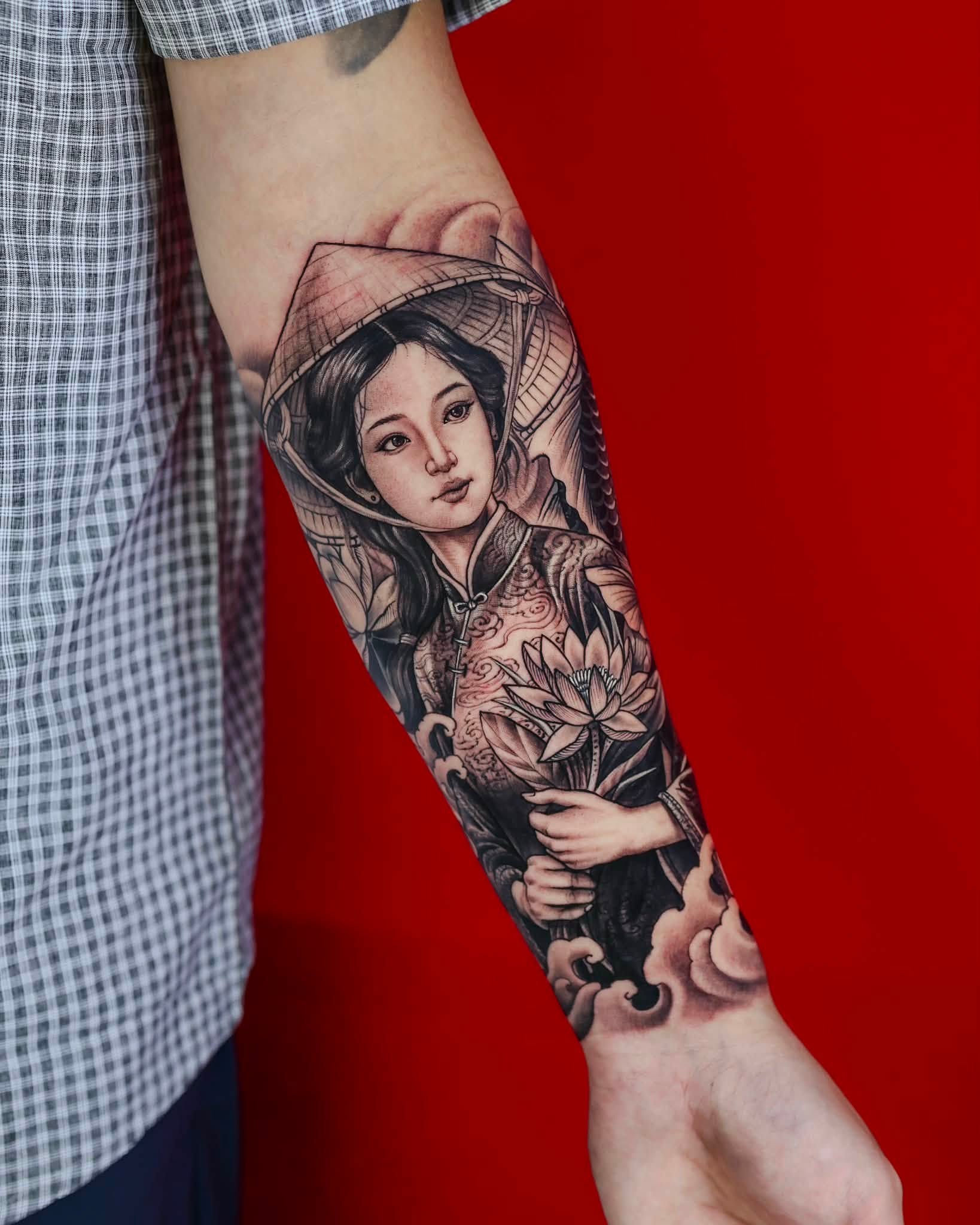
Black and grey geisha forearm tattoo — Phan Lợi, Dragon City Ink
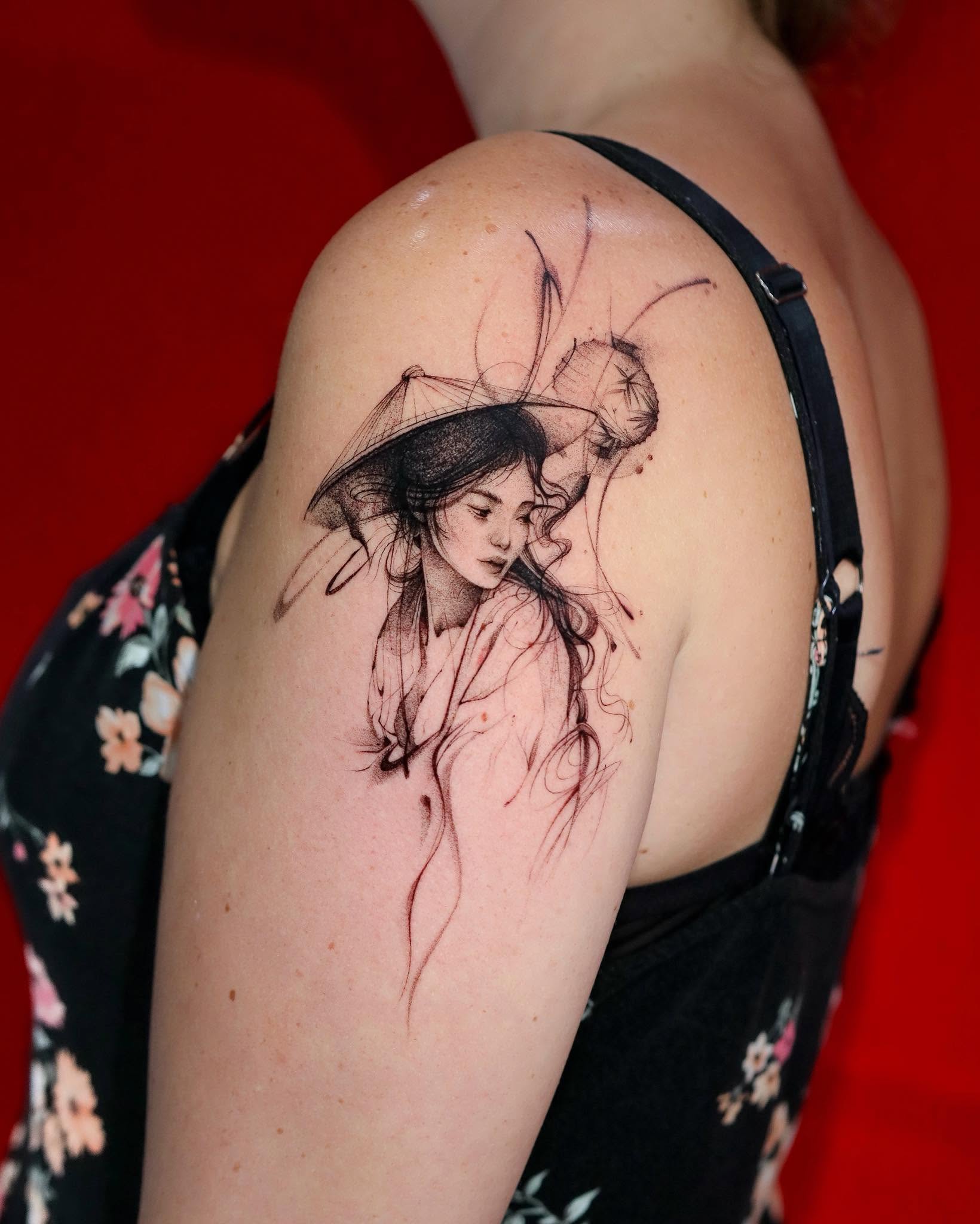
Fine line woman shoulder tattoo — Nerdy, Dragon City Ink
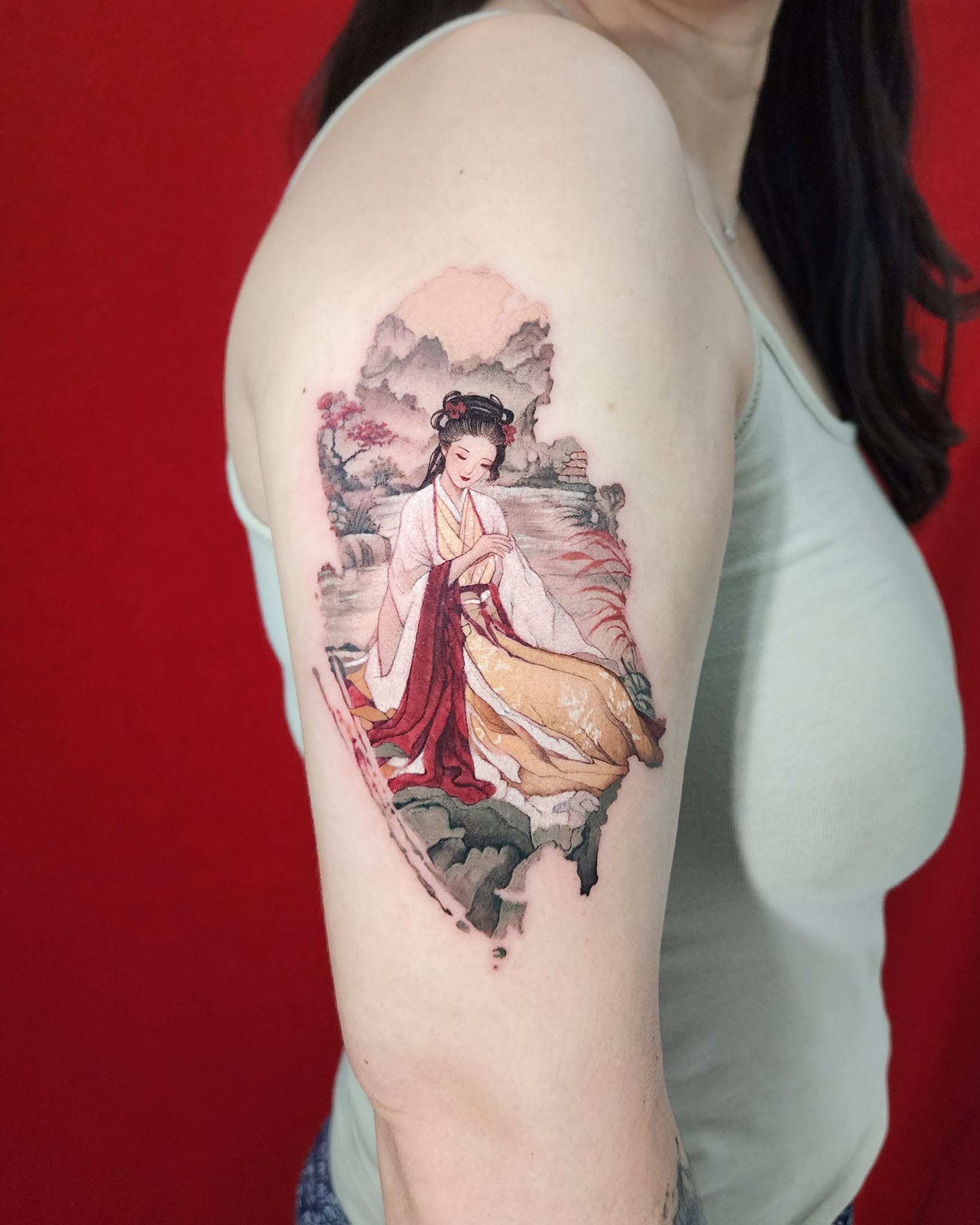
Illustrative geisha arm · Nerdy

Asian Lady tattoo at Dragon City Ink Da Nang
Asian Lady Tattoo
Phan Lợi Da Nang Tattoo
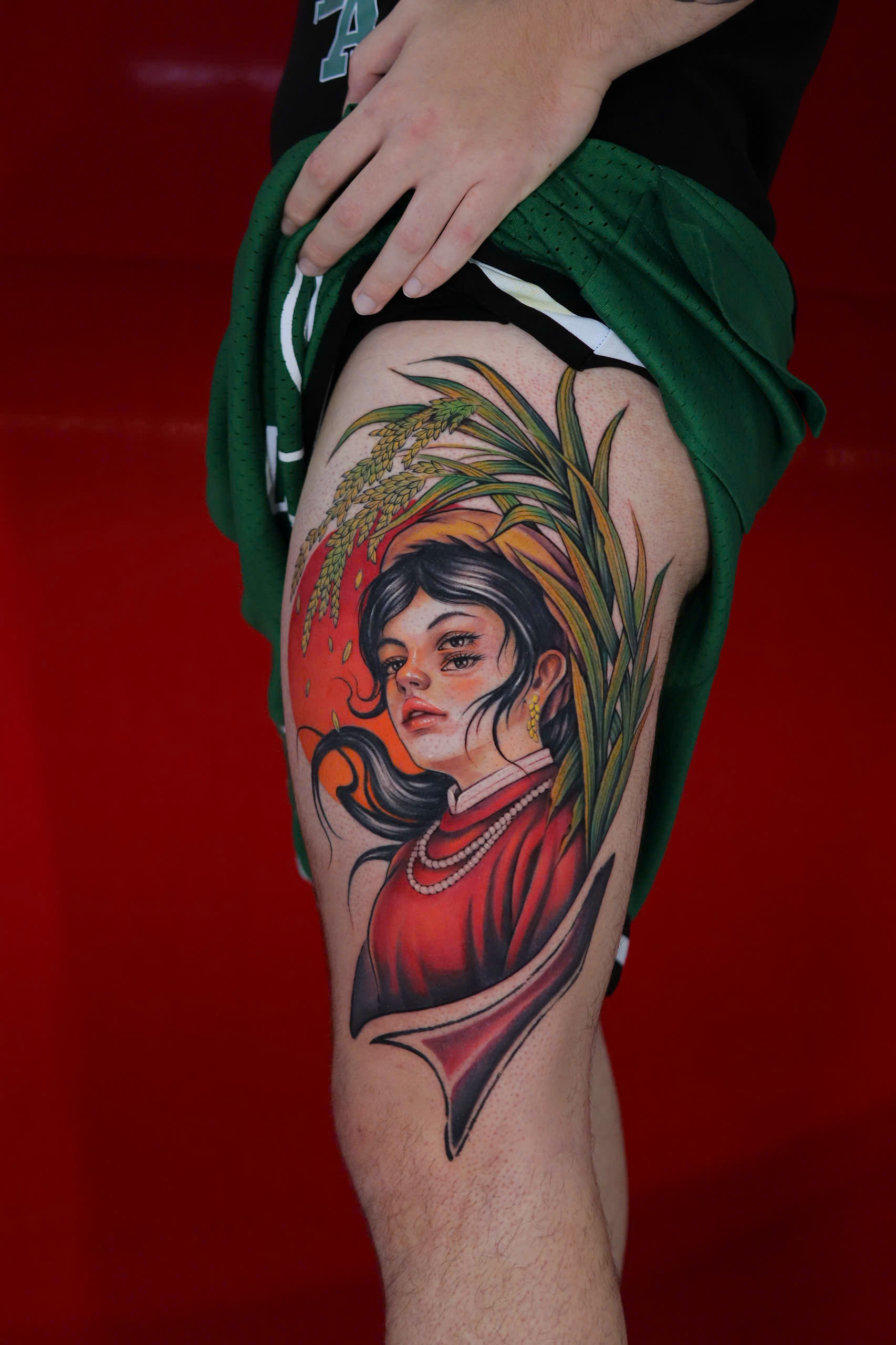
Lady head · neo-traditional
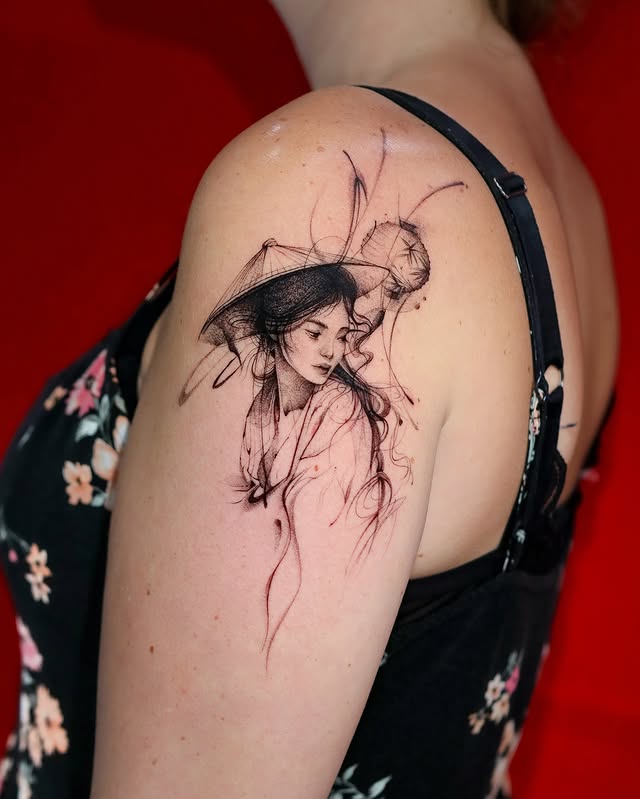
Woman in a nón lá · shoulder
The family
From Edo to Da Nang
Japanese tattooing belongs to a wider Asian family of images. These are the styles you will find in our portfolio.
Japanese traditional · irezumi
The classic style of Edo, today’s Tokyo, shaped by the woodblock prints of Utagawa Kuniyoshi and the tattooed heroes of the Suikoden. Bold black outlines, colour graded smoothly into black, and sleeves, backs and bodysuits built around one story.
Japanese neo-traditional
The same figures drawn with more detail, richer colour and a little more freedom: geishas with glowing faces, daruma dolls, hannya masks in unexpected colours. A great choice for a strong standalone piece.
Black and grey Japanese
The irezumi composition without colour, shaded in soft greys. Foo dogs, koi and samurai look heavy and sculpted, and the work has a timeless, quiet power.
Ink wash · sumi-e
Inspired by Chinese and Japanese brush painting: loose brushstrokes, mountains disappearing into mist, a pagoda by the water, a crane against a red sun. Light and elegant, and well suited to fine-line work.
Chinese and Vietnamese traditional
Lion dance heads, blue-and-white porcelain landscapes, pagodas and the dragons of Vietnamese temple roofs. The imagery of the region we live in, and the one our artists grew up with. For the dragons, see our dragon tattoo gallery.
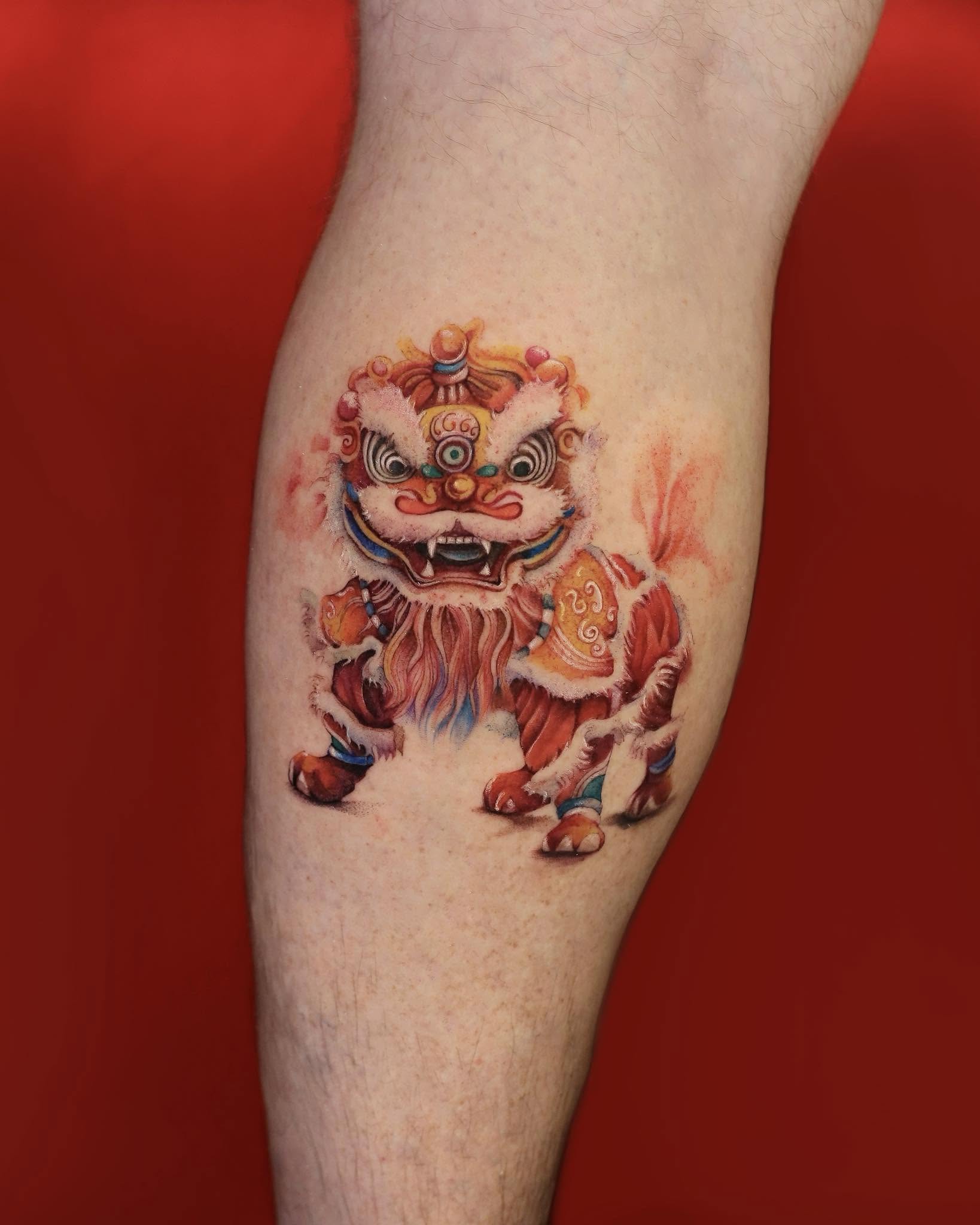
Color lion dance tattoo — Nerdy, Dragon City Ink
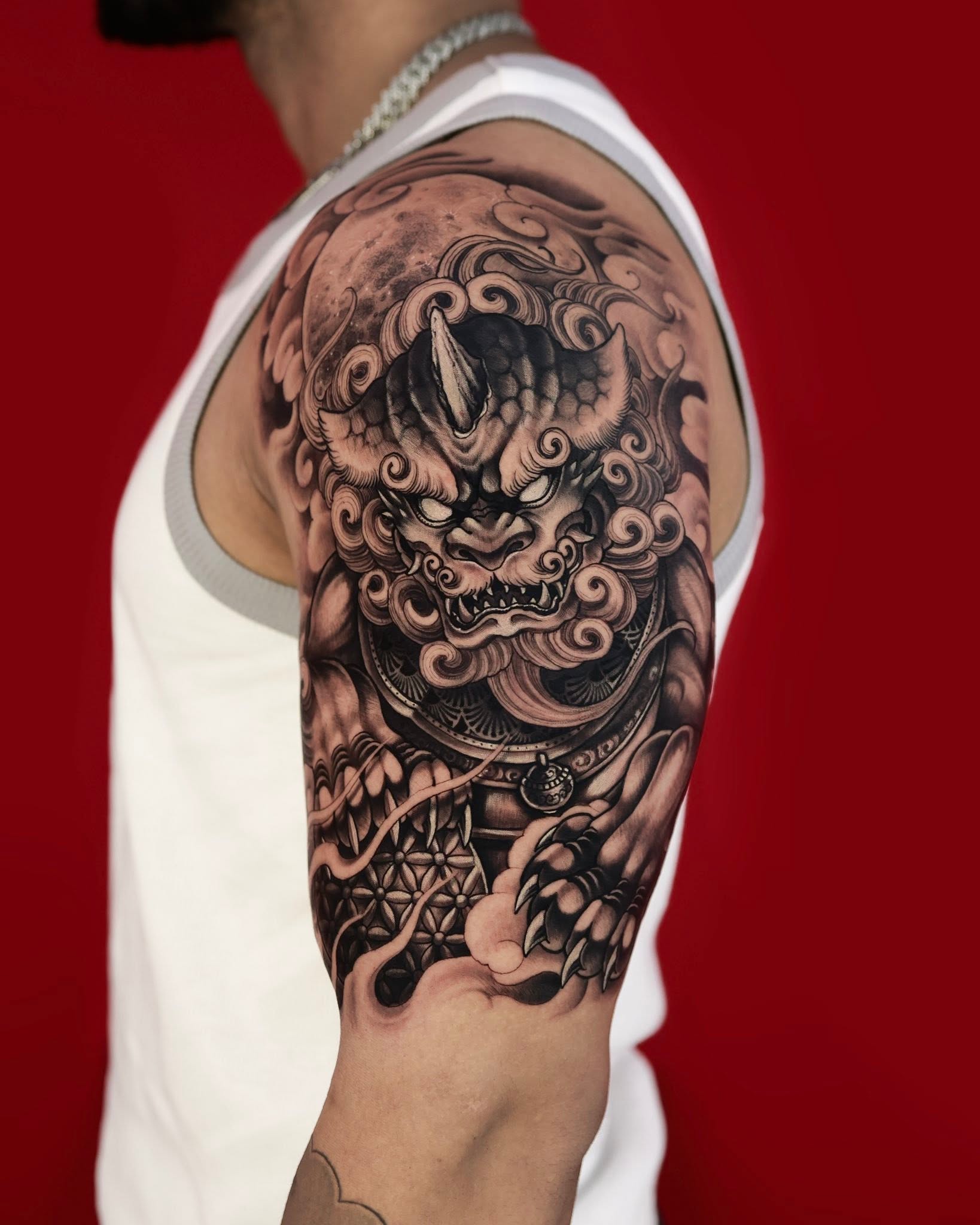
Foo dog · black and grey
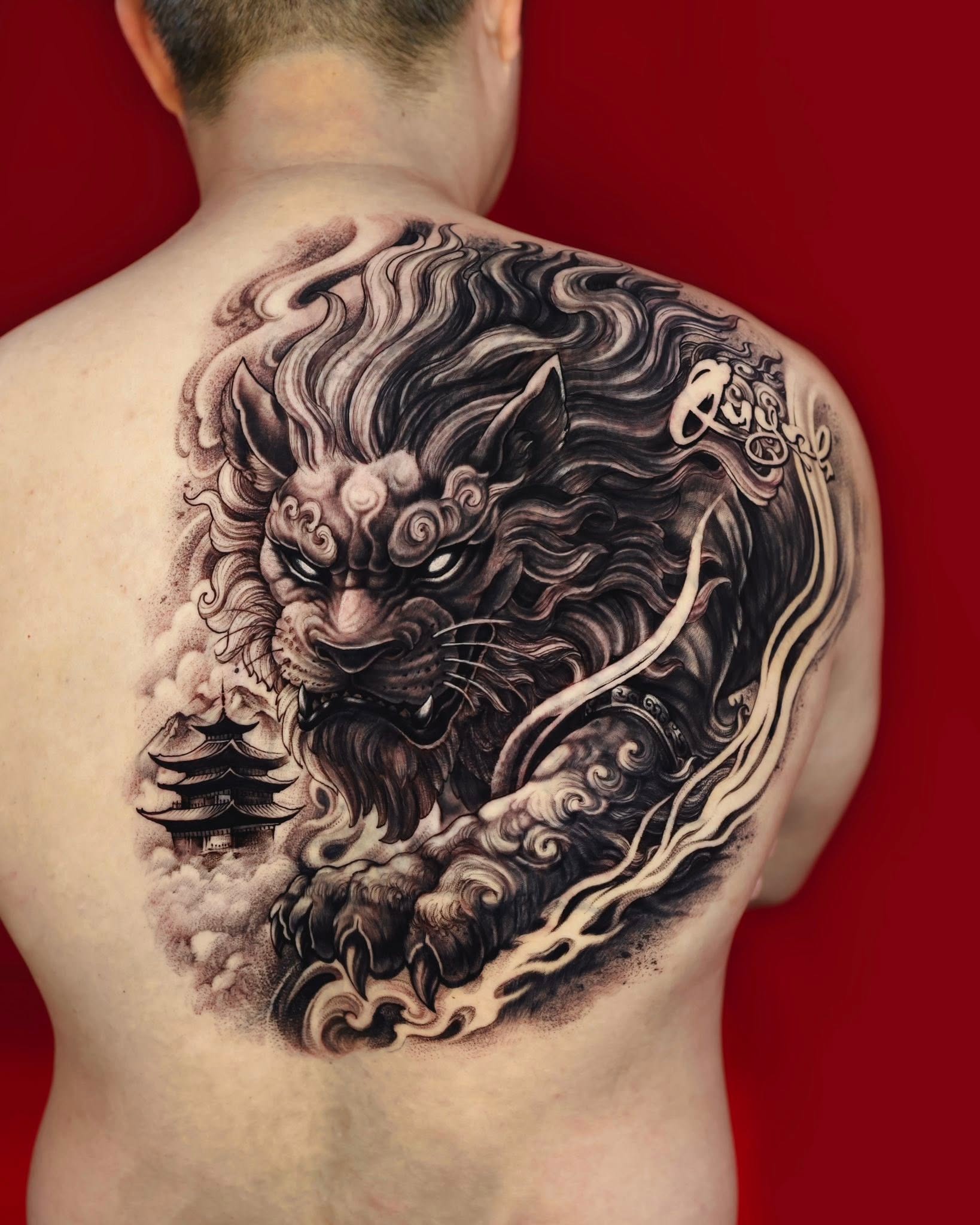
Foo dog · black and grey back piece
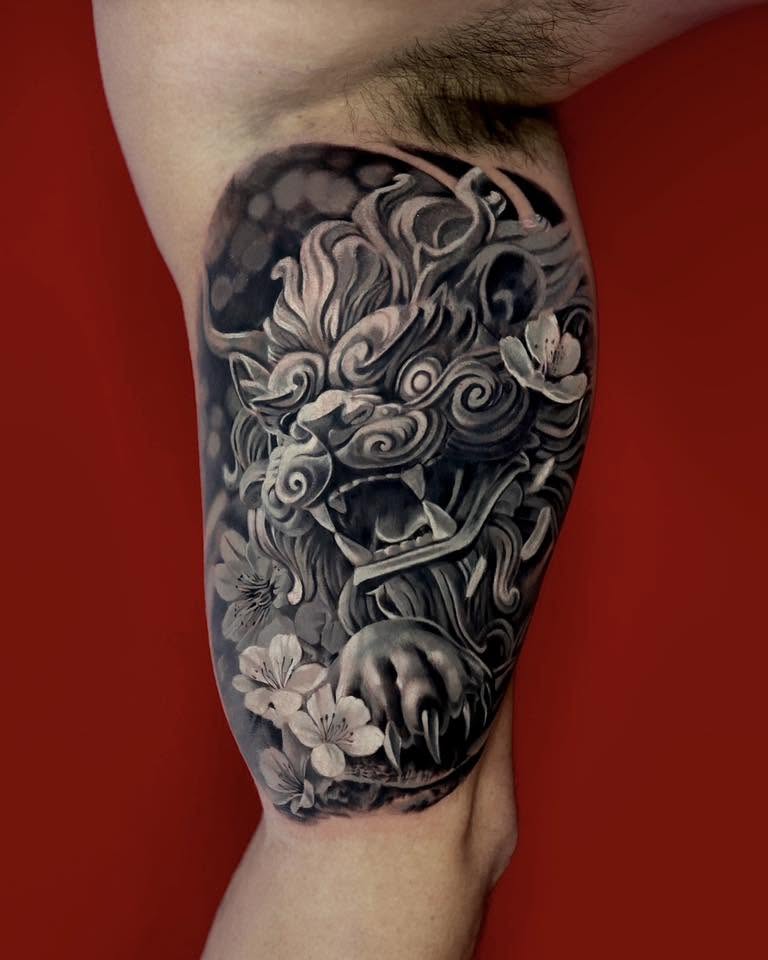
Black and grey thigh tattoo — Mỹ Nguyễn (America), Dragon City Ink

Lion dance head · colour
Colorful lion head tattoo made at Dragon City Ink Da Nang.

Lion dance · Vietnamese
A cartoonish Vietnamese lion dance tattoo which made at Dragon City Ink Da Nang.
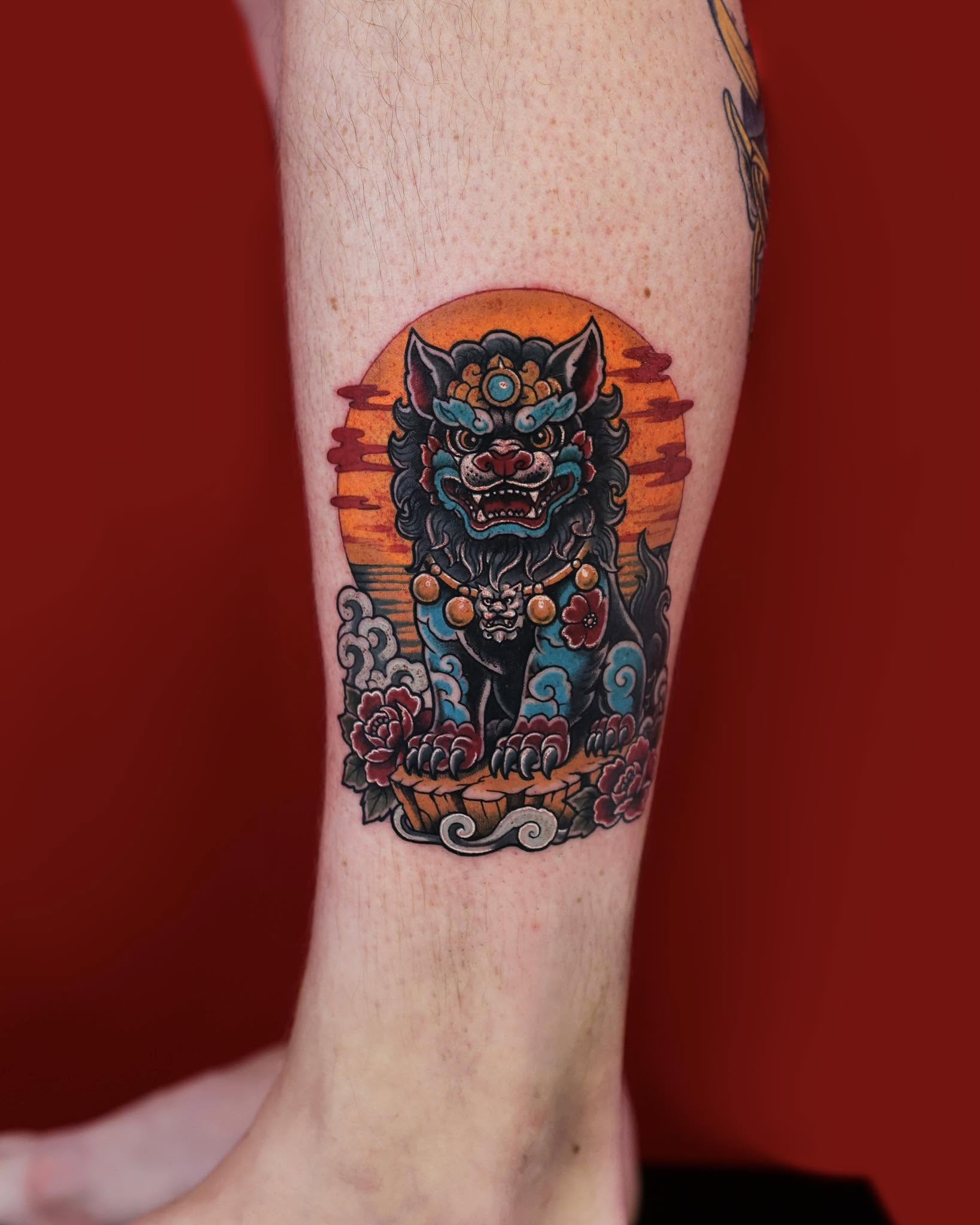
Sasha Tattoo Artists Dragon City Ink Da Nang Vietnam (12)
Phan Lợi Tattoo Da Nang
Meaning
The figures and what they mean
Every classic figure carries a meaning shared by generations of tattooers and collectors. These are the ones our clients ask for most.
Hannya
The Noh theatre mask of a woman consumed by jealousy and rage. On the skin it is worn as protection against evil, and as a reminder of how strong emotions can change a person.
Koi · cá chép · goi
The carp that swims up the waterfall and turns into a dragon: perseverance, ambition and success earned by effort. Swimming upstream it is still fighting; swimming down, it has arrived.
Foo dog · karajishi
The lion that guards temples and palaces across Asia, usually shown with the peony, the king of flowers. A protector of home and family.
Tiger · hổ · tora
Courage and strength, and a guard against illness and bad luck. Traditionally drawn with bamboo or with the wind.
Phoenix · phượng · hōō
Rebirth, grace and good fortune. In Japan the phoenix is a sacred bird that appears in times of peace.
Crane · hạc · tsuru
Long life and loyalty; legend says a crane lives a thousand years. A crane against a red sun is one of the classic images of Japan.
Geisha
Beauty, mystery and the art of performance. Today she is one of the most popular figures in neo-traditional Japanese work.
Samurai and oni
The samurai stands for honour and discipline. The oni, a horned demon, stands for raw power, and is often worn to scare away worse demons.
Daruma
The round doll of Bodhidharma, the founder of Zen Buddhism. Knock it over and it always rises again. One eye is painted in when you set a goal, the other when you reach it.
Lion dance · múa lân
The dancing lion of Tết and the Mid-Autumn Festival, chasing away bad spirits and bringing luck for the year ahead. A favourite with our Vietnamese clients.
Peony, chrysanthemum, cherry blossom
The peony stands for wealth and daring, the chrysanthemum for nobility and long life; it is the emblem of the Japanese emperor. The cherry blossom falls at the height of its beauty and reminds us that life is short.
Waves, wind and clouds
The elements of the background. Water stands for strength and the flow of life, wind for change, and clouds for the heavens where dragons live.
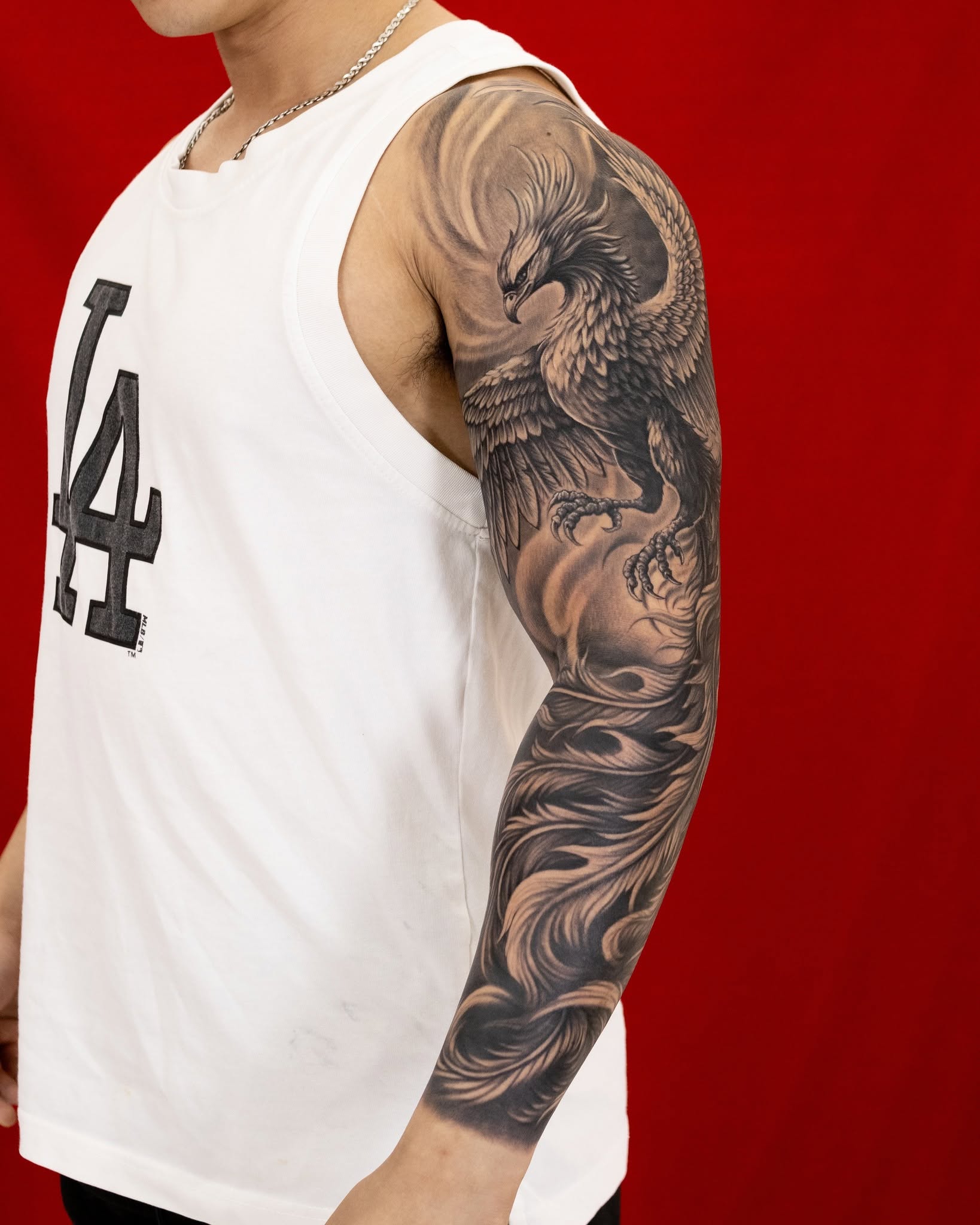
Black and grey full sleeve tattoo — Phan Lợi, Dragon City Ink
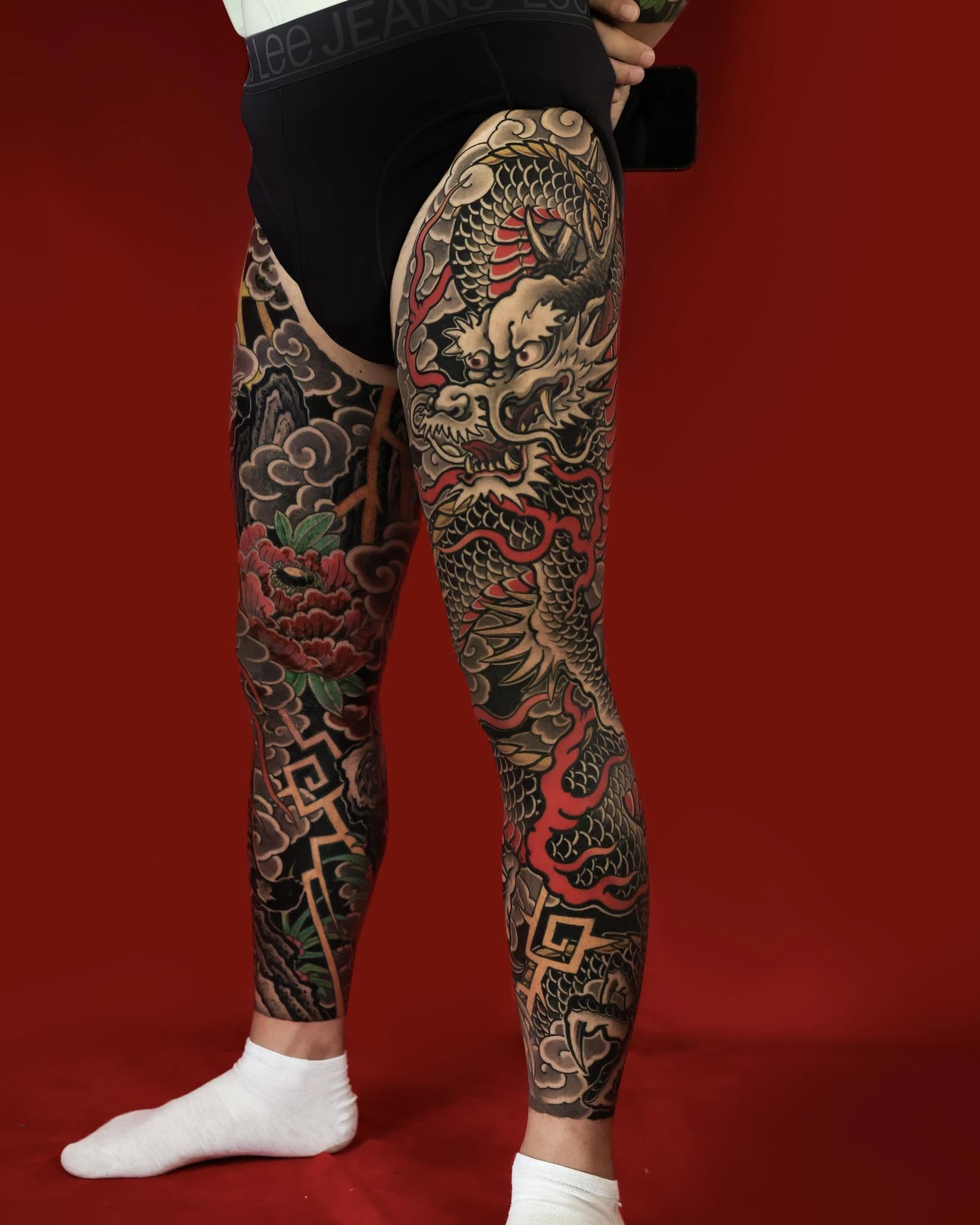
Japanese leg sleeves
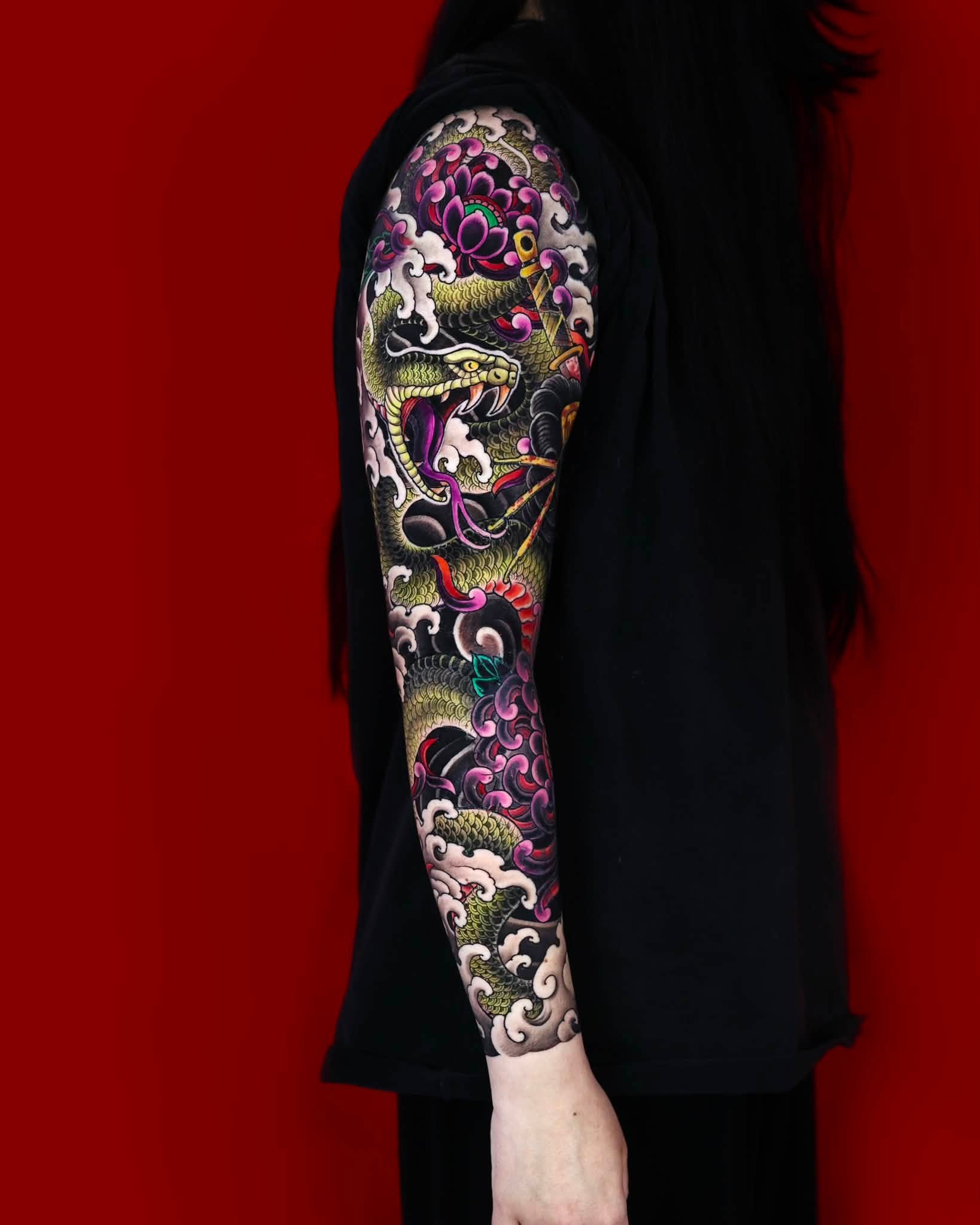
Japanese full sleeve
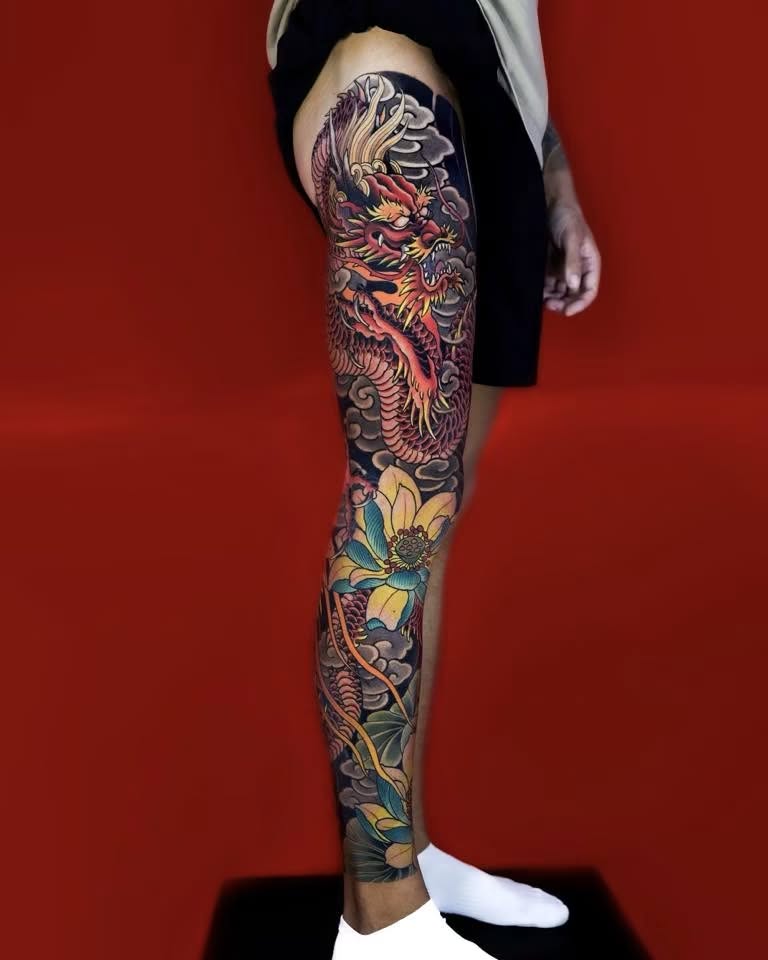
Color dragon full leg sleeve tattoo — Phan Lợi, Dragon City Ink
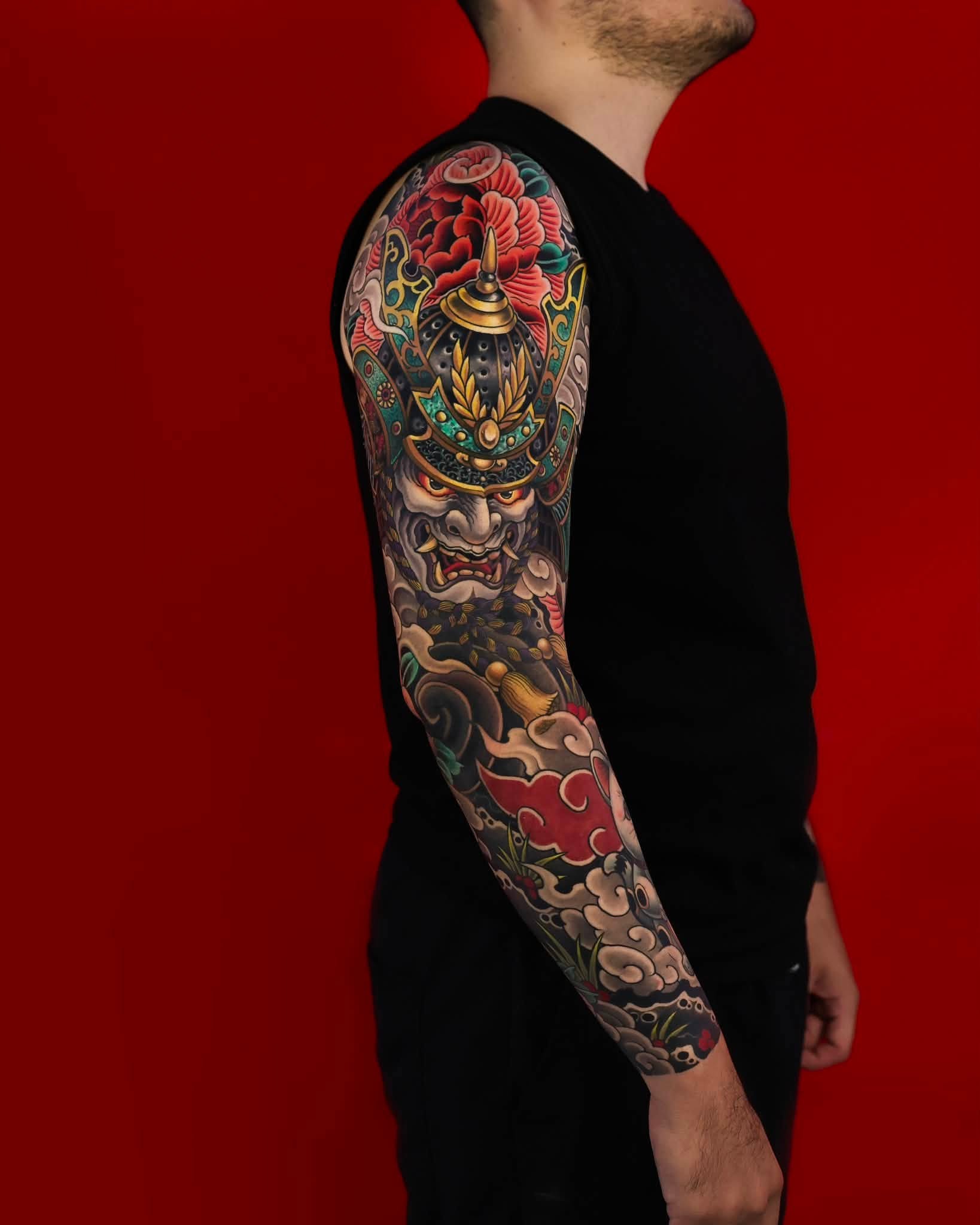
Japanese colour sleeve
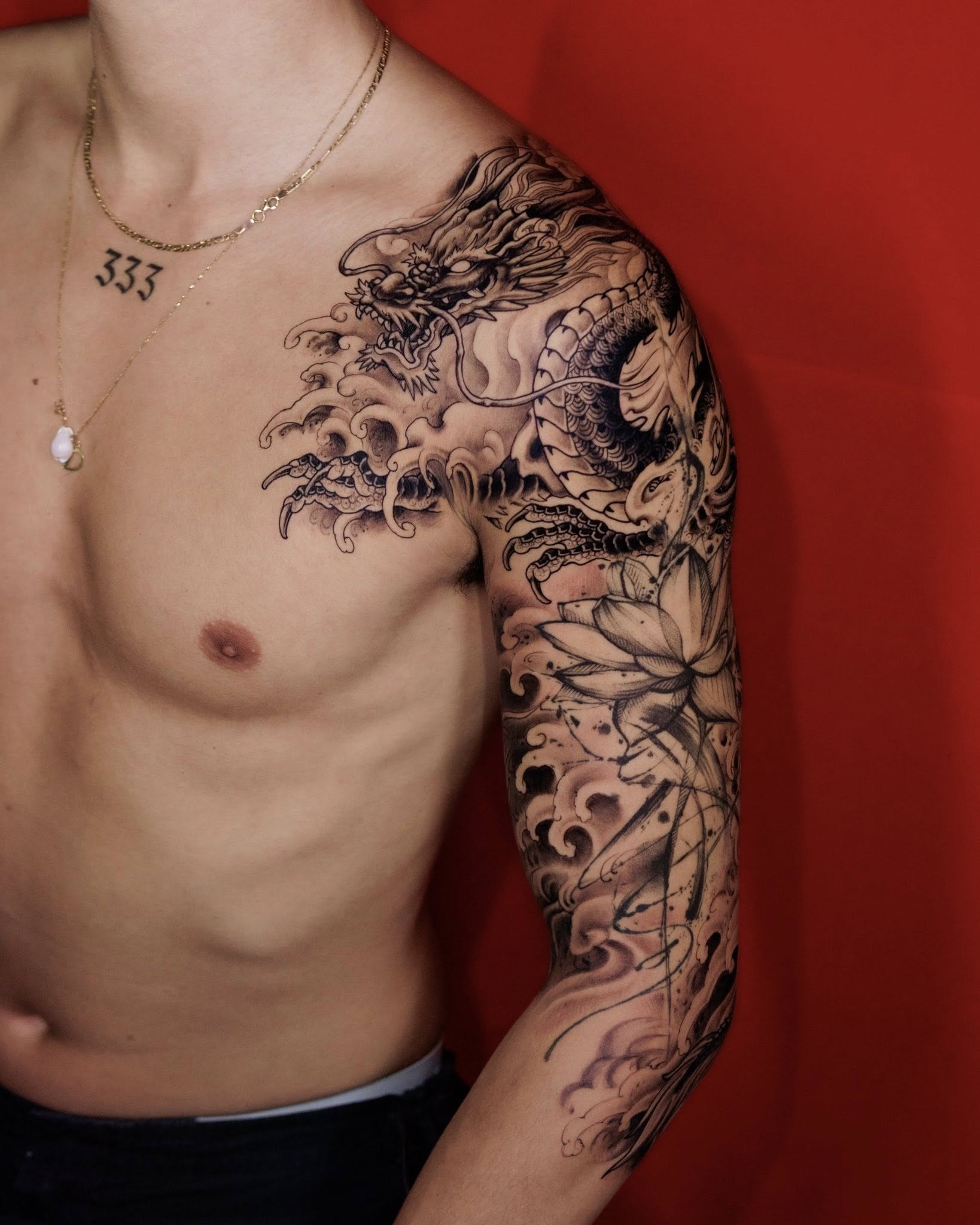
Black and grey dragon sleeve tattoo — Phan Lợi, Dragon City Ink
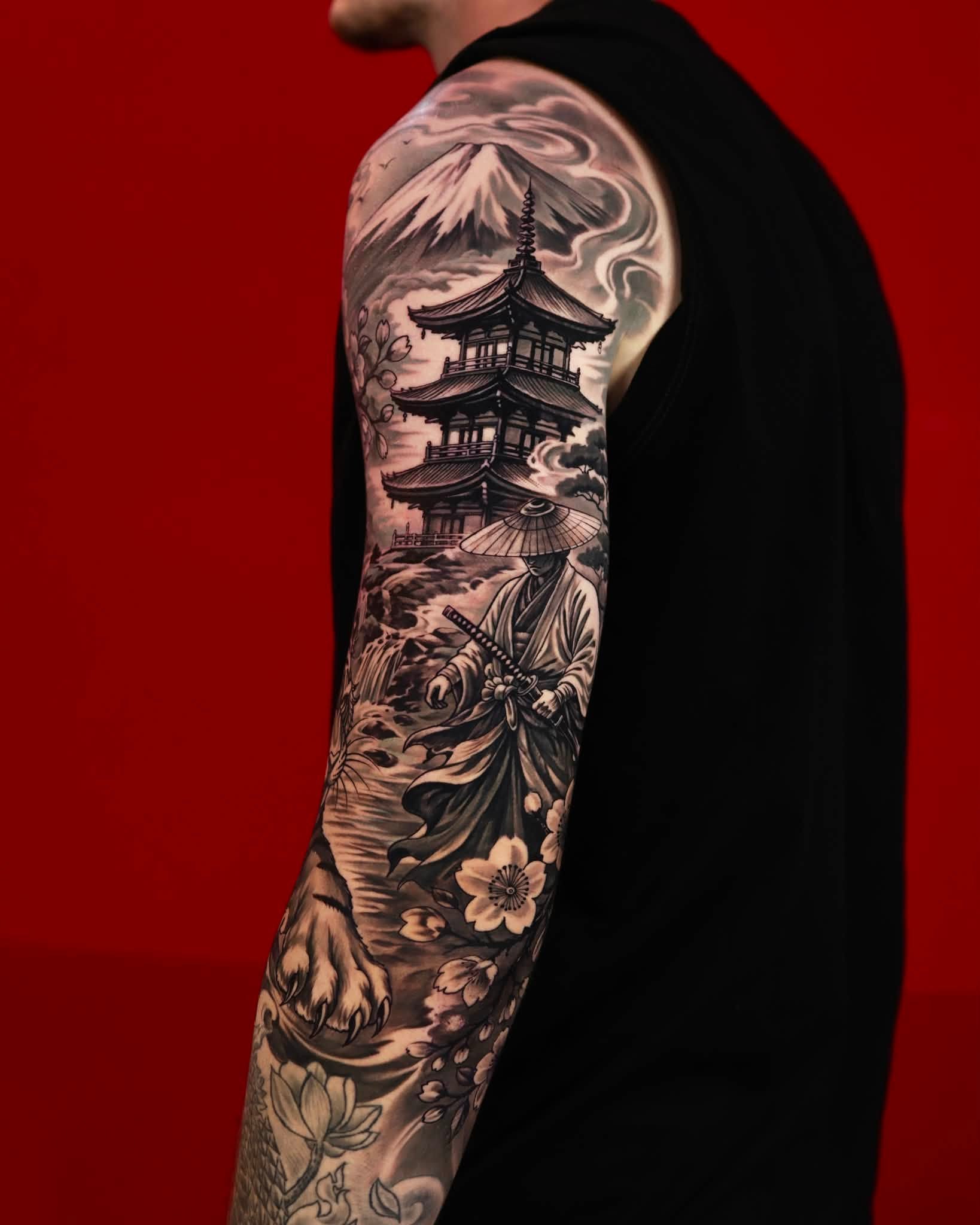
Black and grey pagoda sleeve tattoo — Mỹ Nguyễn (America), Dragon City Ink
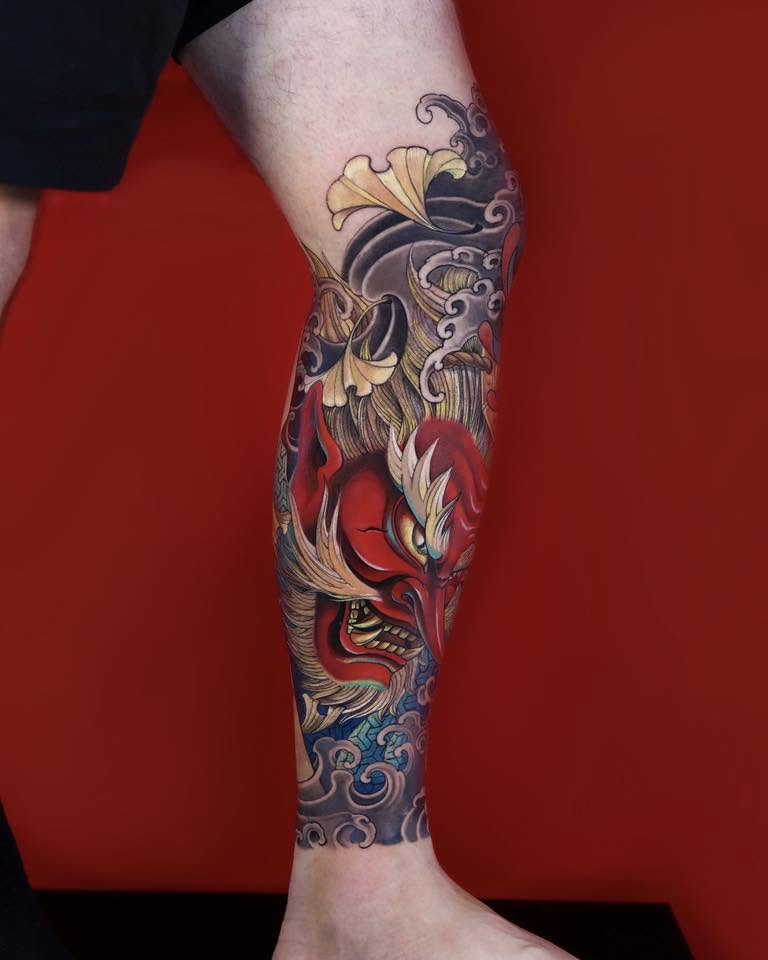
Color leg sleeve tattoo — Mỹ Nguyễn (America), Dragon City Ink
In our studio
Japanese work, the Dragon City Ink way
A Japanese piece starts with a conversation, not a drawing. We ask what you want it to say, how much skin you want to give it and how many sessions you can plan. Then we design the whole composition before the first line: the main figure, its partners and the background that ties everything together.
Mỹ Nguyễn builds our large colour Japanese pieces, from sleeves to full bodysuits. Phan Lợi, our first artist, is the one we hand the traditional Asian pieces and dragons to.
Japanese tattooing even has its own names for size. A one-point piece is a single figure on its own. A shichibu, or seven-tenths sleeve, stops between the elbow and the wrist, and a nagasode runs all the way to the wrist. A back piece covers the back from the shoulders down, and a full bodysuit often leaves an open strip down the chest, called munewari.
A one-point piece is usually done in a single session. A sleeve takes several, and a back piece or bodysuit is a project of months. Only in Da Nang for a short time? We can plan a large piece in stages across several visits.
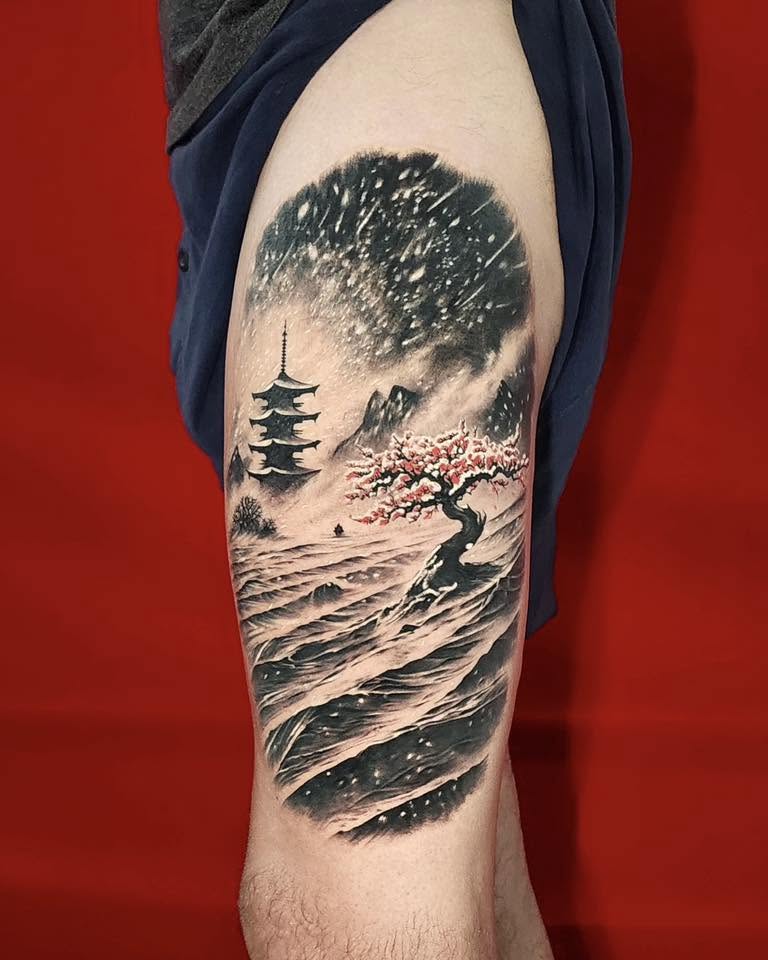
Black and grey Japanese landscape upper arm tattoo — Phan Lợi, Dragon City Ink
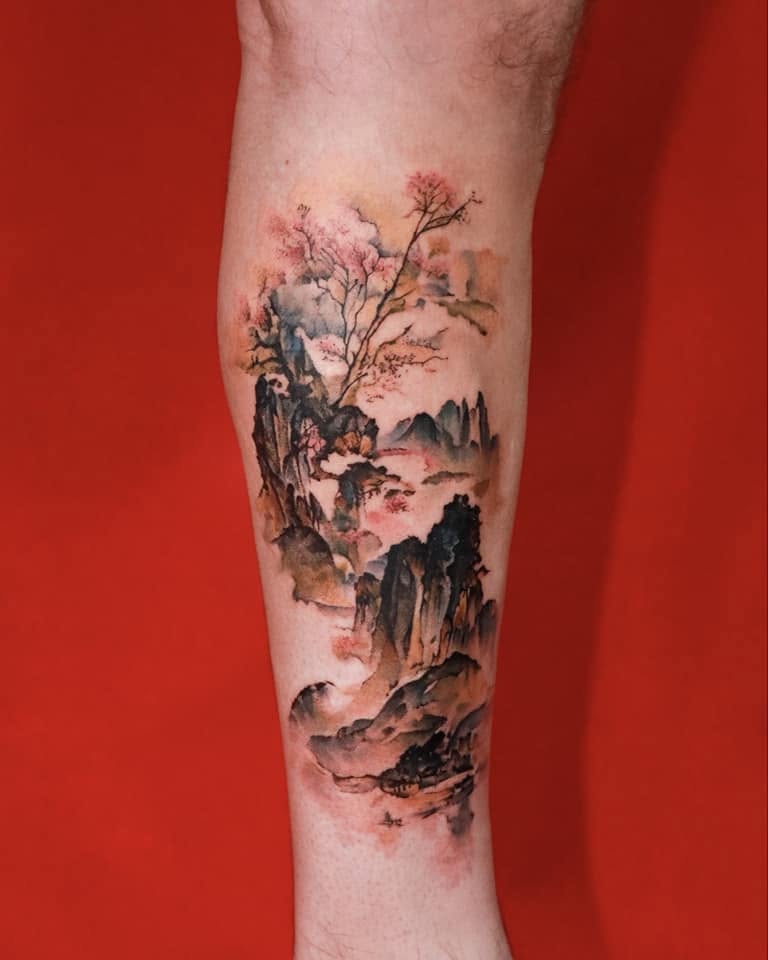
Color Asian landscape leg · Nerdy
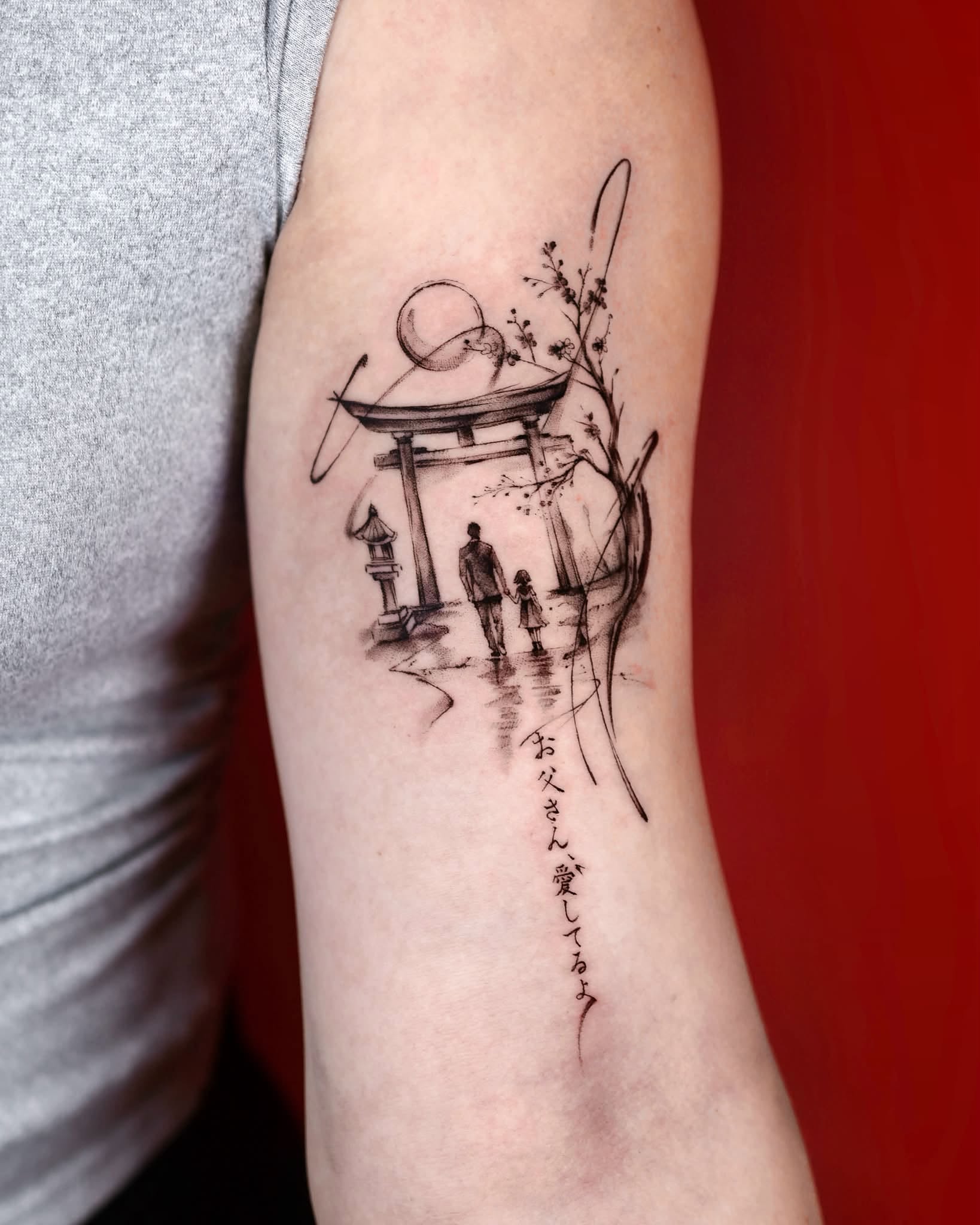
Fine line torii gate arm · Nerdy
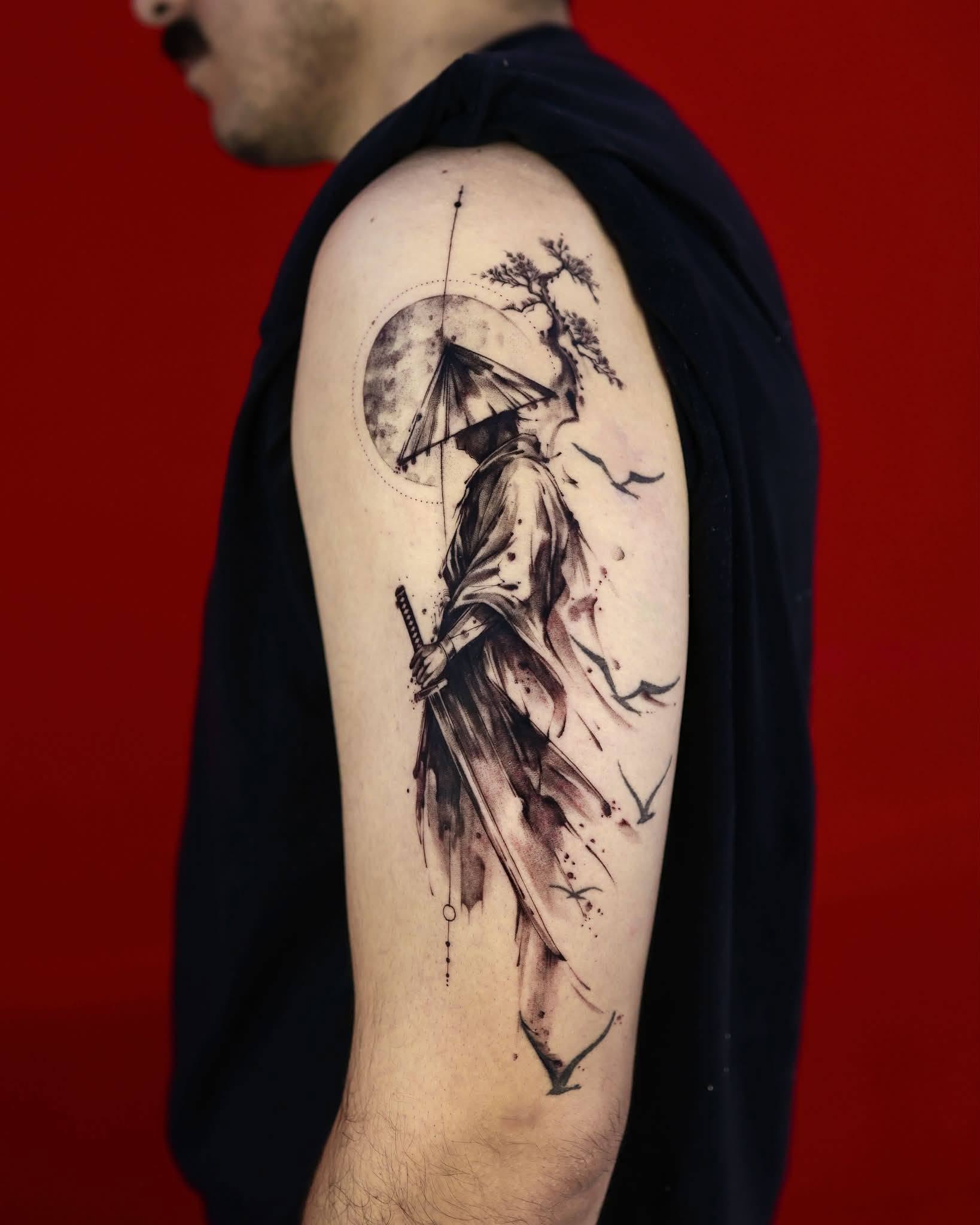
Black and grey ink-wash figure upper arm · Nerdy
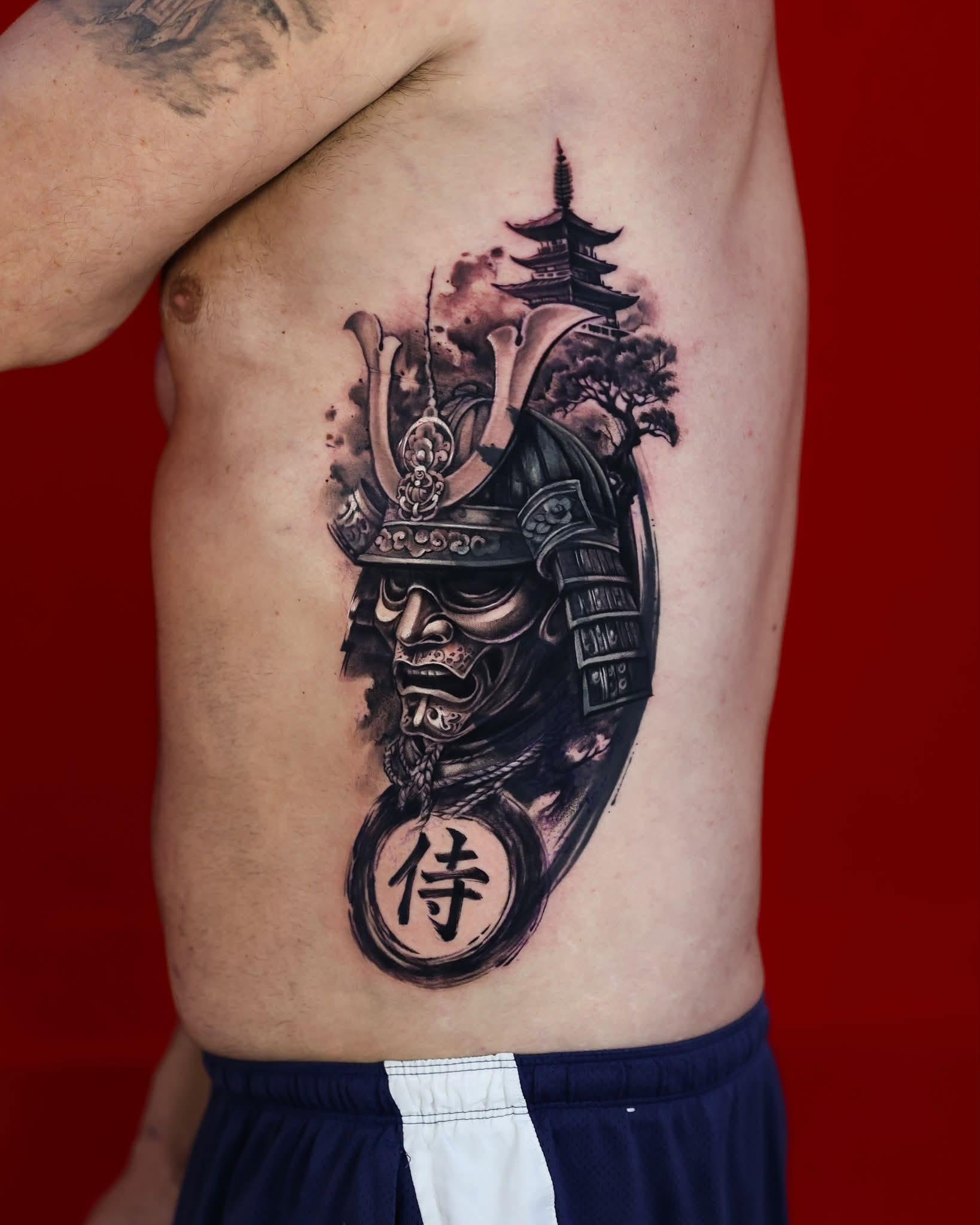
Black and grey samurai rib tattoo — Mỹ Nguyễn (America), Dragon City Ink
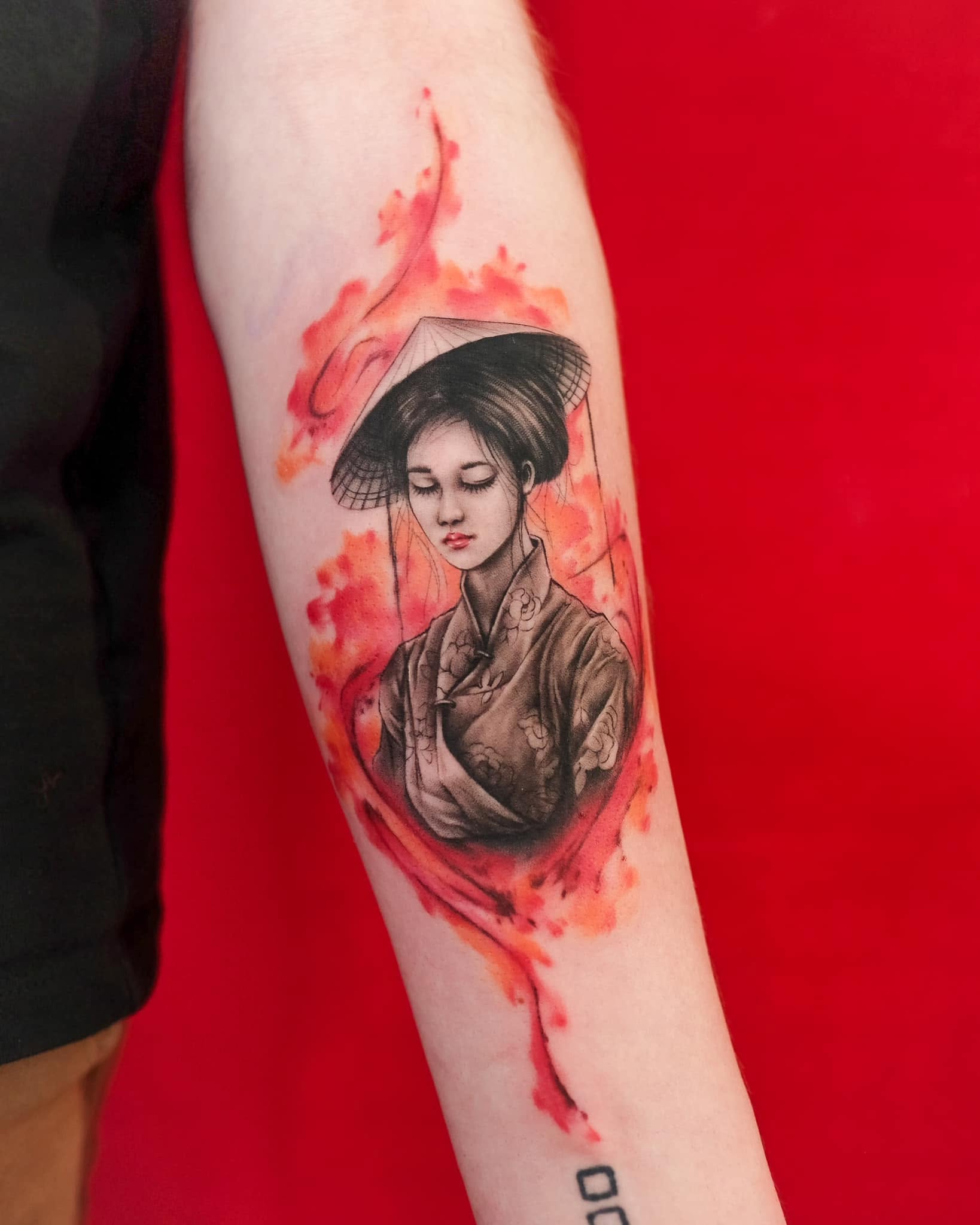
Vietnamese lady tattoo with red watercolor — X-Man, Dragon City Ink

Loi Tattoo Artist Da Nang
