Style guide · Fine line tattoos
Fine line tattoos in Da Nang
A line as thin as a pencil stroke, drawn with one needle or a tight group of three. Fine line was born in the black and grey shops of Los Angeles and is now the most requested way to get tattooed, from Seoul to New York to Da Nang. It is not one style but a technique that every style can be drawn in. This is our guide to it, with fine line work tattooed at our studio in An Thượng.
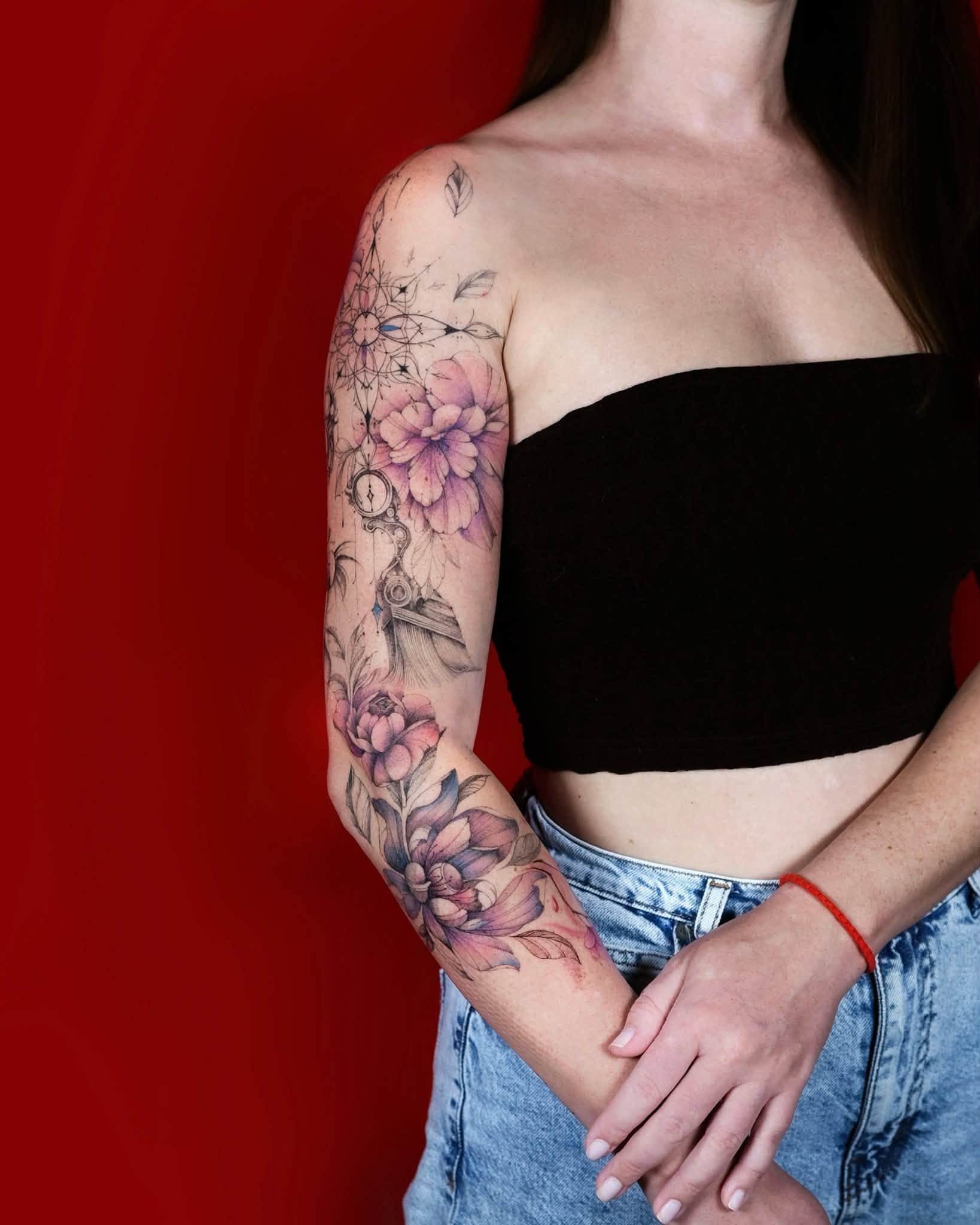
Floral fine line sleeve · Nerdy
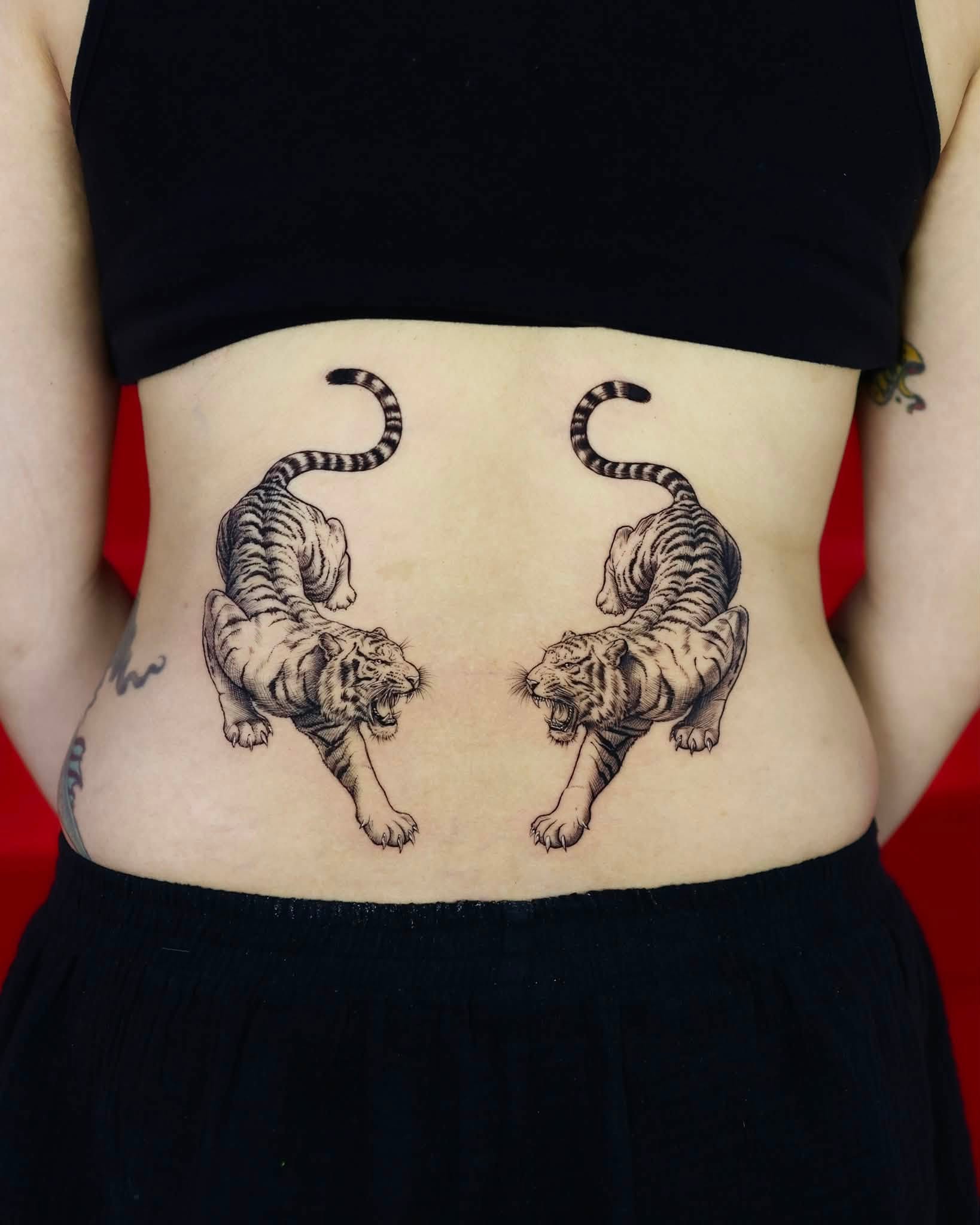
Twin tigers · lower back · Hải Đinh
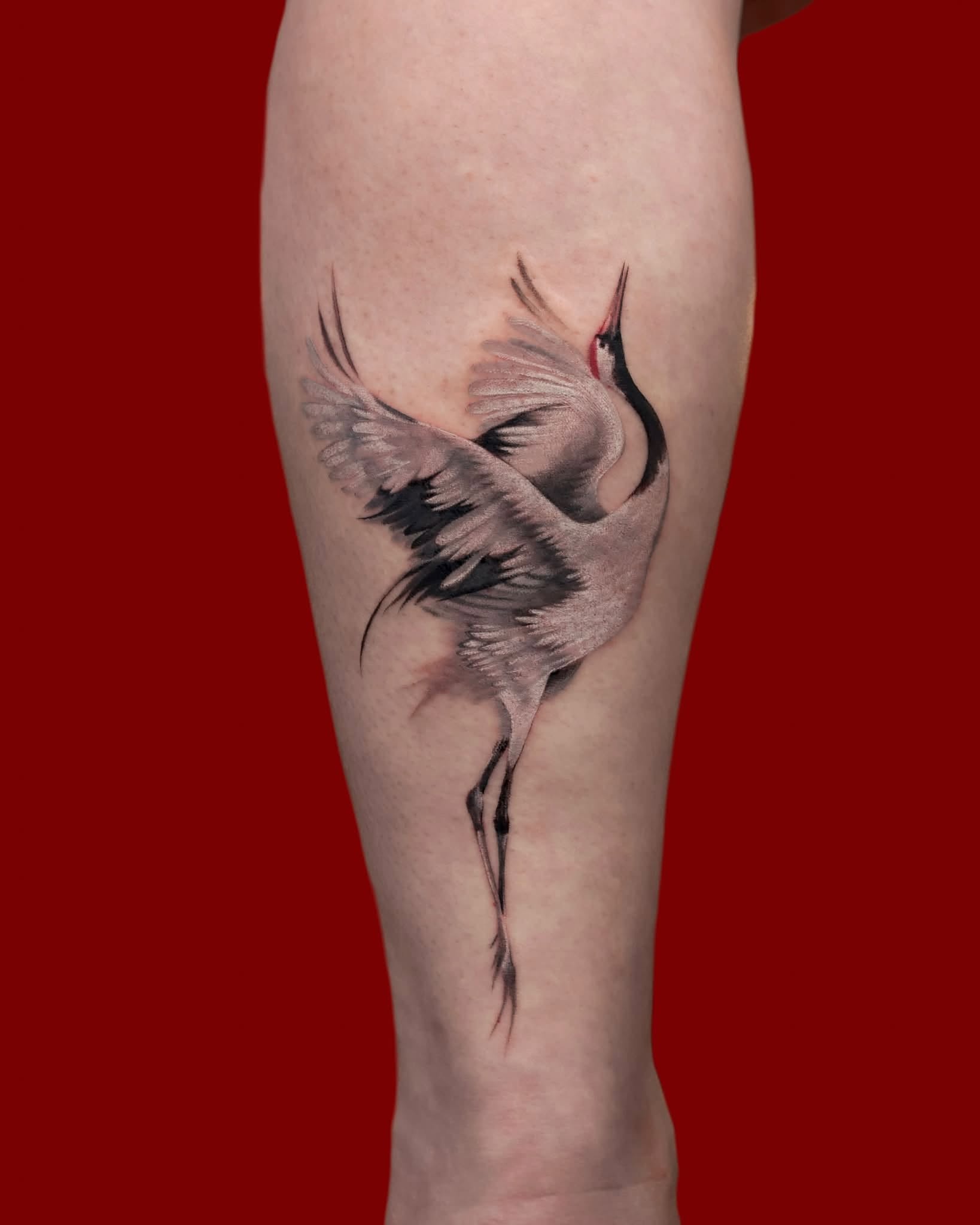
Fine line crane forearm · Nerdy
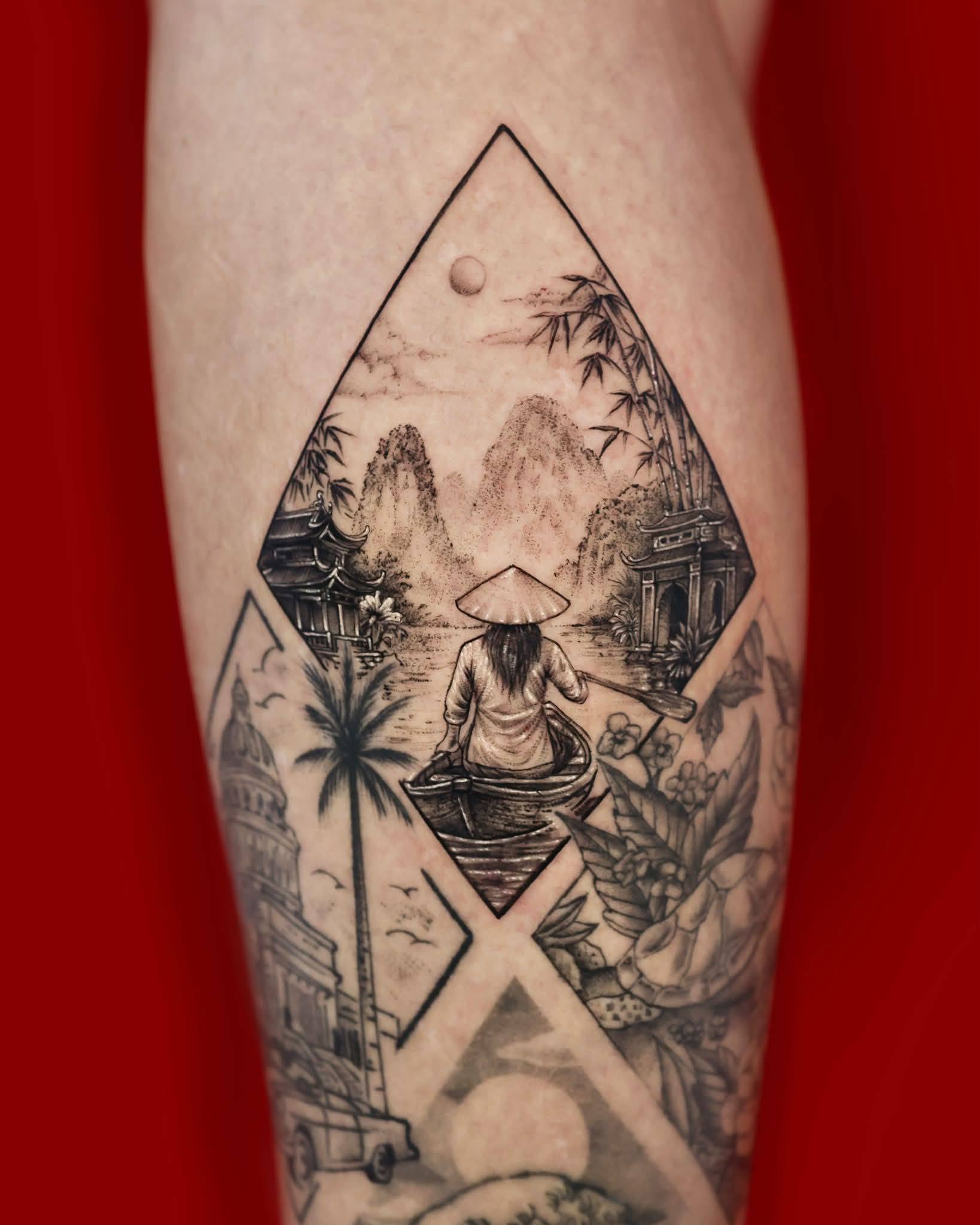
Landscape in a diamond · Hải Đinh
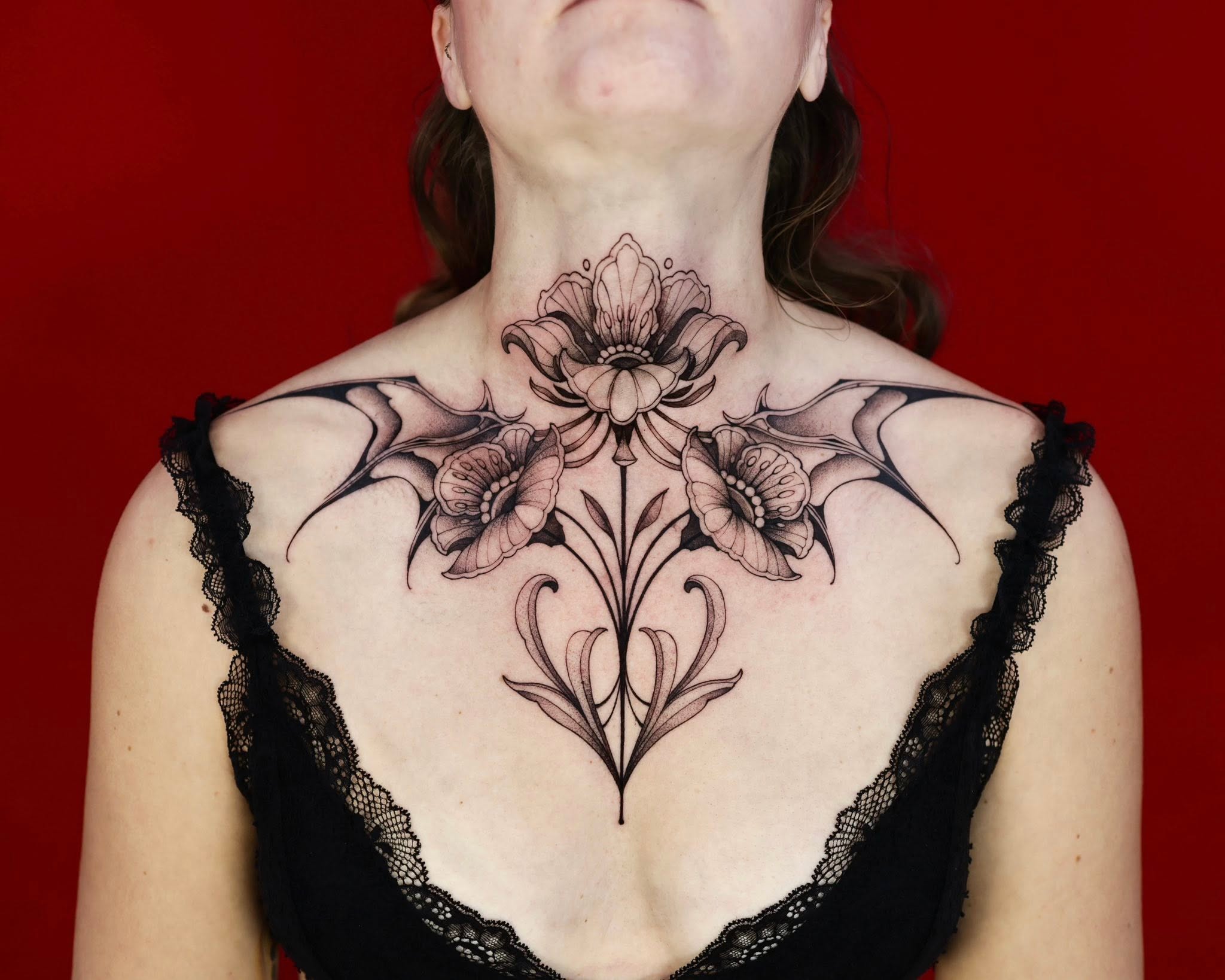
Ornamental lotus chest · Nerdy
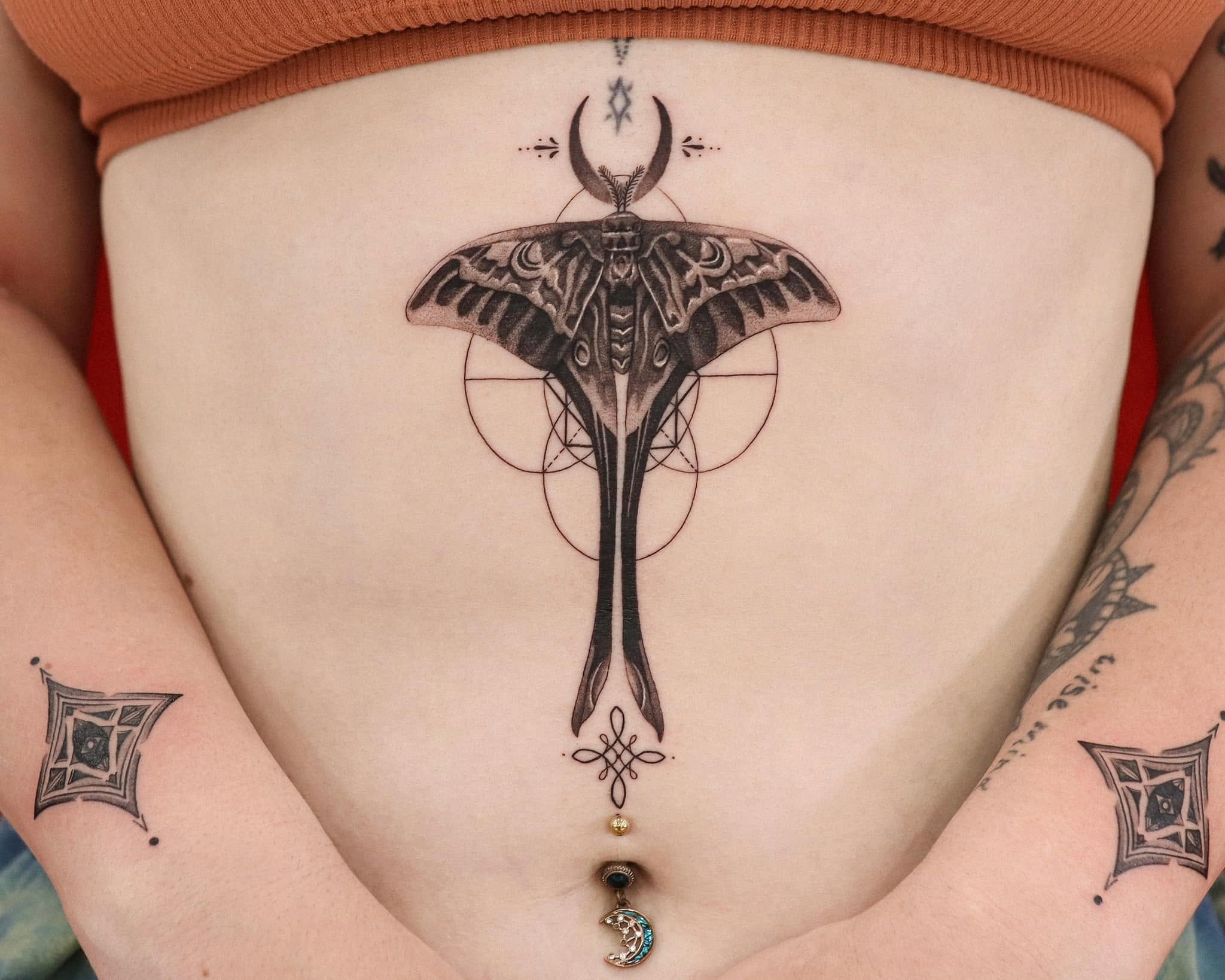
Moth and moon · ornamental · Minh Khang
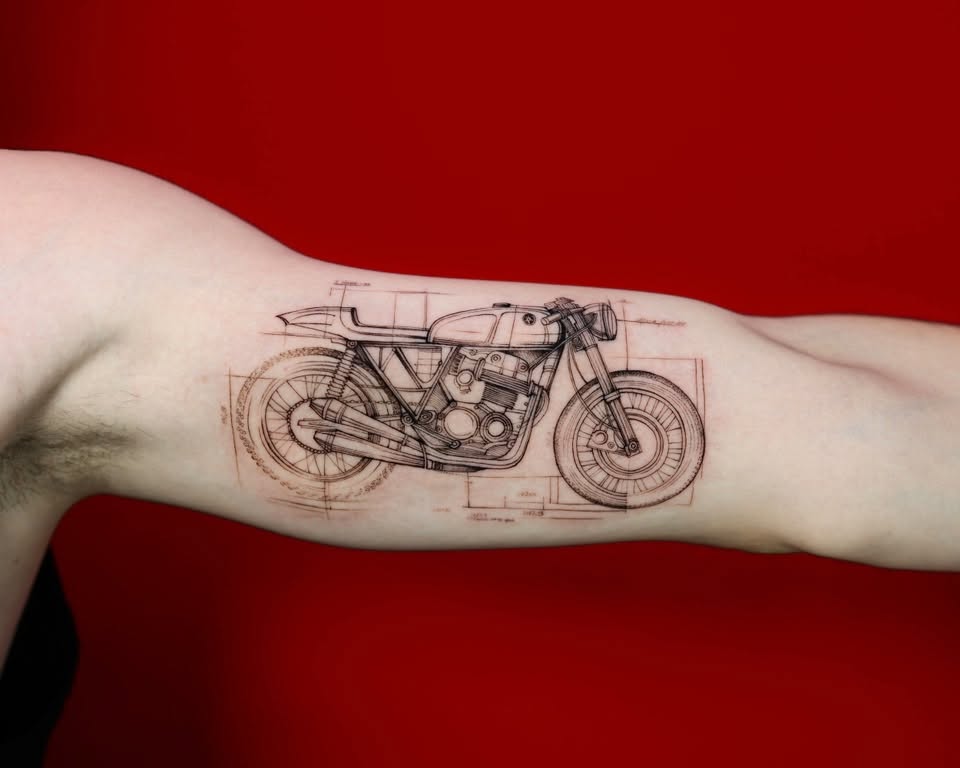
Fine line motorcycle blueprint arm · Nerdy
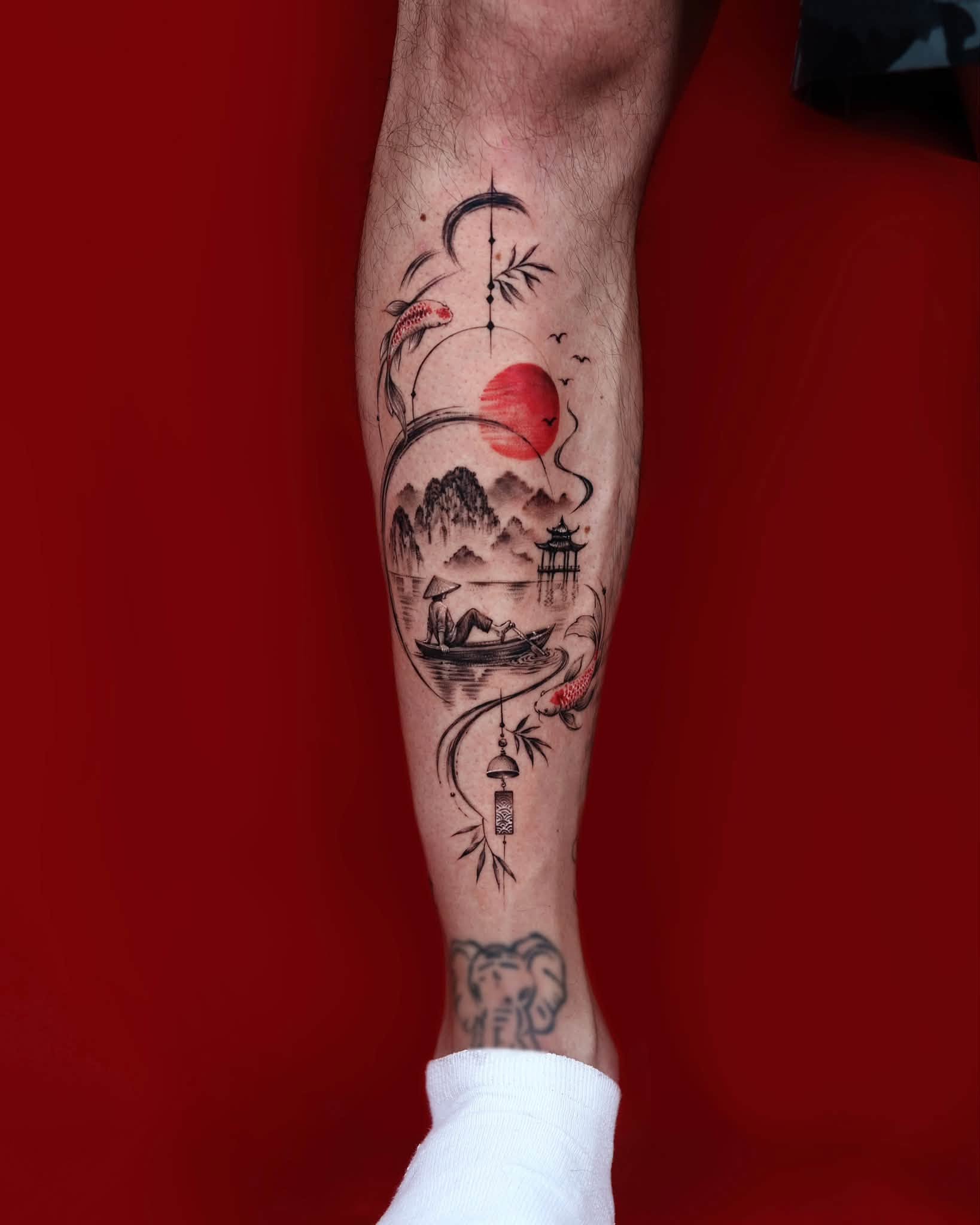
Red sun landscape · forearm · Hải Đinh
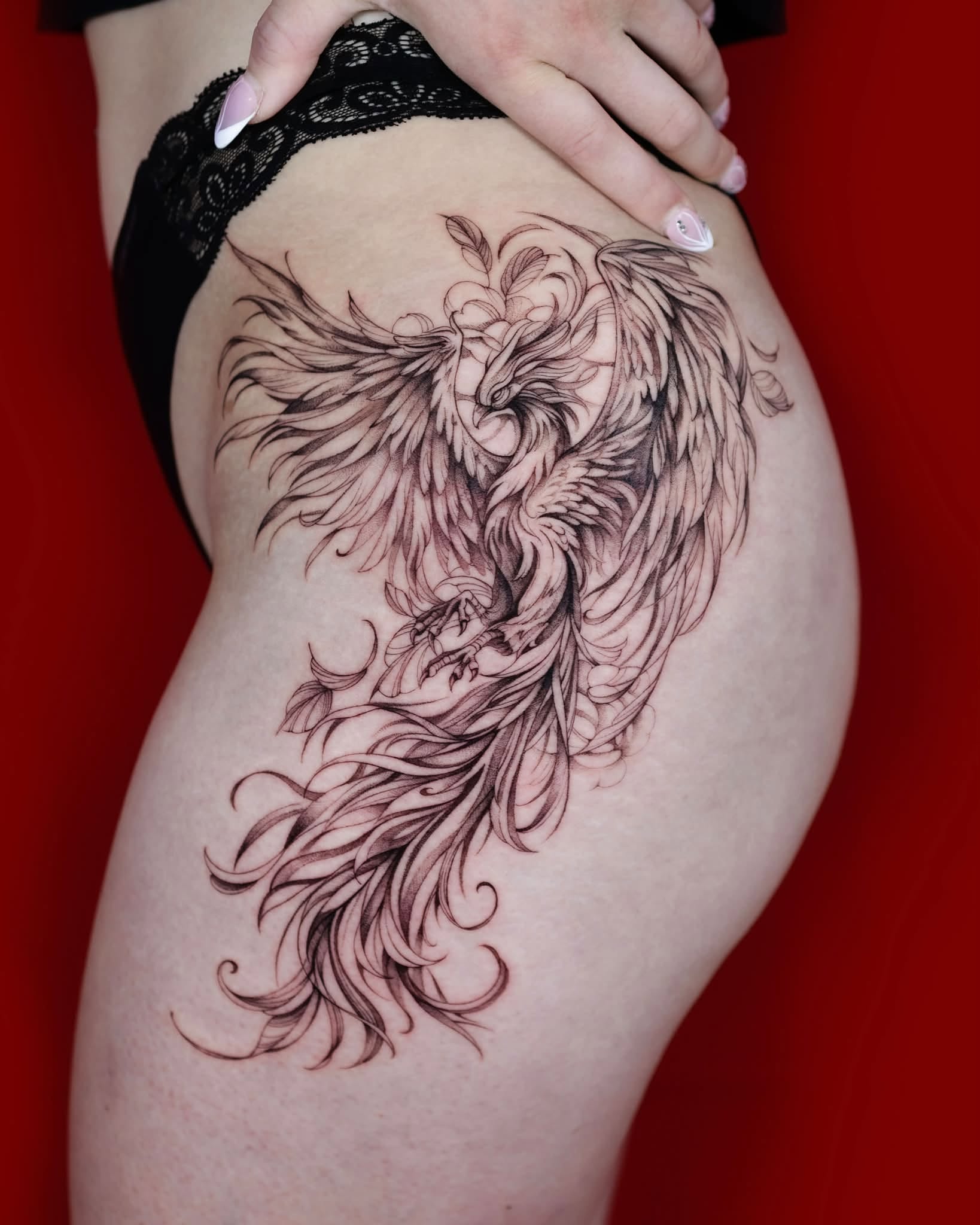
Fine line phoenix hip · Nerdy
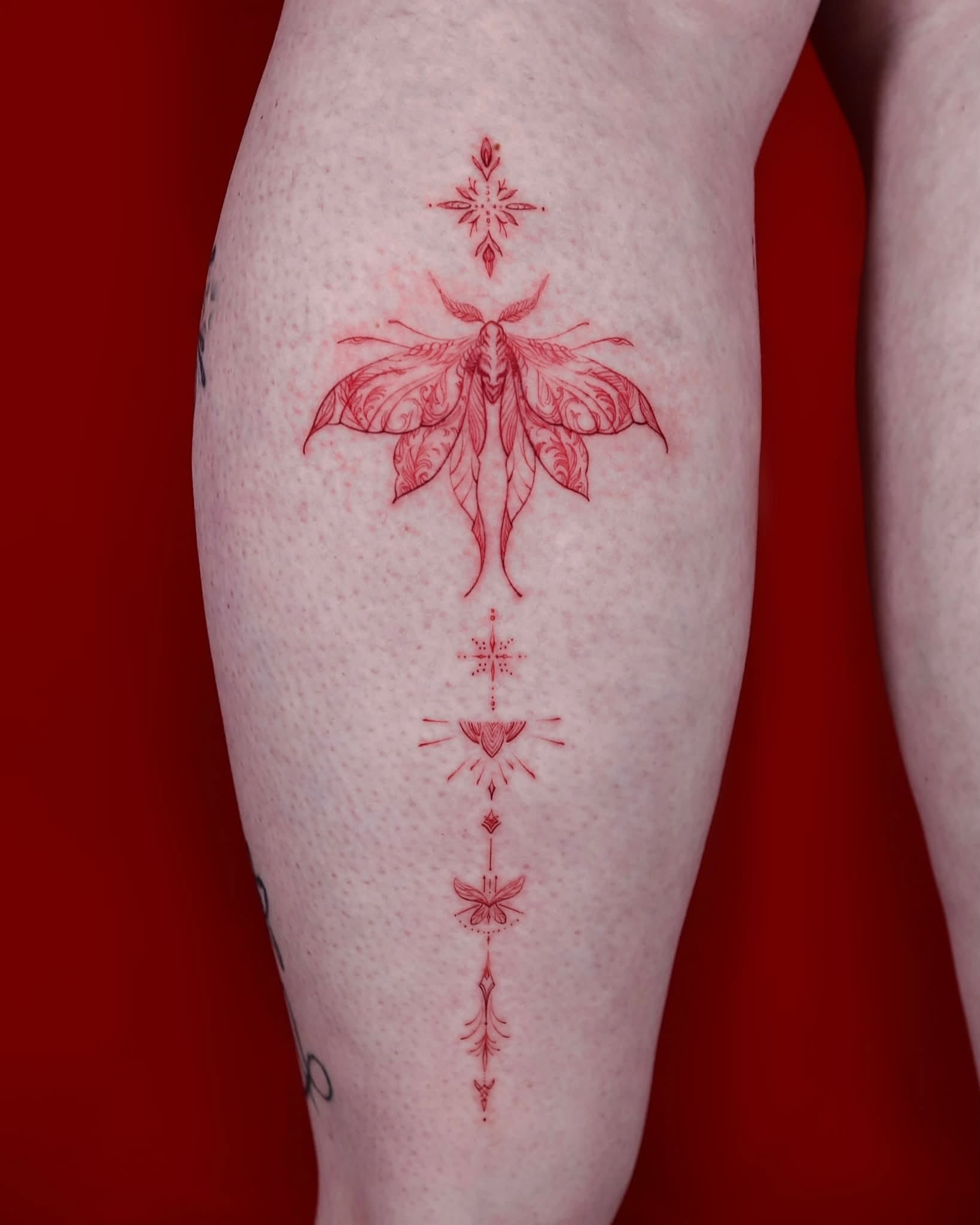
Red ornamental spine · Minh Khang
The technique
What makes a tattoo fine line
A tattoo line is made by a cluster of needles. A bold traditional outline uses a grouping of nine needles or more. Fine line work is drawn with a round liner of just one to three: a single needle (1RL) gives the thinnest line a machine can make, three in a tight triangle (3RL) gives a fine line with a little more body.
The needles themselves get thinner too. The standard tattoo needle is 0.35 mm across; fine line artists often work with 0.30 mm or even 0.25 mm needles, sometimes called bugpins. The result is detail that used to belong only to pencil drawings and engravings.
The needle
One to three needle points, each as thin as 0.25 mm. Less ink per pass, so every line has to be placed exactly where it belongs.
The hand
There is nowhere to hide. A bold line can absorb a wobble; a fine line shows every one. That is why fine line takes years to master.
The depth
Too shallow and the line fades out while it heals. Too deep and the ink spreads under the skin into a soft halo, called a blowout. A fine line artist works in a margin of a fraction of a millimetre.
The design
Fine line rewards negative space. The skin between the lines is part of the drawing, so a good fine line design knows what to leave out.
Fine line is not the same as small. A full sleeve can be drawn in fine line, and a tiny tattoo can be bold. What defines it is the thinness and precision of the line.
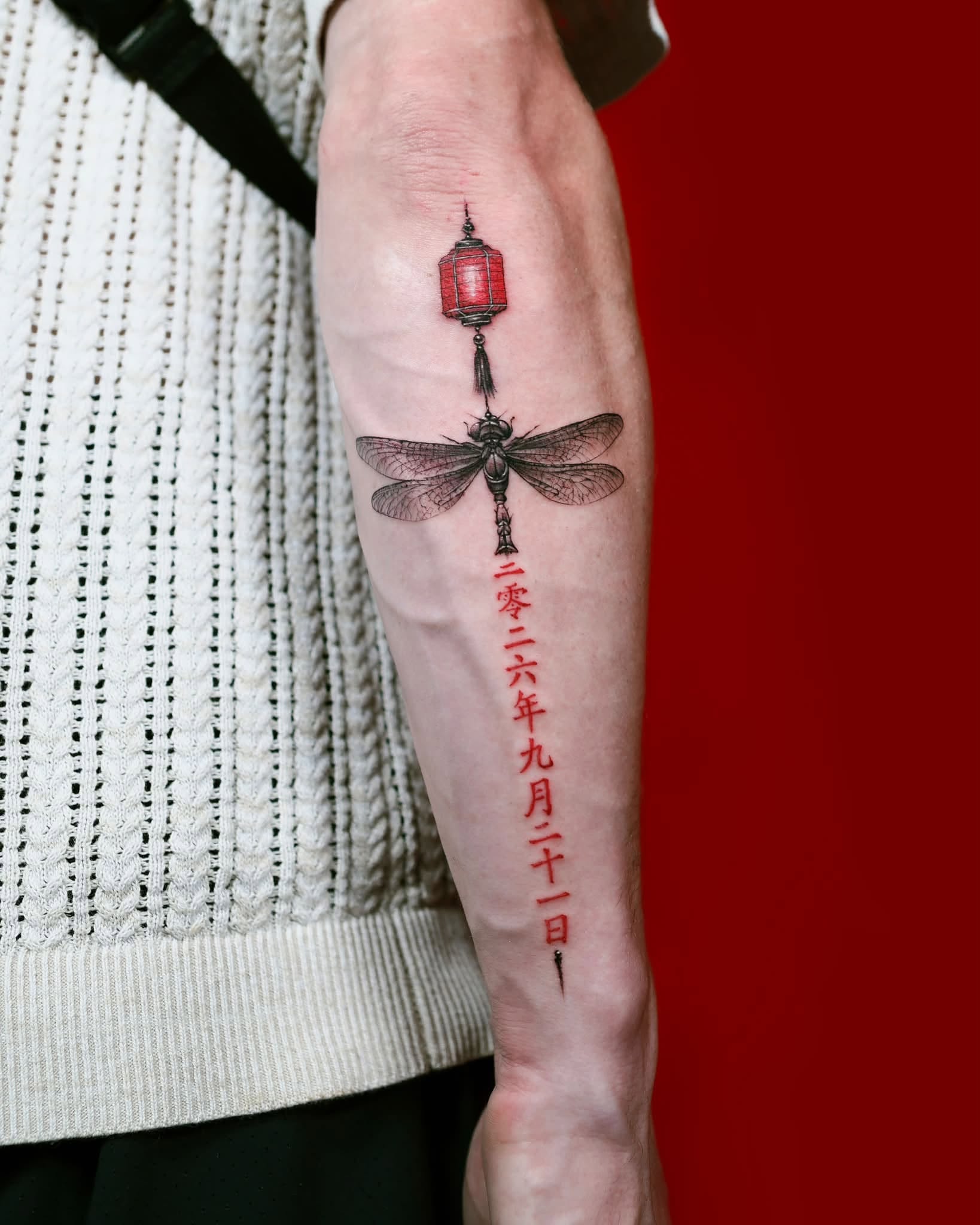
Red dragonfly and script · Hải Đinh
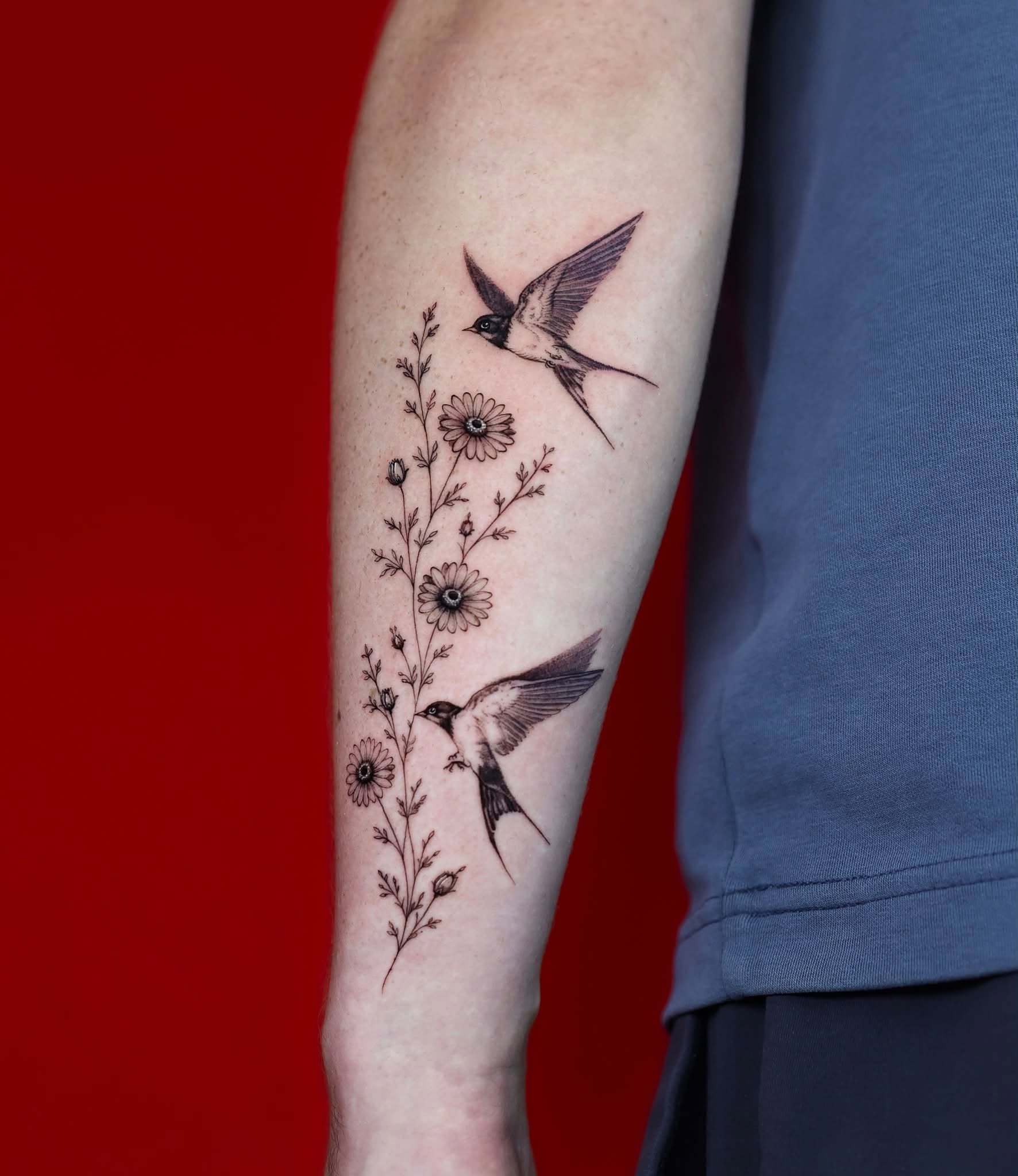
Swallows and wildflowers · Minh Khang
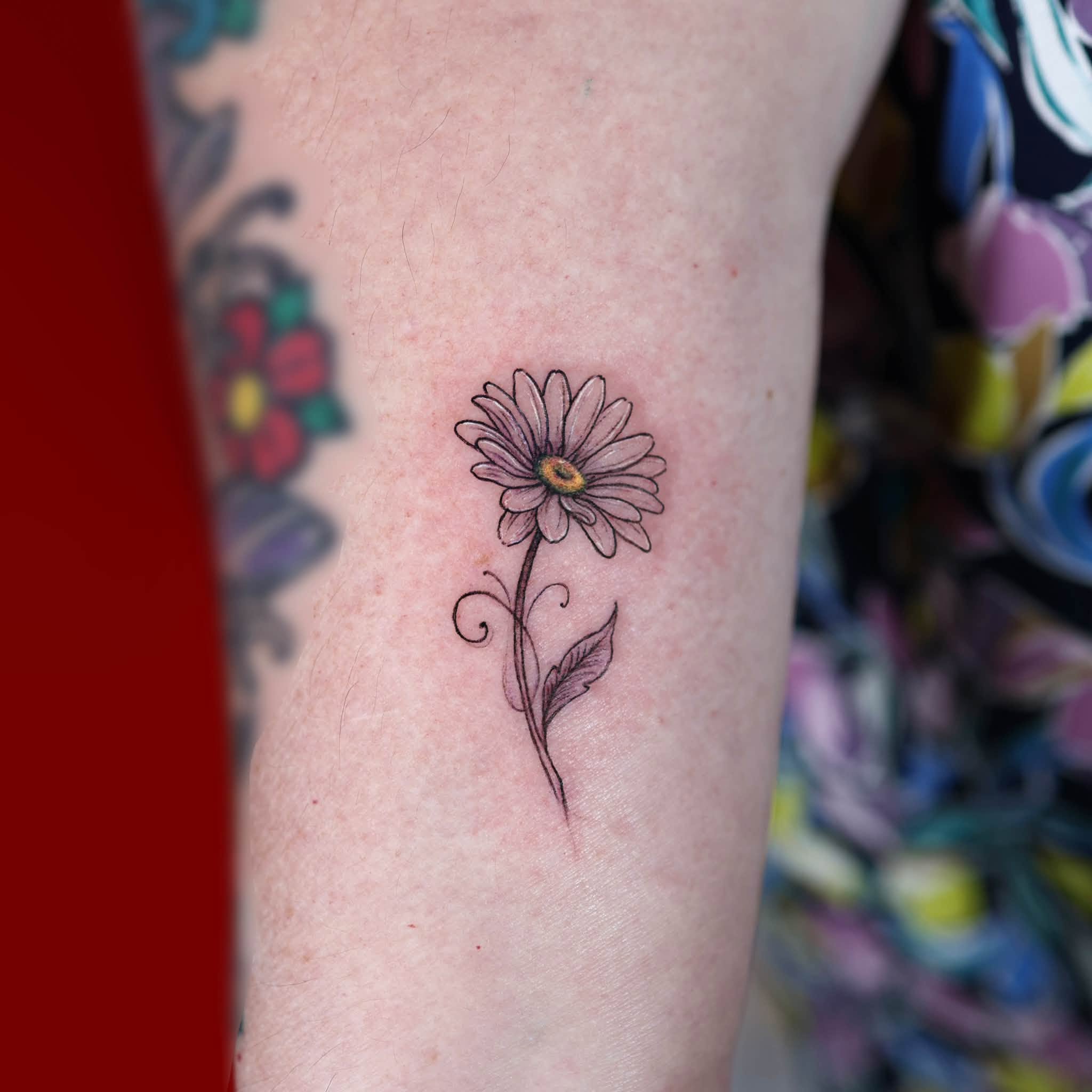
Daisy · single needle · Thiên
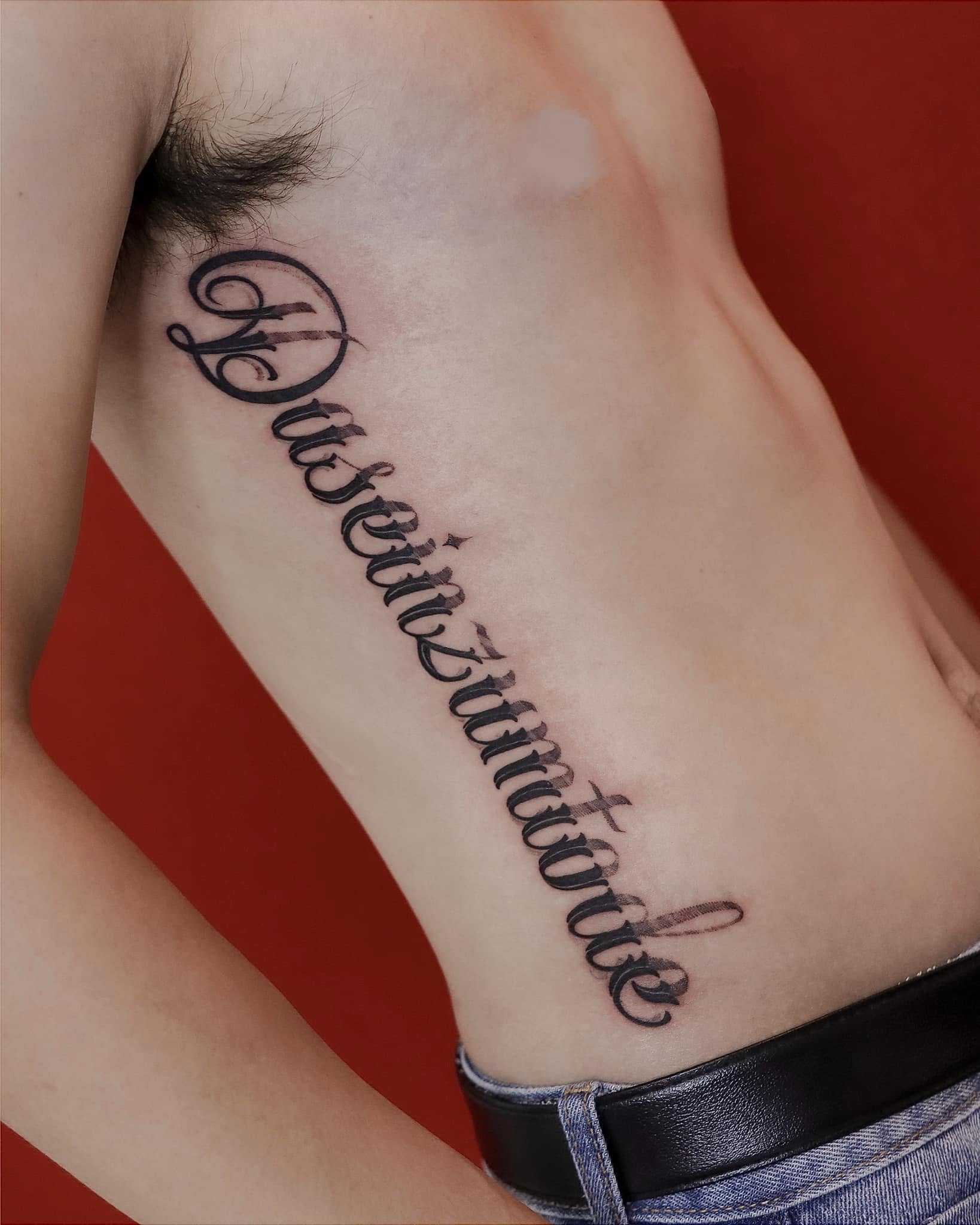
Script lettering · ribs · Minh Khang
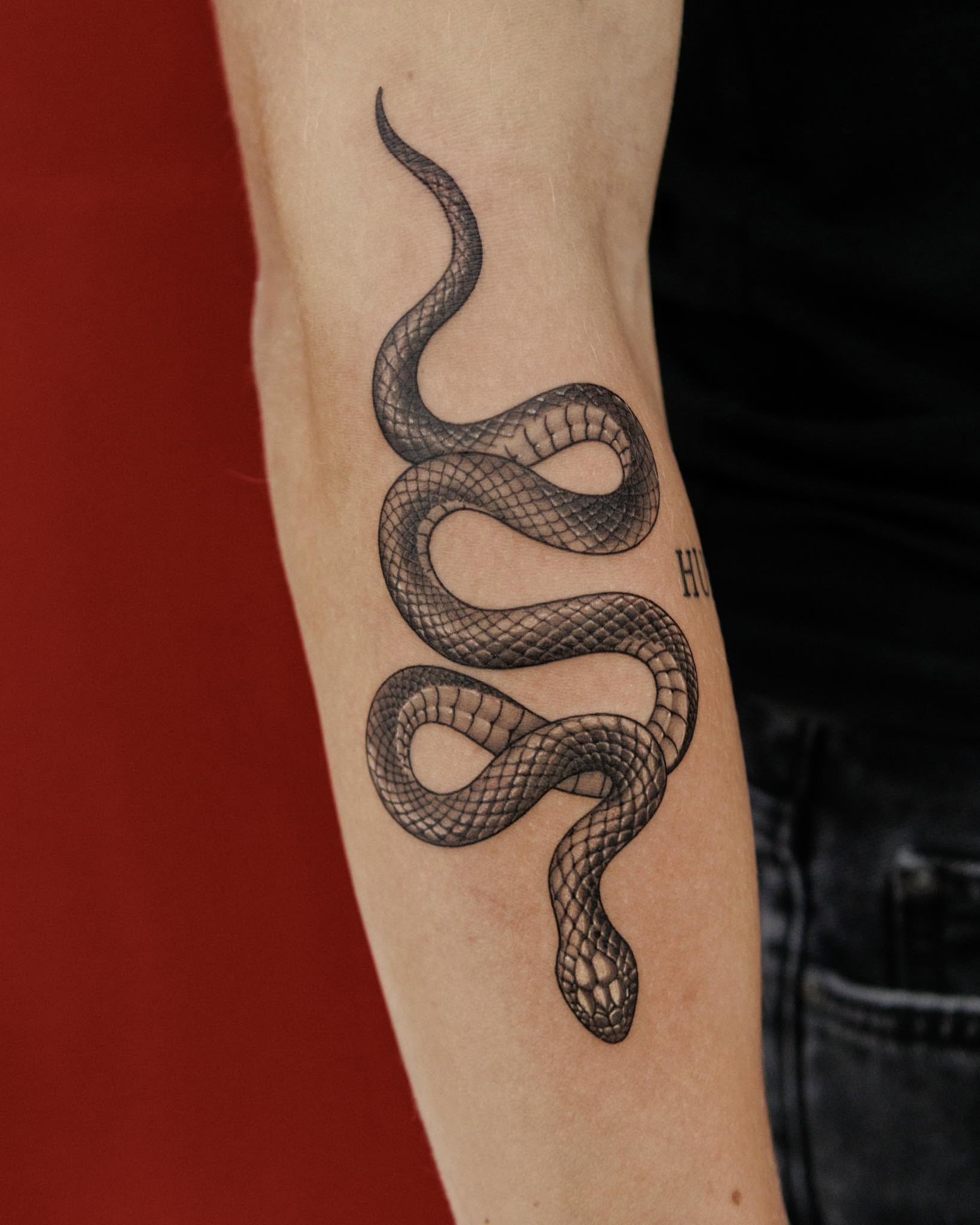
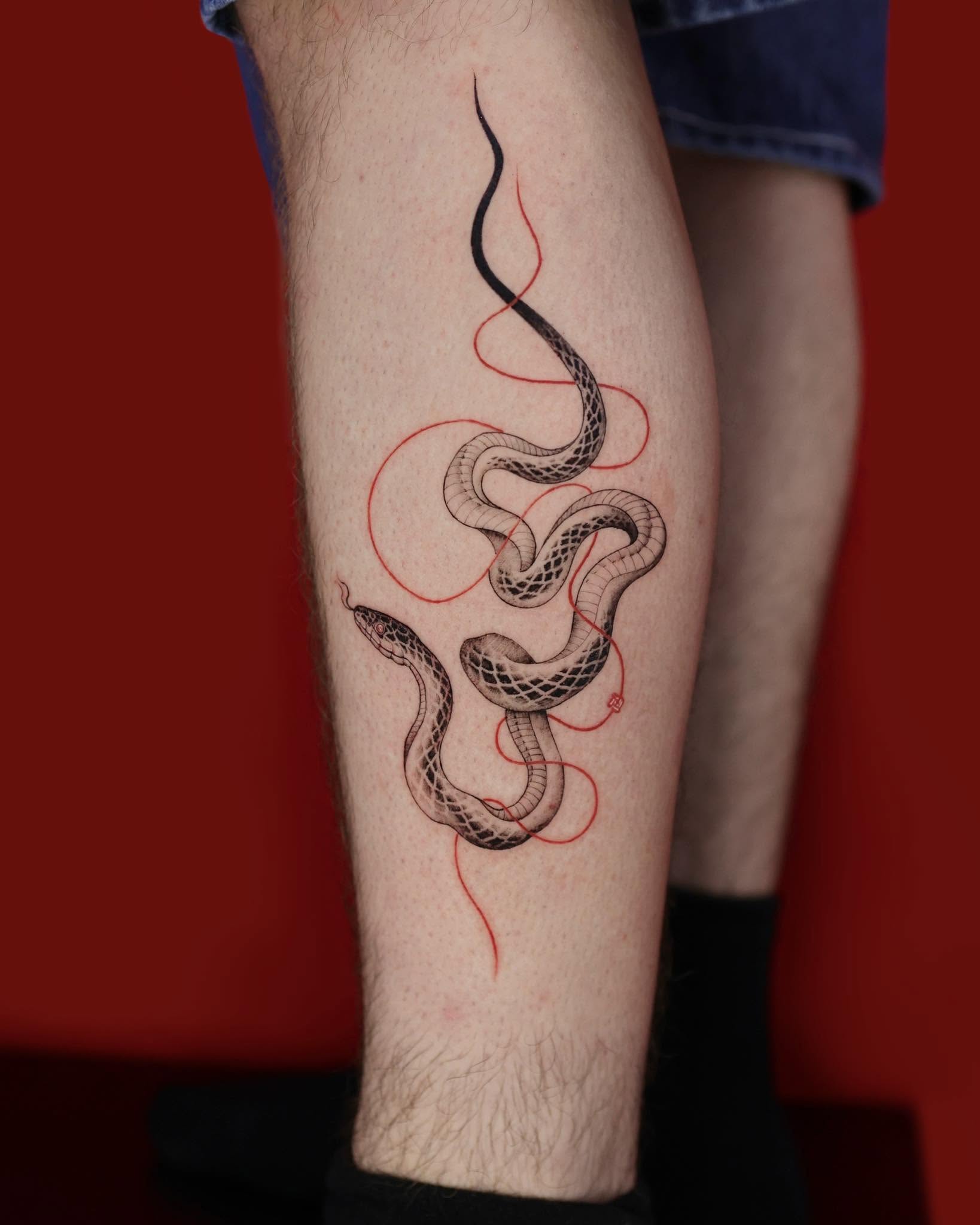
Snake · black and grey · Hải Đinh
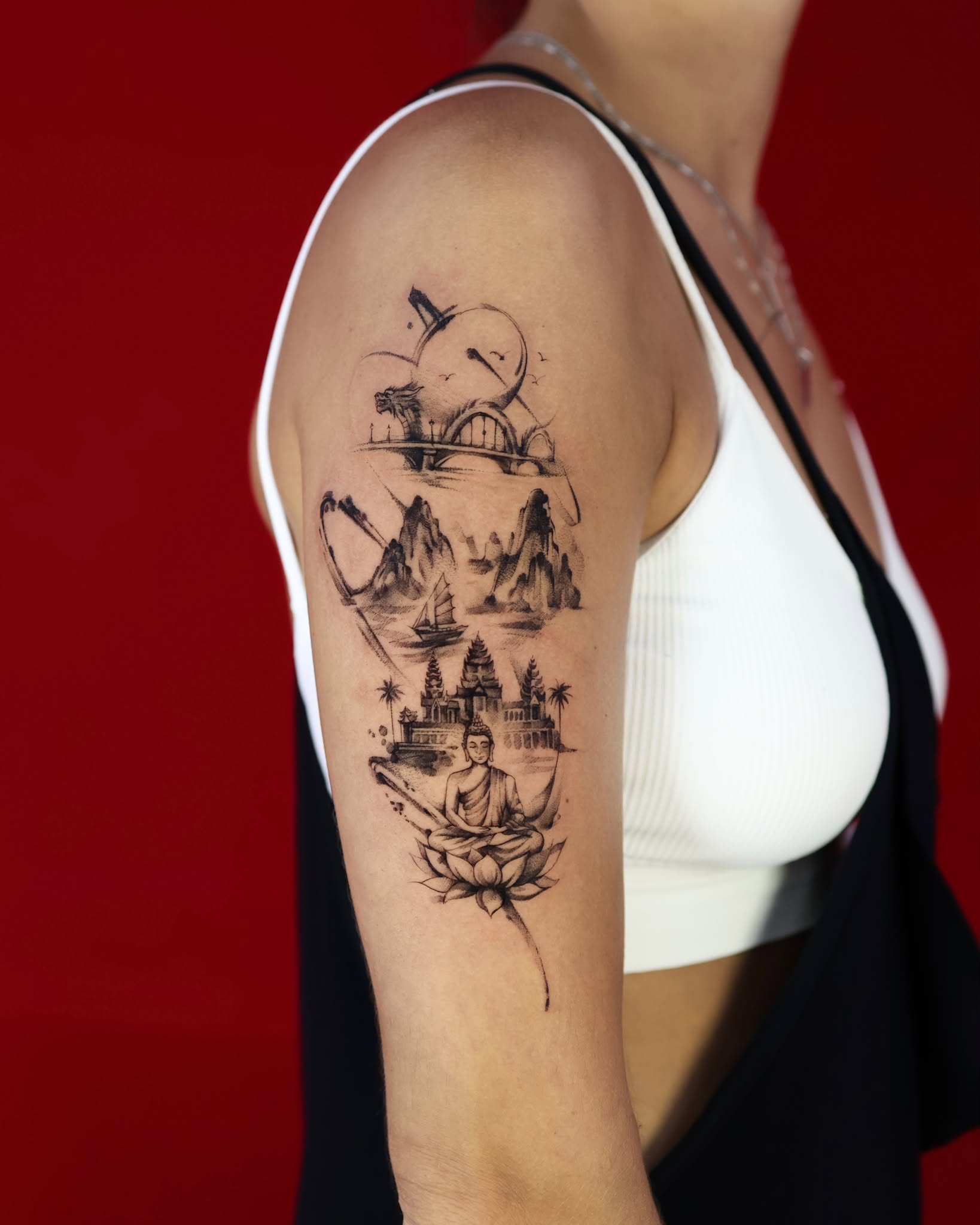
Fine line landscape arm · Nerdy
The story
From East Los Angeles to the whole world
Fine line did not start in a design studio. It started with a sewing needle, a guitar string and a lot of patience.
1960s · Prison ingenuity
In the California prison system, tattooers had time but almost no tools. Homemade machines carried a single sharpened needle, sometimes a guitar string, and the only ink was black, watered down into greys. If you could draw, you could tattoo. The result was a delicate, pencil-like style of portraits, script and religious images, carried home to the Chicano neighbourhoods of East Los Angeles.
1975 · Good Time Charlie’s Tattooland
Charlie Cartwright and his apprentice Jack Rudy opened Good Time Charlie’s Tattooland on Whittier Boulevard in East LA. Their customers kept asking for the prison look, which the shop machines of the day could not make. So Rudy built single-needle set-ups right in the shop. “Modern single needle black and gray tattooing was born in our shop,” he later said. In 1977 they hired Freddy Negrete, who had learned to tattoo inside, and the style went from the street into the professional world.
2001 · The Sunset Strip
Mark Mahoney, one of the masters of single-needle black and grey, opened the Shamrock Social Club on Sunset Boulevard in 2001. Its motto, “where the underworld and the elite meet”, said it all: gang-style black and grey line work, now on the arms of Hollywood actors, musicians and footballers.
2008 · The Instagram generation
Mahoney took on an apprentice called Brian Woo, who became Dr. Woo. His tiny, precise single-needle designs suited the new world of the smartphone perfectly: a whole tattoo fits on one screen, and a fine line looks sharp in a photo. By 2018 he had over 1.2 million followers, and a waiting list of months. Fine line became the tattoo you could wear to the office.
2010s · The Korean school
In South Korea, a 1992 court ruling made tattooing a medical act, so only doctors could do it legally. Korean artists worked behind unmarked doors and became some of the most precise fine line tattooers in the world, famous in New York and Los Angeles while still underground at home. In September 2025 Korea’s National Assembly finally voted to license non-medical tattooists, with the law taking effect after two years.
Today · Everywhere
Fine line is now in every city and every style: botanical, script, micro-realism, ornamental, Asian ink-wash. It has done something no style before it managed: it brought people who never imagined having a tattoo into the studio.
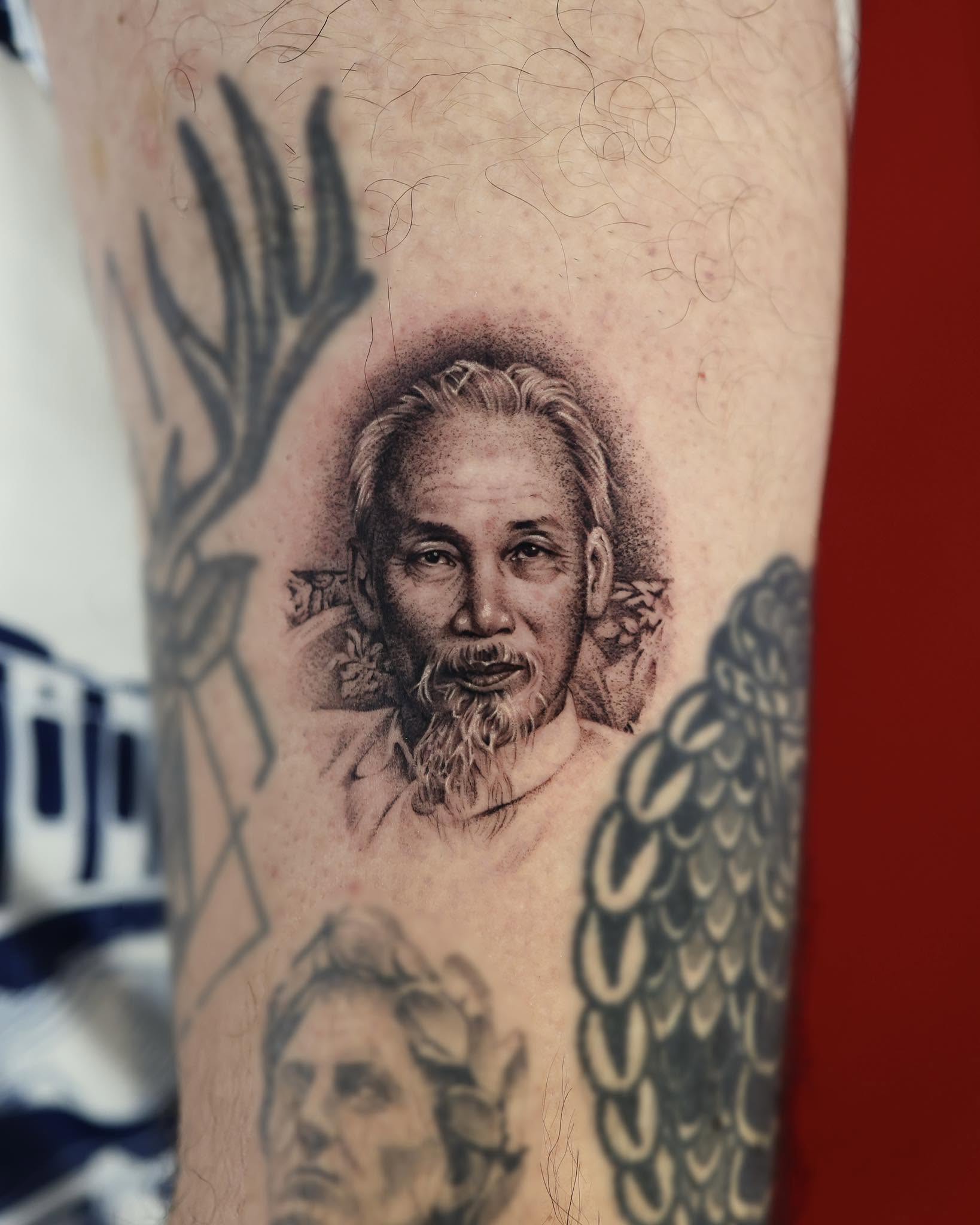
Micro-realism portrait · Hải Đinh
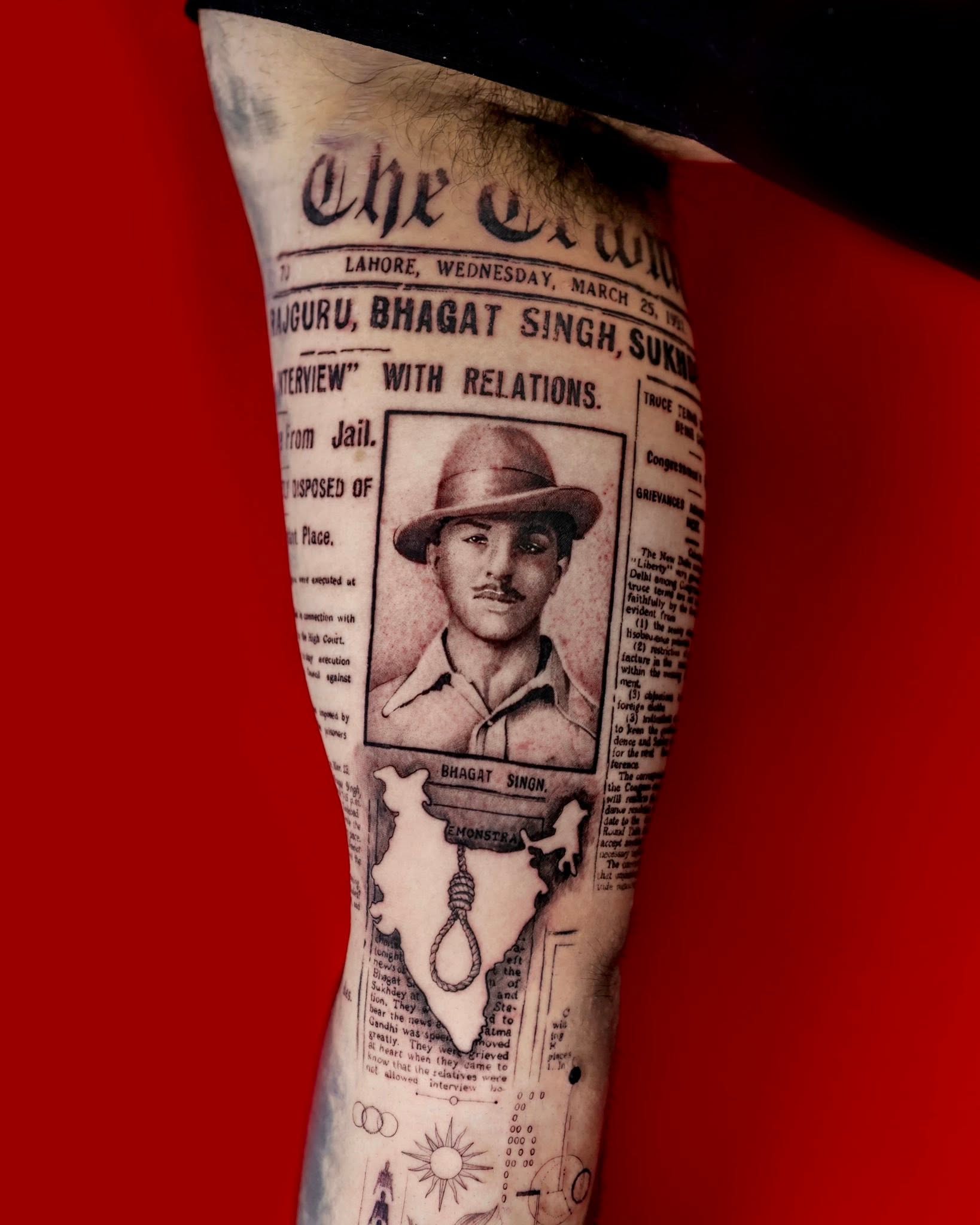
Newspaper portrait · Hải Đinh
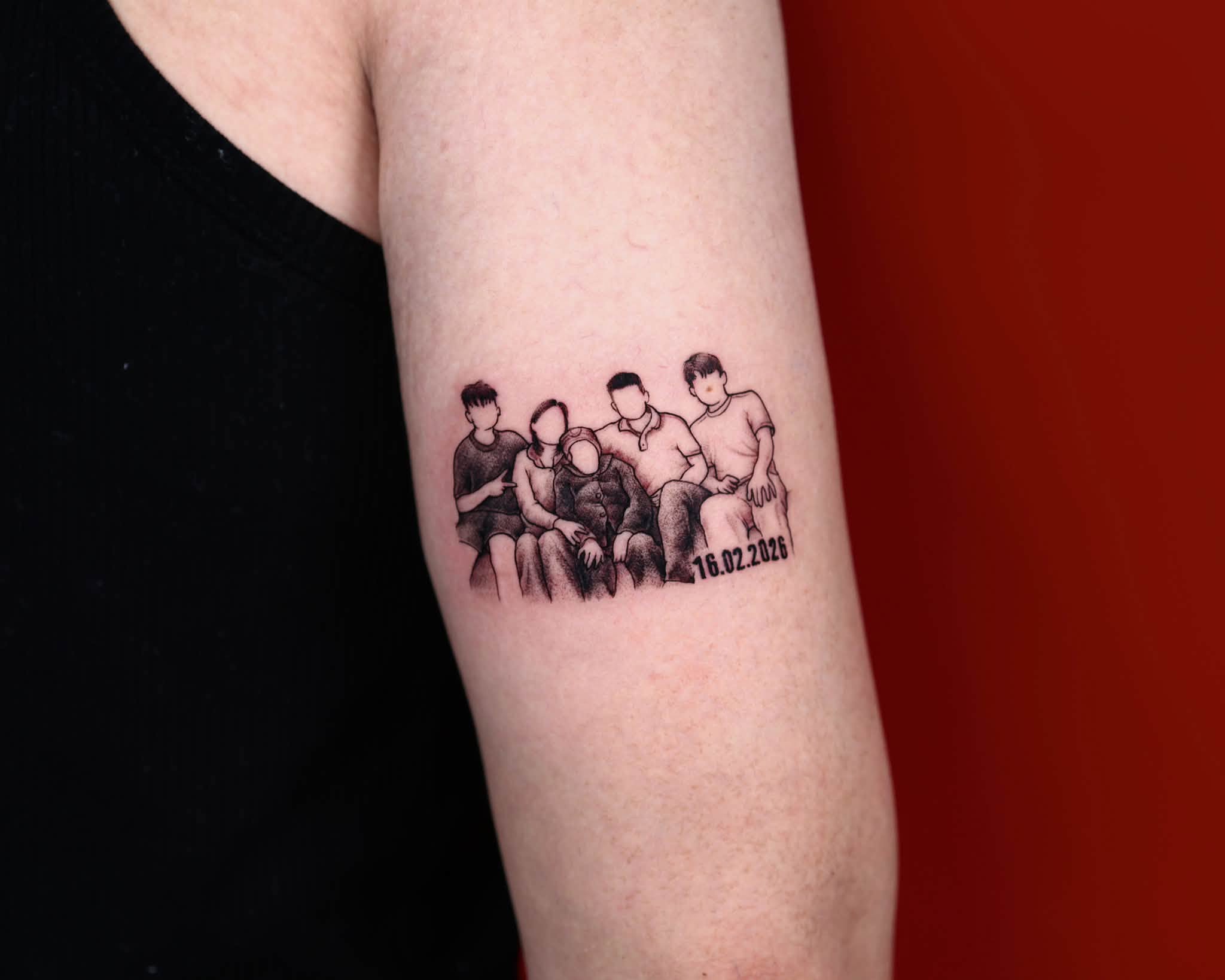
Micro group portrait · Thiên
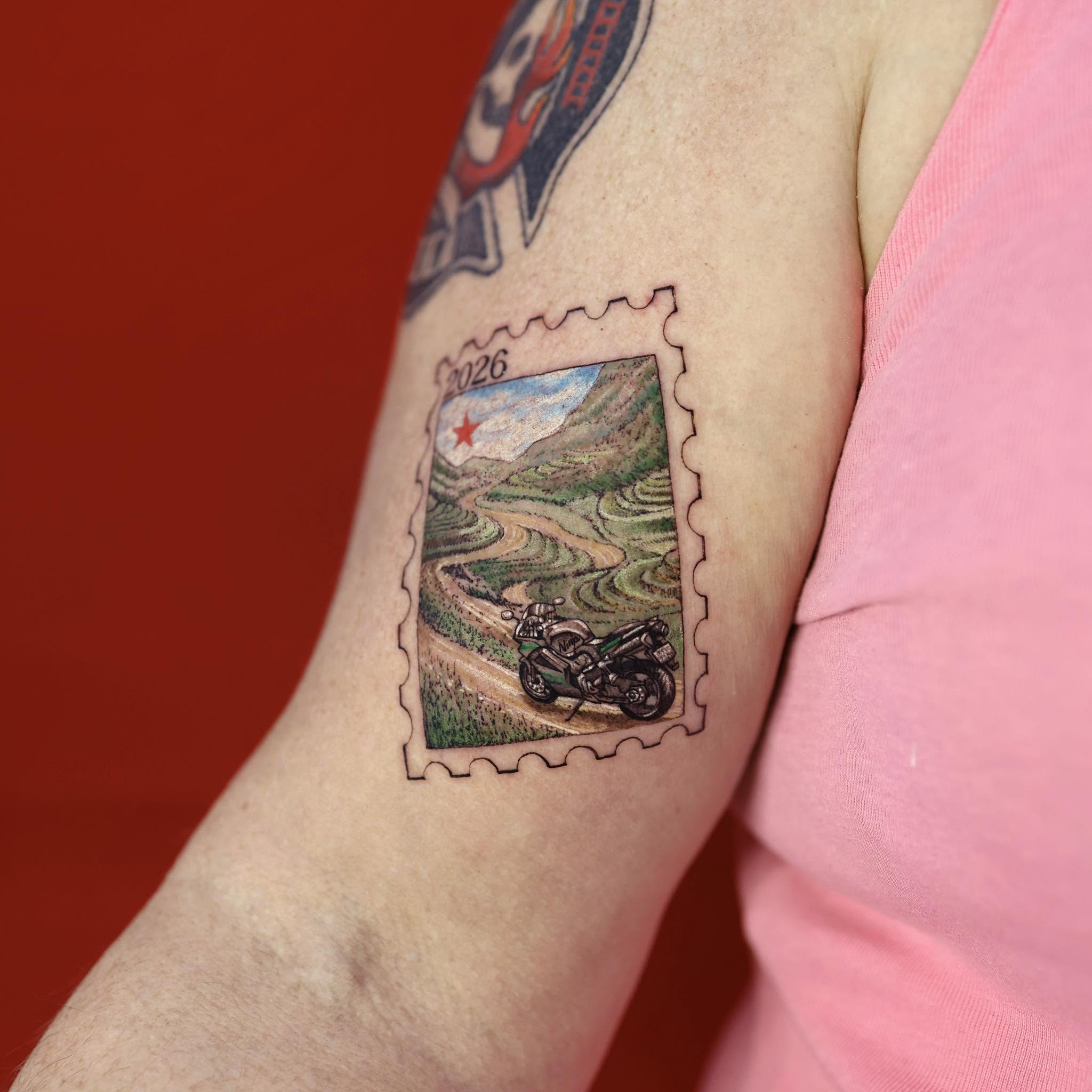
Postage stamp landscape · Hải Đinh
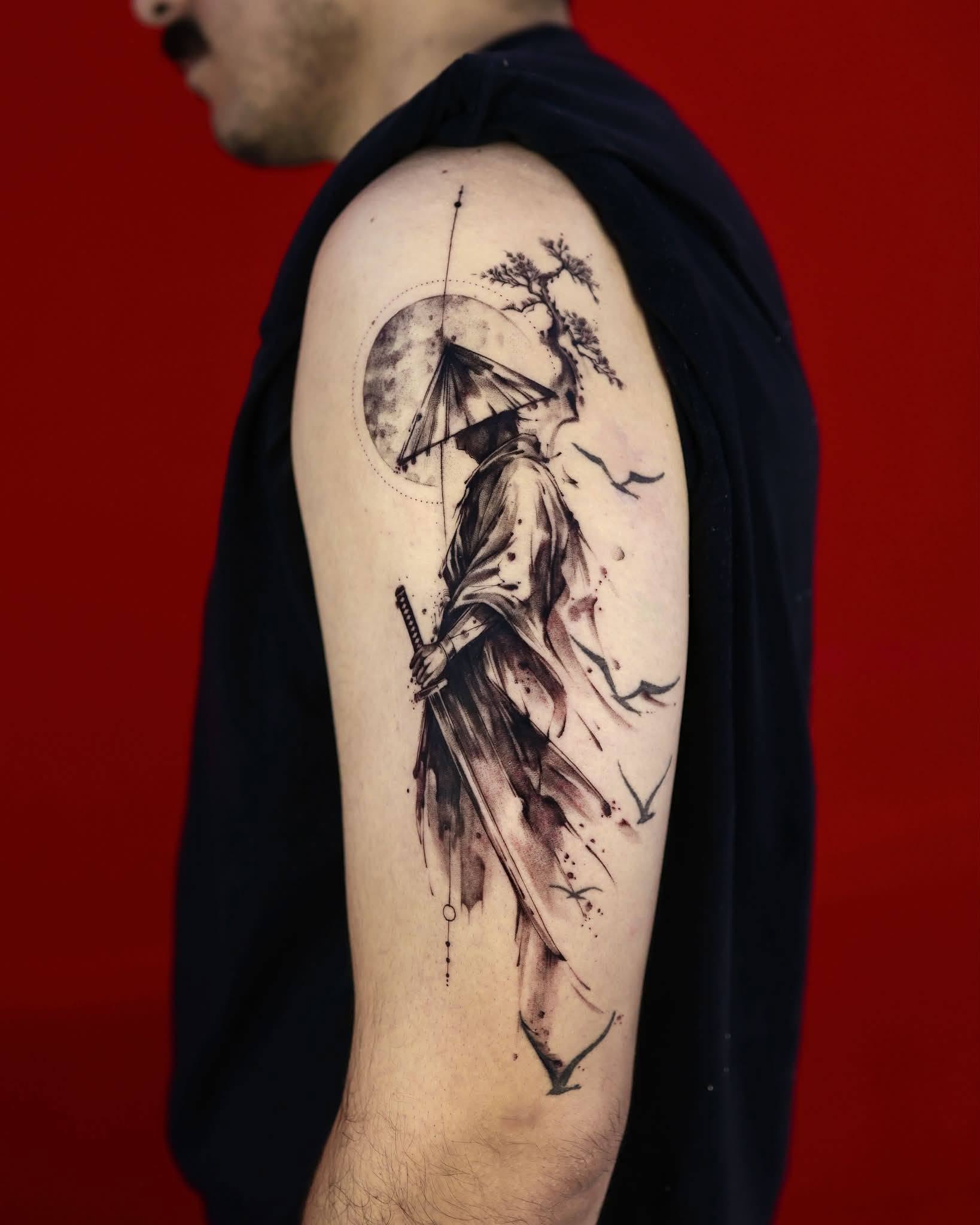
Black and grey ink-wash figure upper arm · Nerdy
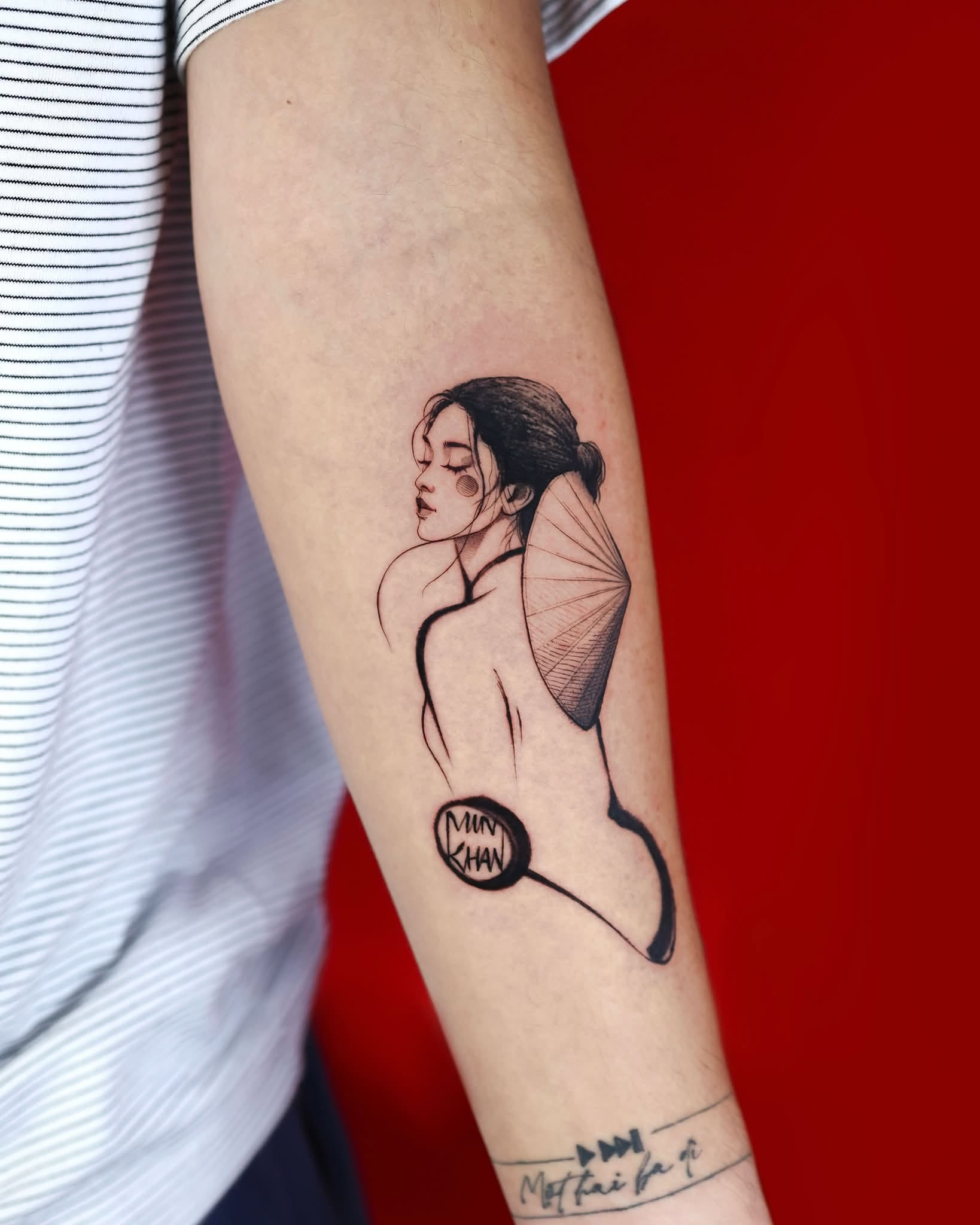
Woman in line · single line · Minh Khang
One technique, every style
The faces of fine line
Fine line is a way of drawing, not a subject. These are the directions our clients ask for most.
Botanical and floral
Wildflowers, peonies, cherry branches and leaves, drawn the way a botanist sketches. The most popular fine line subject of all.
Script and lettering
Names, dates, a line of poetry. Fine line lettering reads like handwriting rather than a sign, and can be as small as a ring.
Micro-realism
Portraits, pets and places shrunk to the size of a matchbox, with the detail of a photograph. The hardest and most technical branch.
Ornamental
Mandalas, moths, spine pieces and jewellery-like patterns built from dots and hairline symmetry.
Asian ink-wash
Brush-painting landscapes, cranes and figures in soft black and grey wash, a style our artists bring from Vietnamese and Chinese painting.
Illustrative and blueprint
Engraving-style animals, machines drawn like technical plans, travel stamps and postcards: pieces that look printed on the skin.
Red line
Fine line in red ink instead of black: softer and more delicate, lovely on flowers, dragons and spine pieces.
Fine line black and grey
The original: smooth shading built up from many fine passes, the direct heir of East LA.
Minimal and symbols
A single line, a small star, a wave, a date. Simple, but nothing in tattooing is harder to draw perfectly straight.
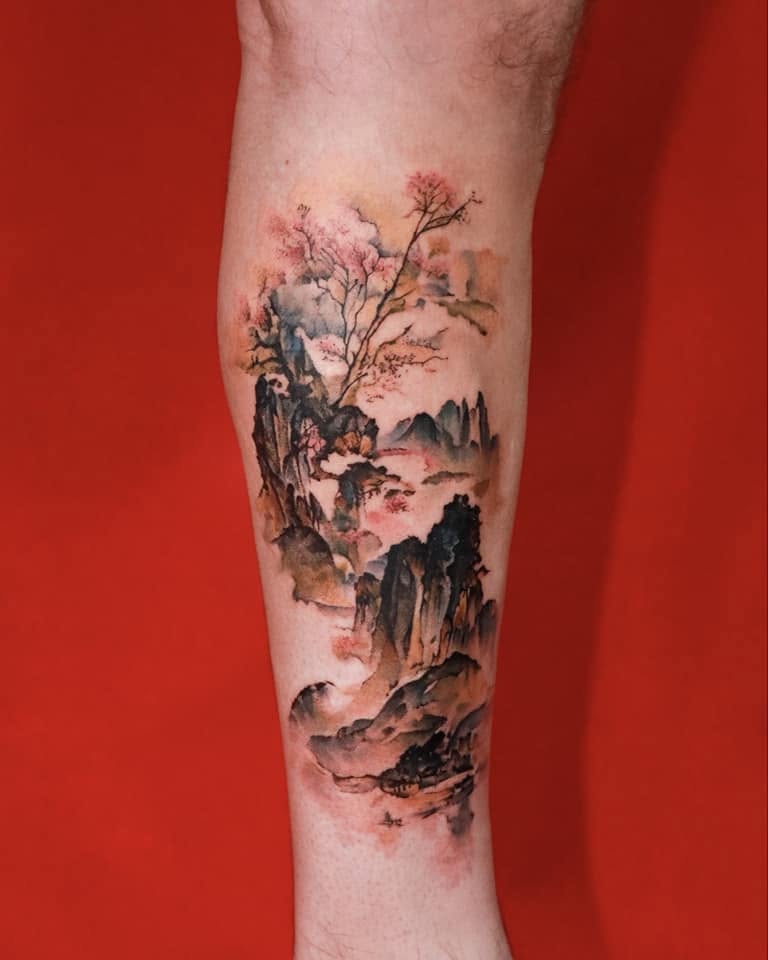
Color Asian landscape leg · Nerdy
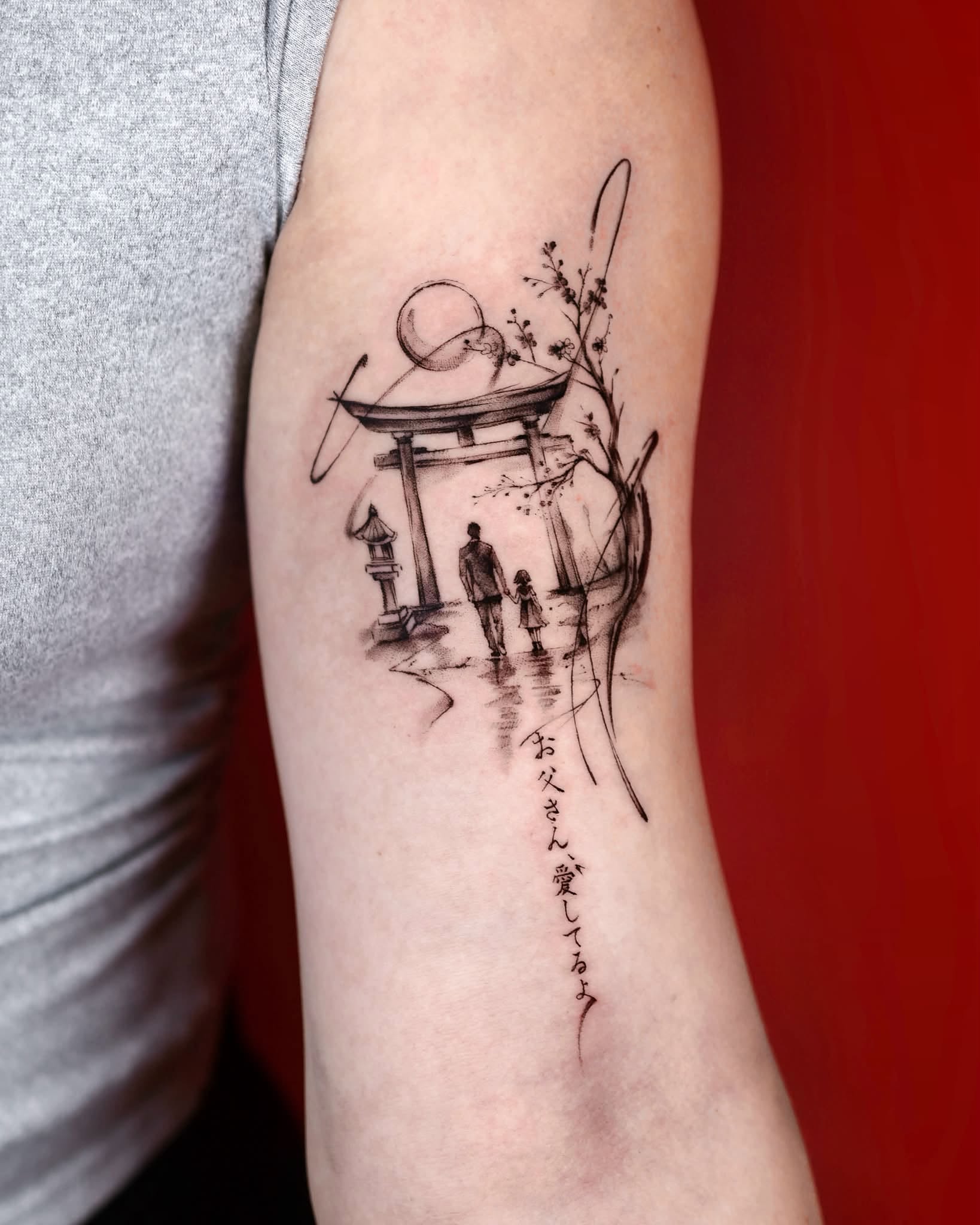
Fine line torii gate arm · Nerdy
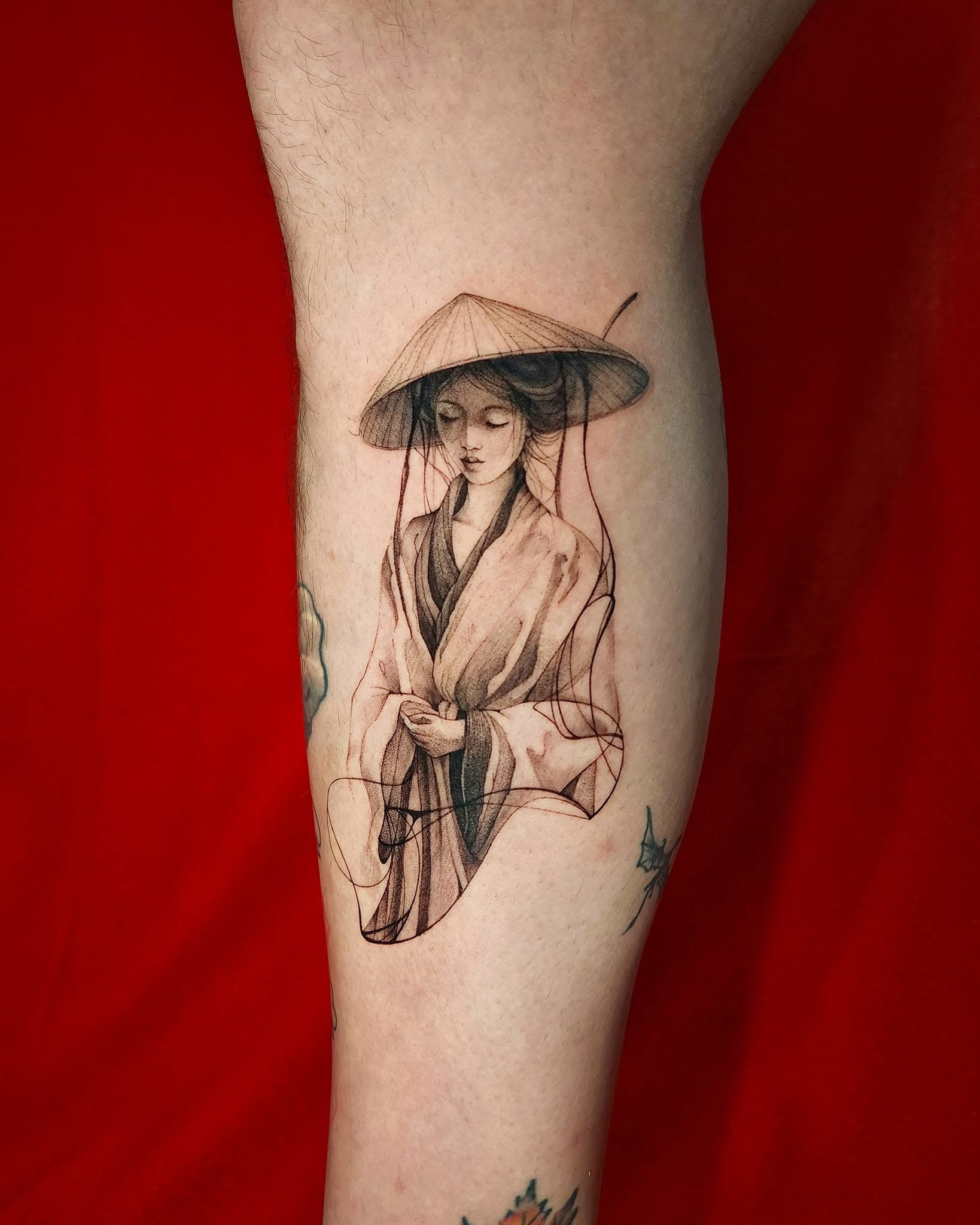
Fine line woman with conical hat · Nerdy
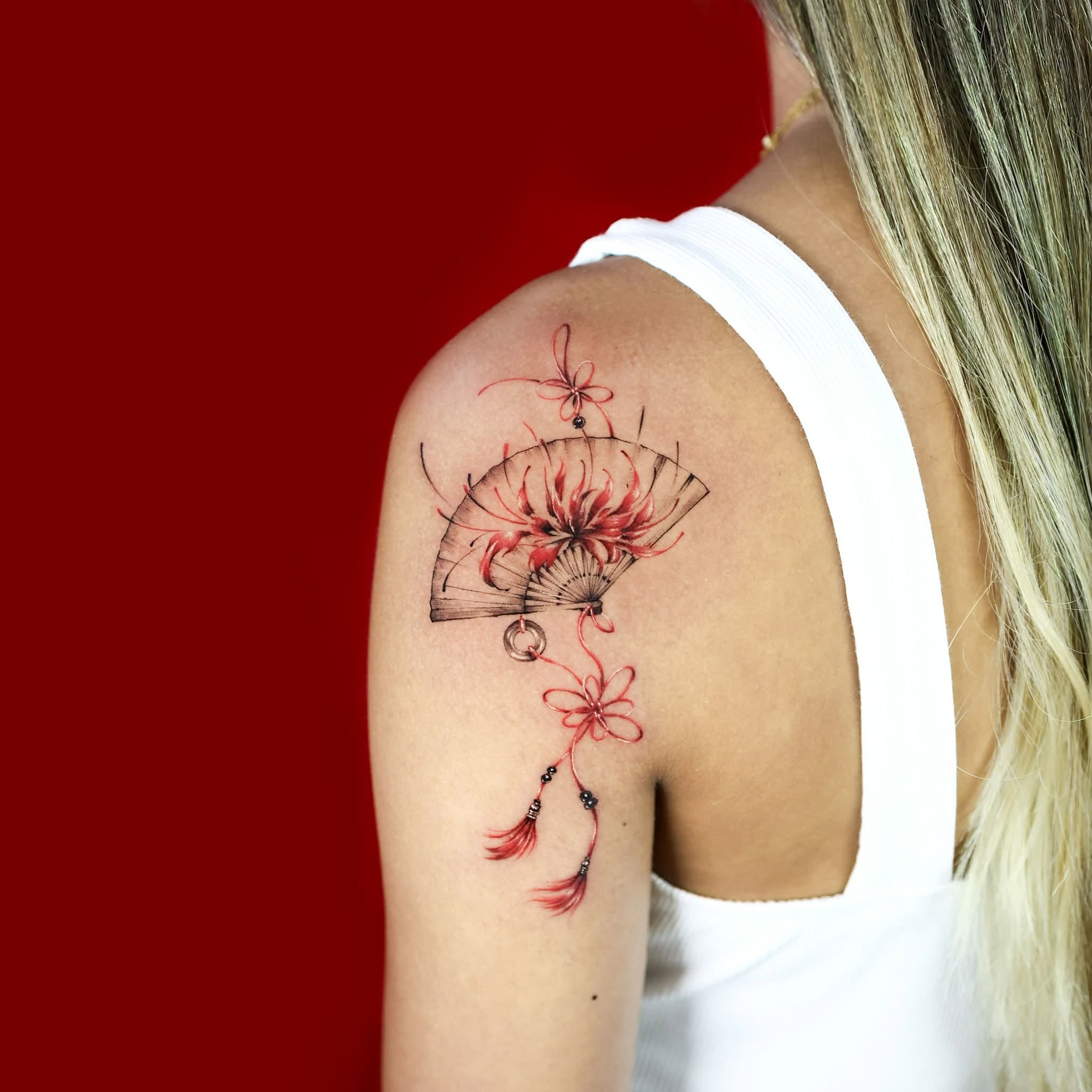
Fan and red blossoms · Hải Đinh
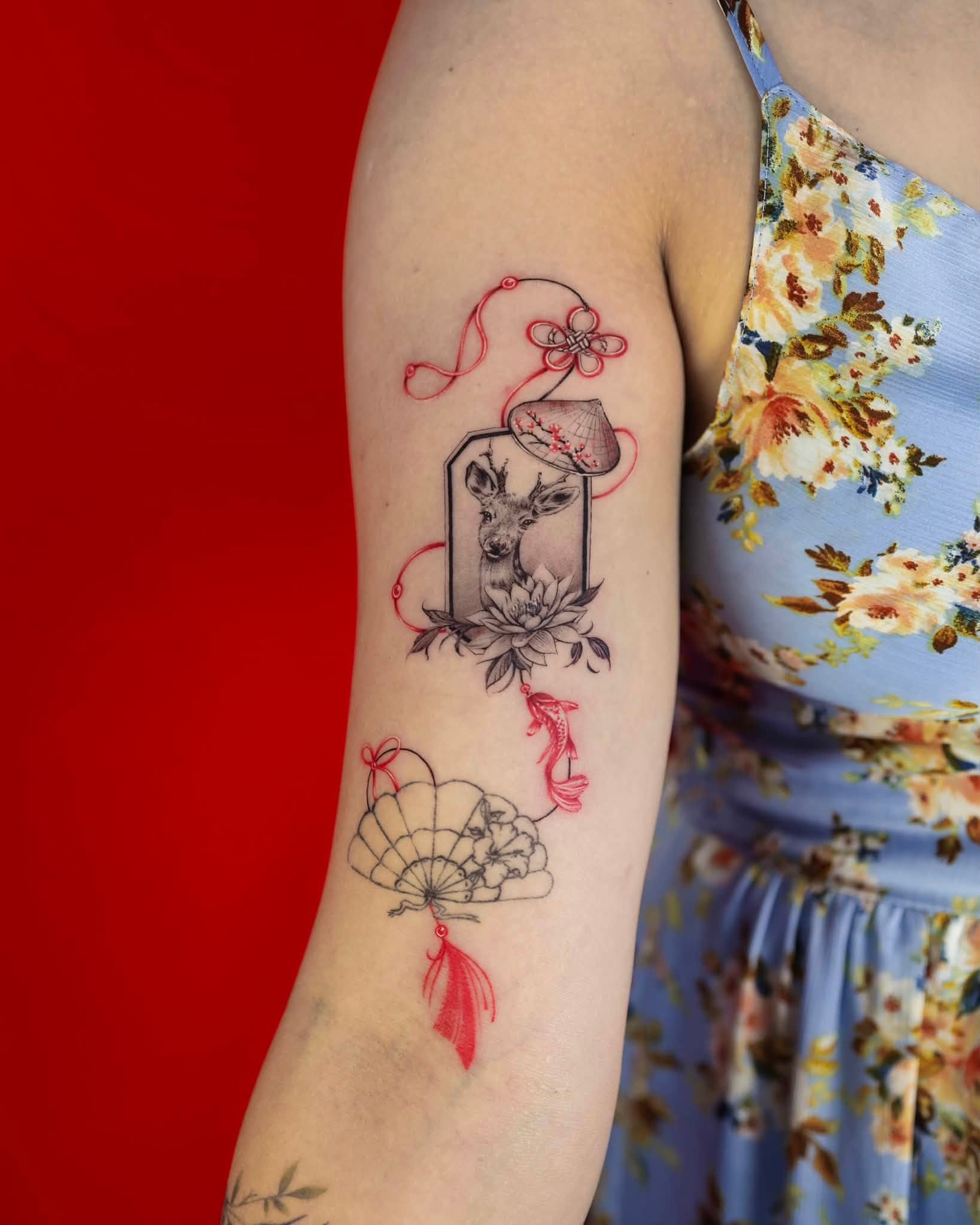
Red blossoms and lantern · Hải Đinh
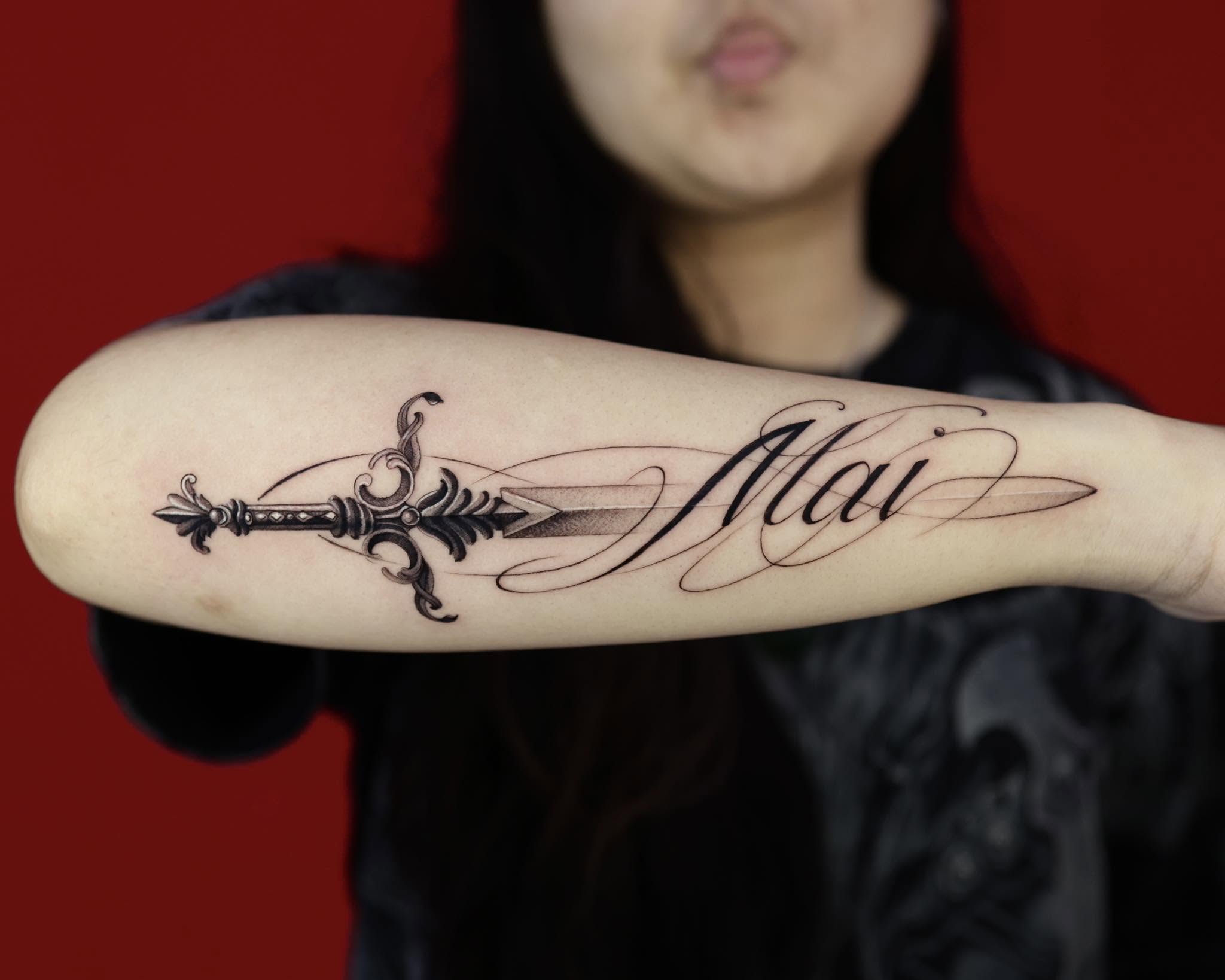
Dagger and script · Minh Khang
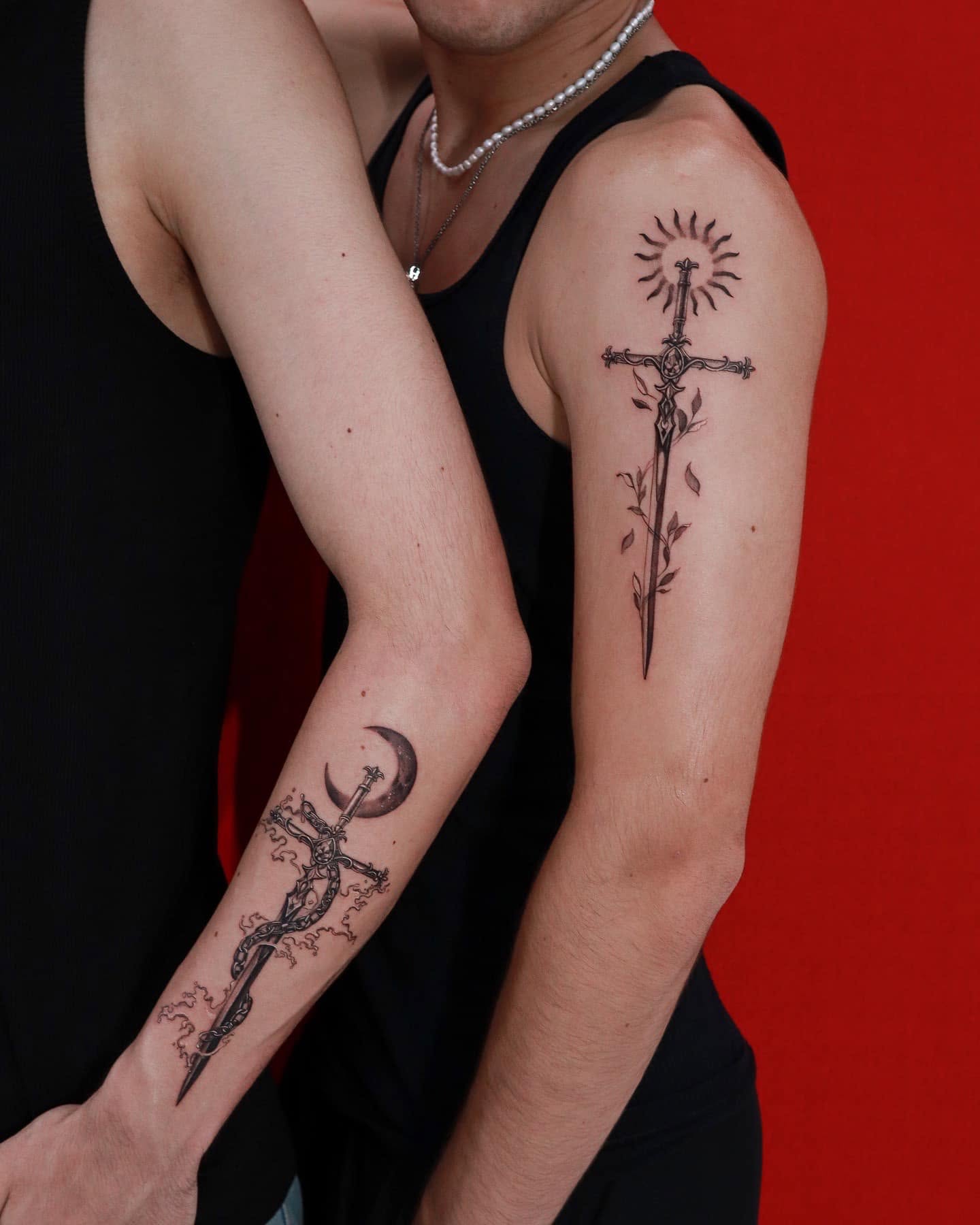
Sword and crescent moon · Minh Khang
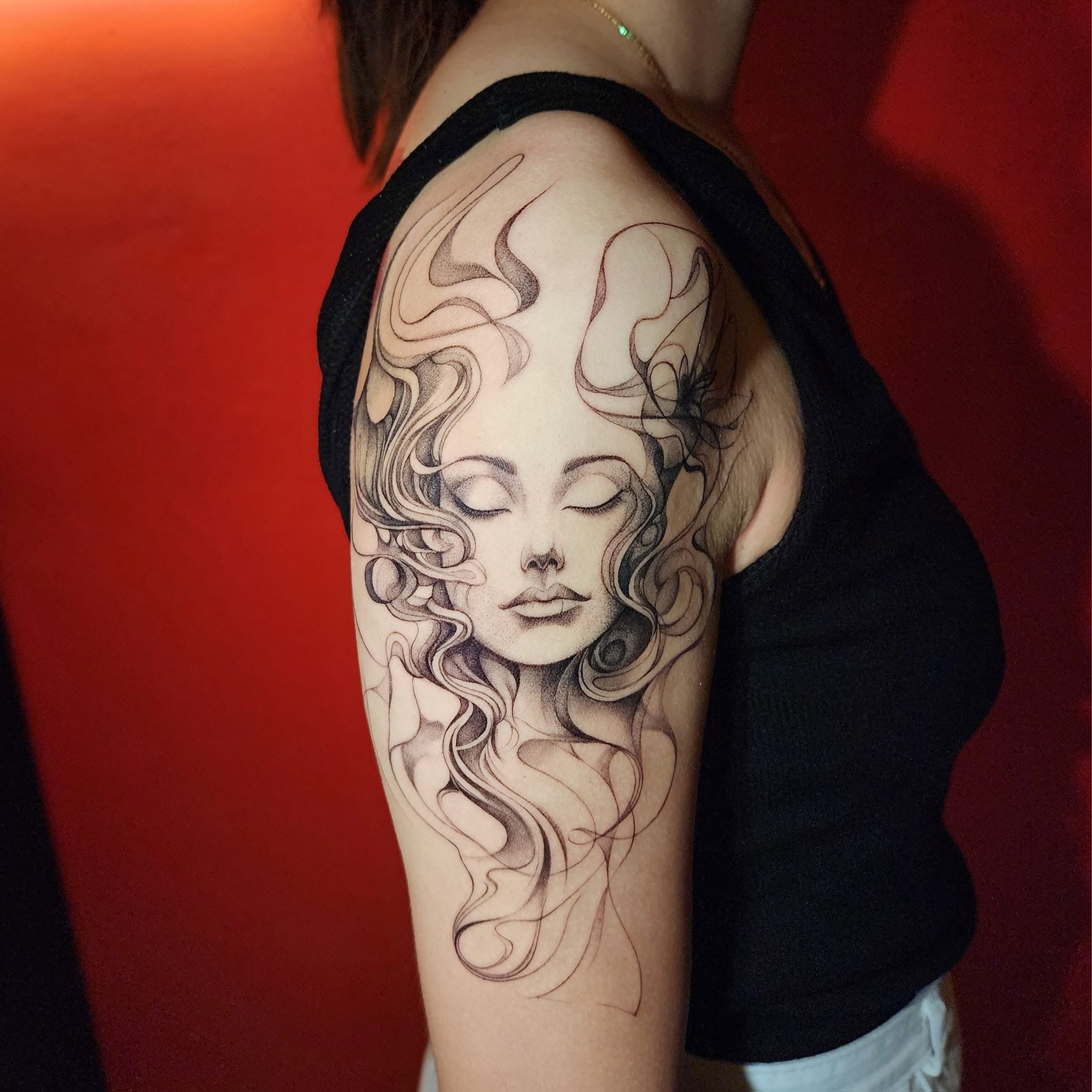
Fine line face portrait shoulder · Nerdy
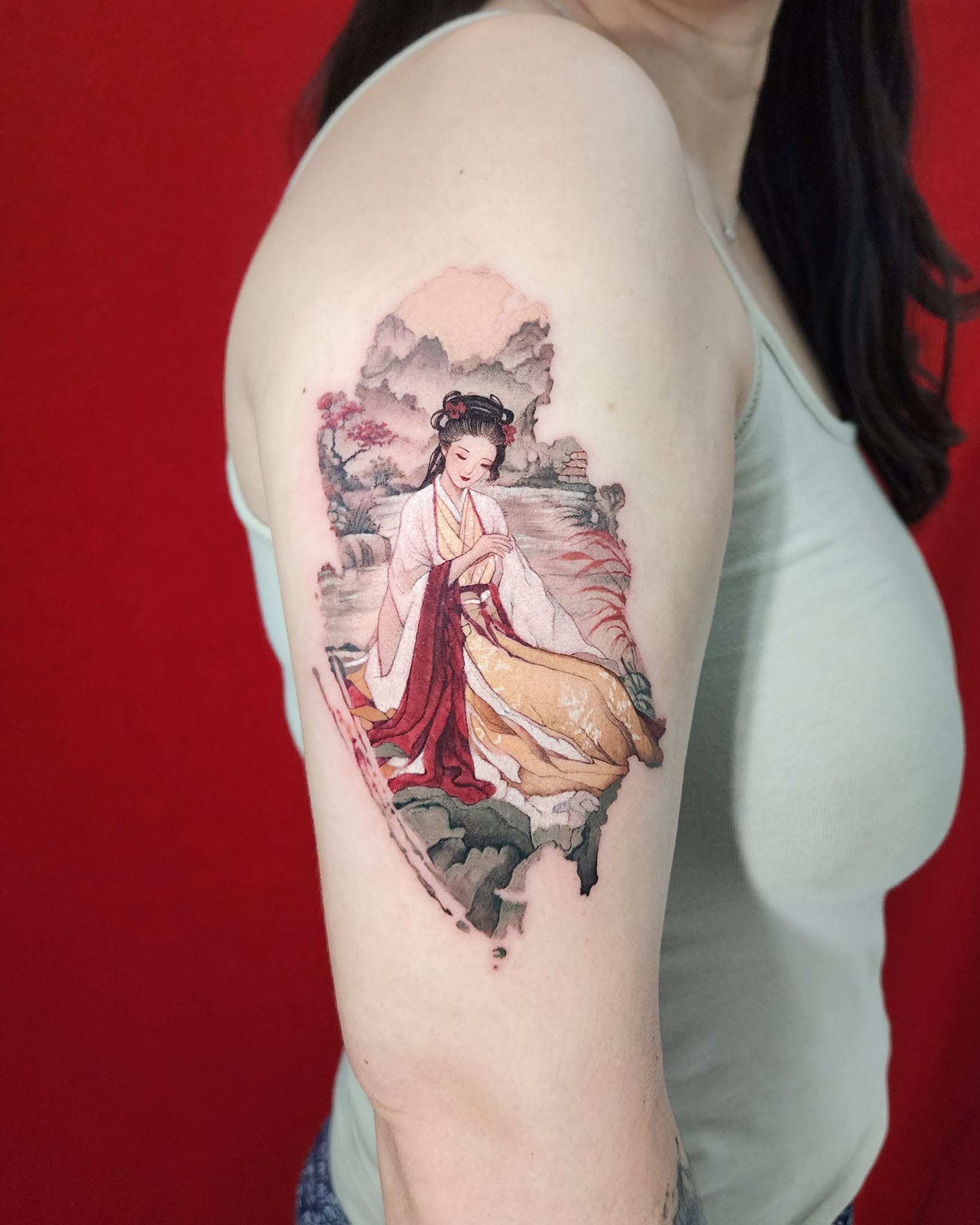
Illustrative geisha arm · Nerdy
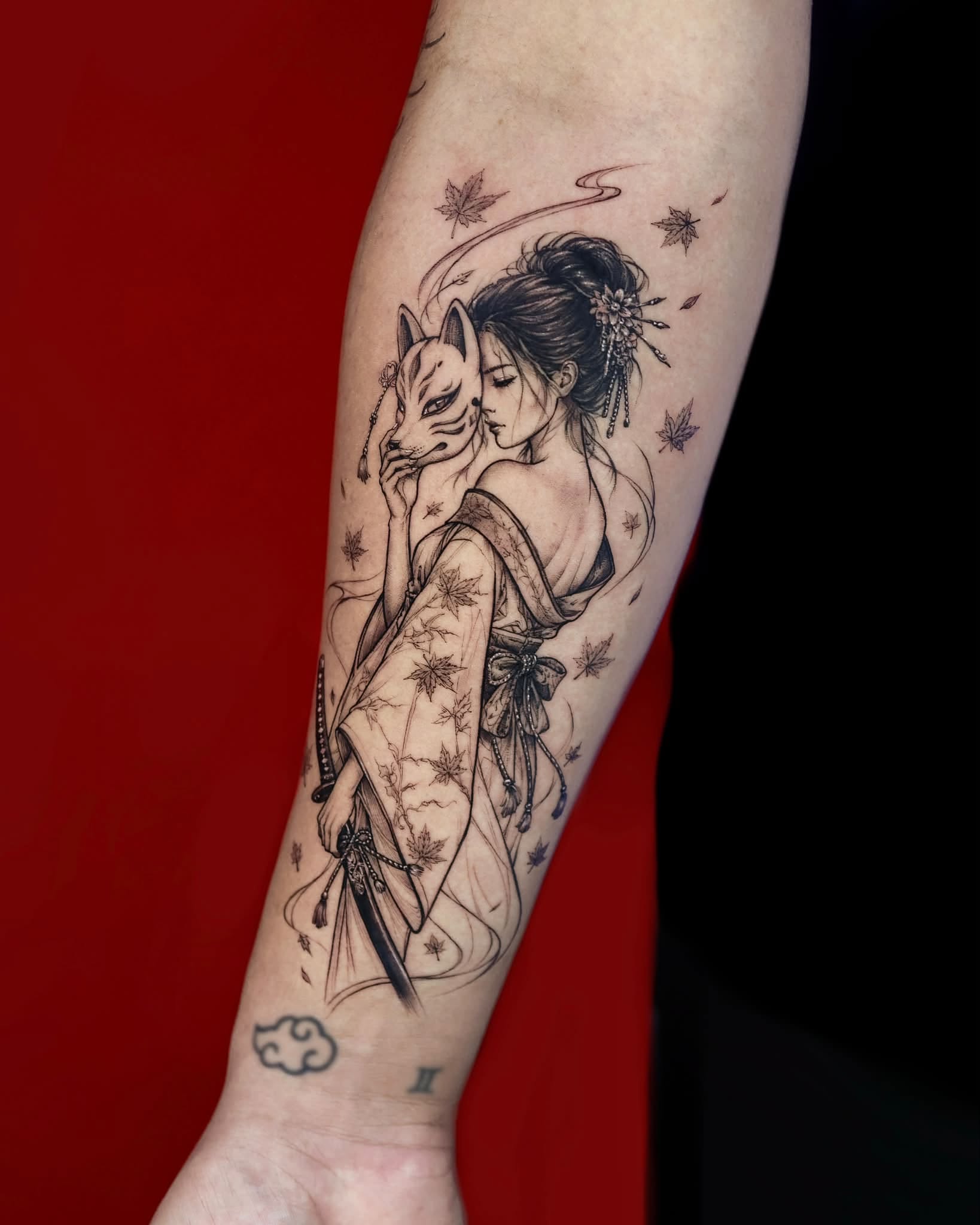
Geisha · fine line · Hải Đinh
Honest advice
How fine line ages, and how to make it last
Every tattoo softens over the years as the skin renews itself and the ink settles. A bold line has room to spare; a fine line does not. That is not a reason to avoid fine line, it is a reason to plan it well. Here is what we tell every client before we start.
Give it room
Lines drawn too close together will slowly merge. A design a little larger than you first imagined will look crisp for many more years.
Choose the spot
Forearms, upper arms, calves, thighs, shoulder blades and the back hold fine line beautifully. Fingers, hands, feet and the sides of the feet rub and renew fast and fade quickly.
Protect it from the sun
UV light is what fades and blurs tattoos most. Under the Vietnamese sun, cover your new tattoo while it heals, then use a high-factor sunscreen on it for life.
Plan a touch-up
A fine line sometimes heals a little lighter in places. A touch-up once it has fully healed is part of the process, not a sign that something went wrong.
And choose the artist, not the price. Fine line is the style where experience shows most, years later.
In our studio
Fine line at Dragon City Ink
Fine line is one of the styles we are asked for most, and at least four of our artists specialise in it. Each one has their own handwriting.
Margarita (Nerdy) draws custom illustrative pieces: floral sleeves, cranes, phoenixes, ornamental chest pieces and blueprint designs, all drawn by hand for you. Hải Đinh is our master of detail: micro-realism portraits, landscapes in a stamp, snakes and red-ink blossoms, with lines so fine they look printed.
Minh Khang is the one for lettering, script and ornamental work, quiet and exact. Thiên works in microrealism and small single-needle pieces: a daisy, a family portrait the size of a stamp.
Not sure who fits your idea? Send us a reference and we will tell you honestly which of them is the right hand for it.
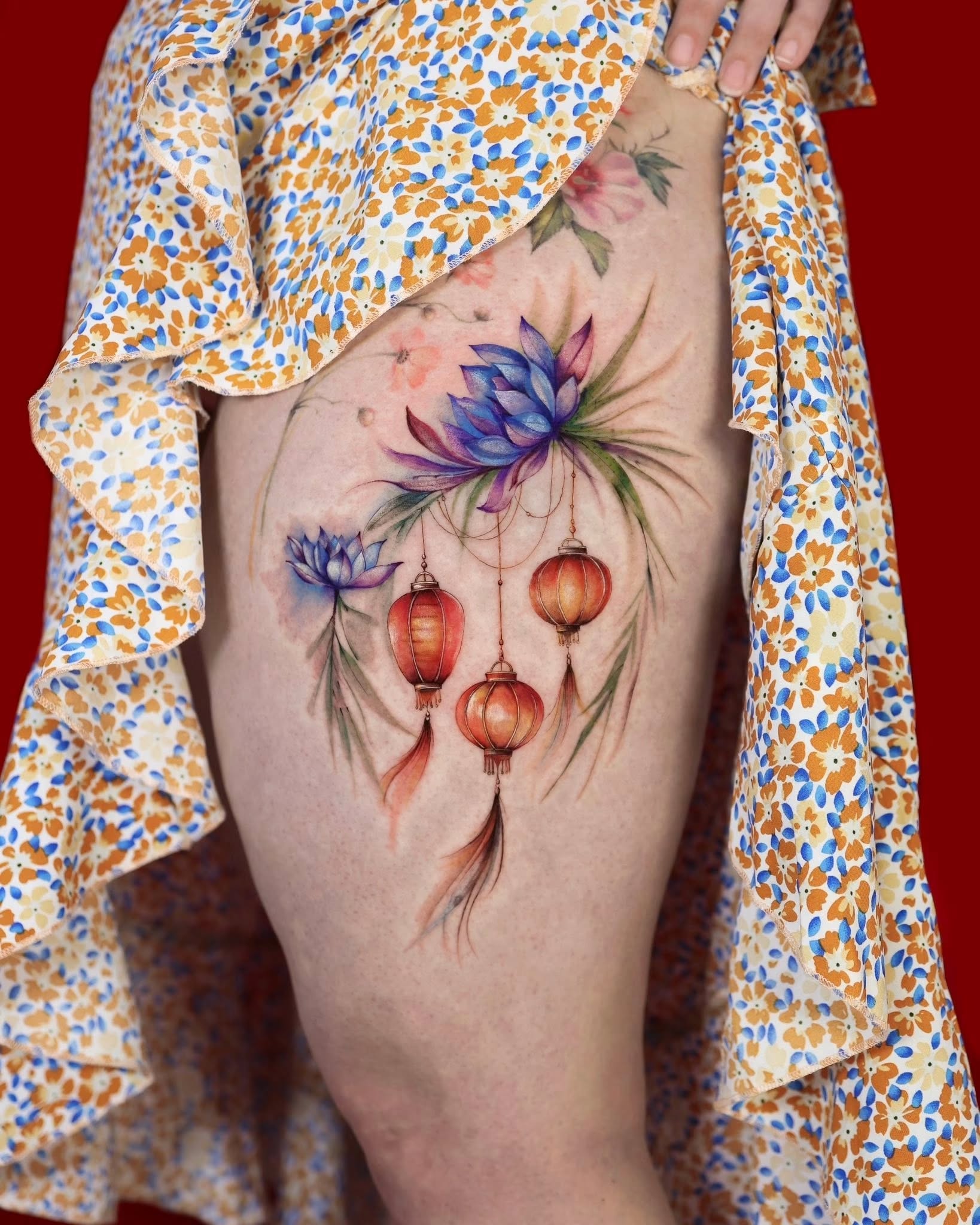
Color lotus and lanterns thigh · Nerdy
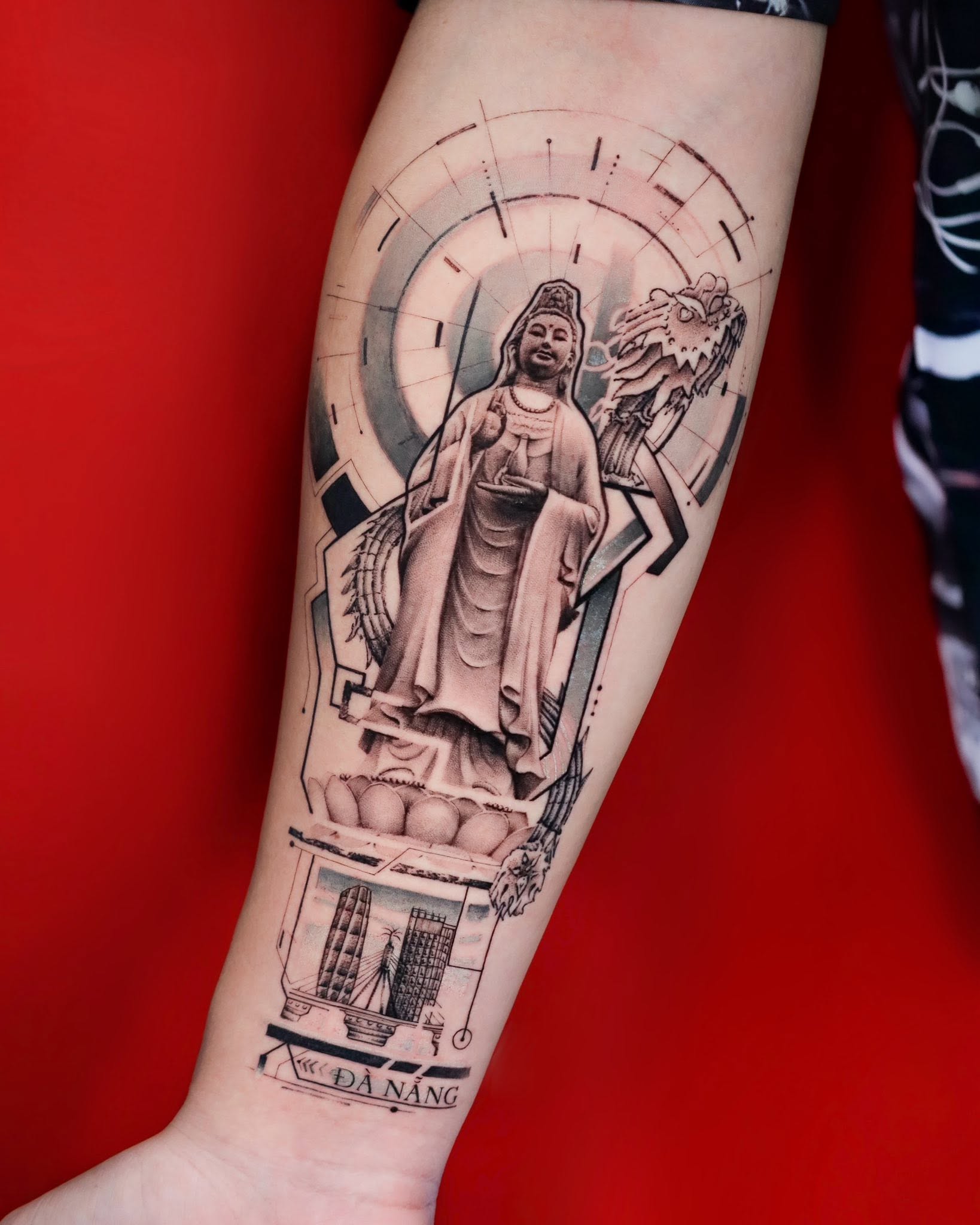
Quan Âm statue · Hải Đinh
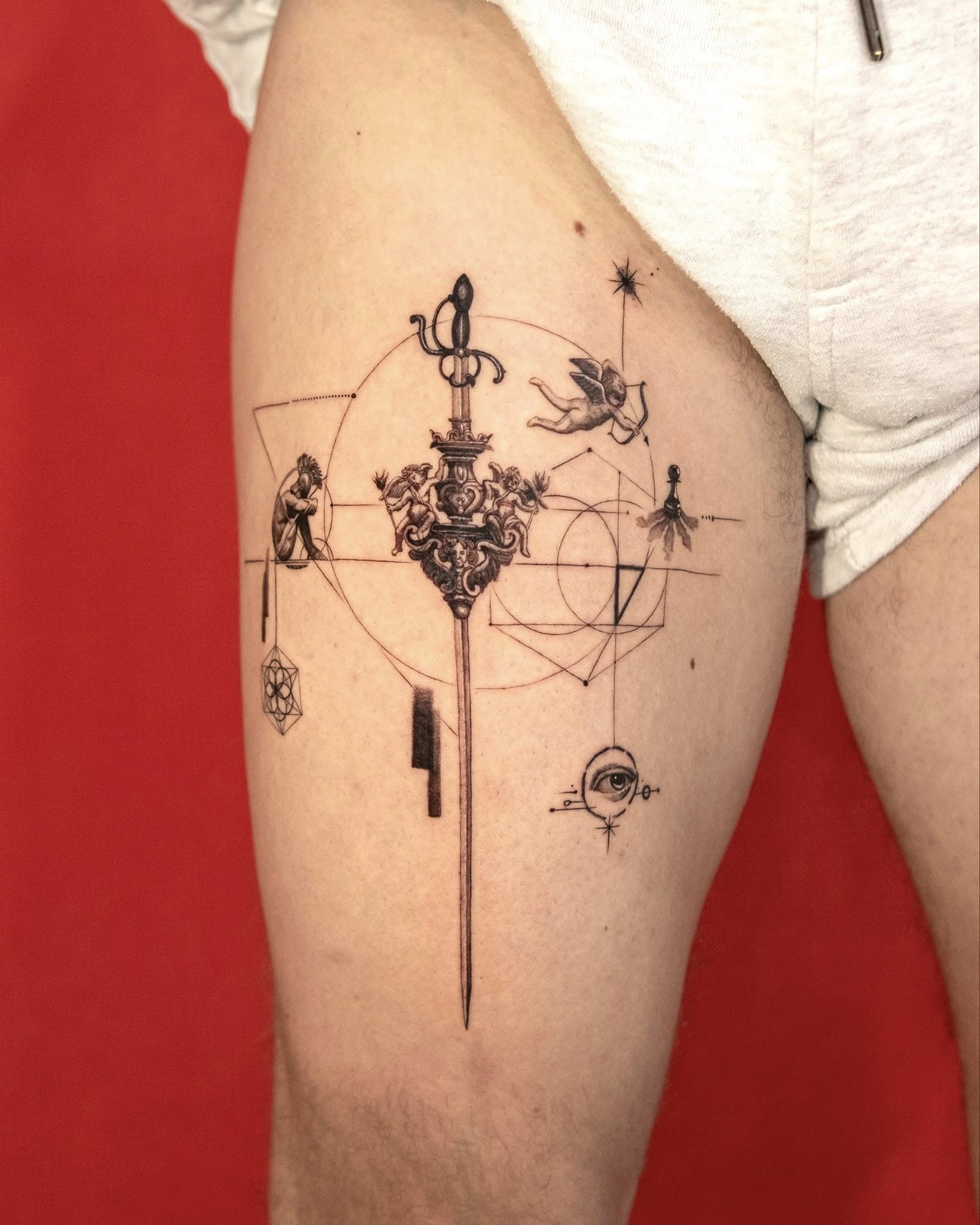
Compass ornament · Minh Khang
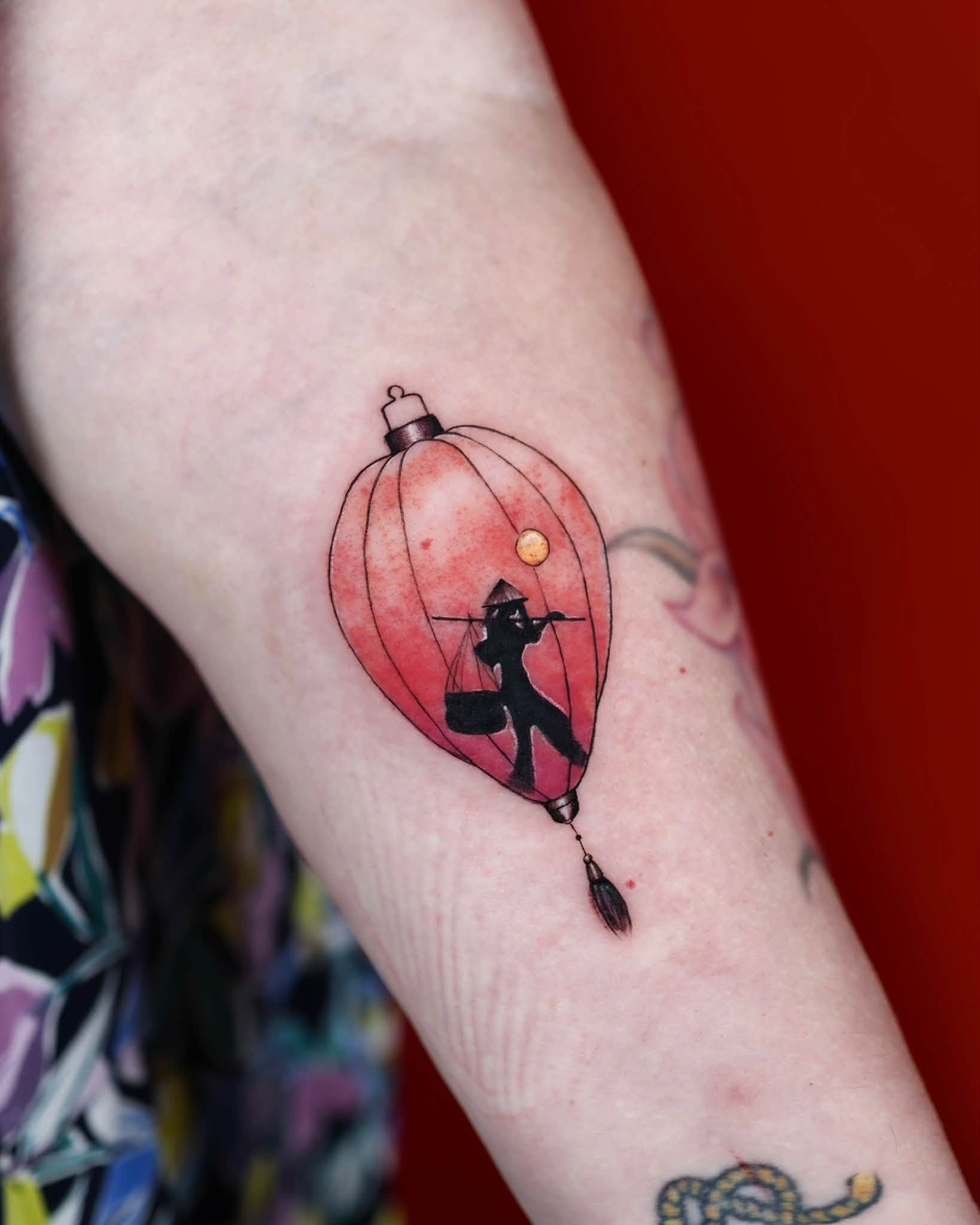
Red lantern · Thiên
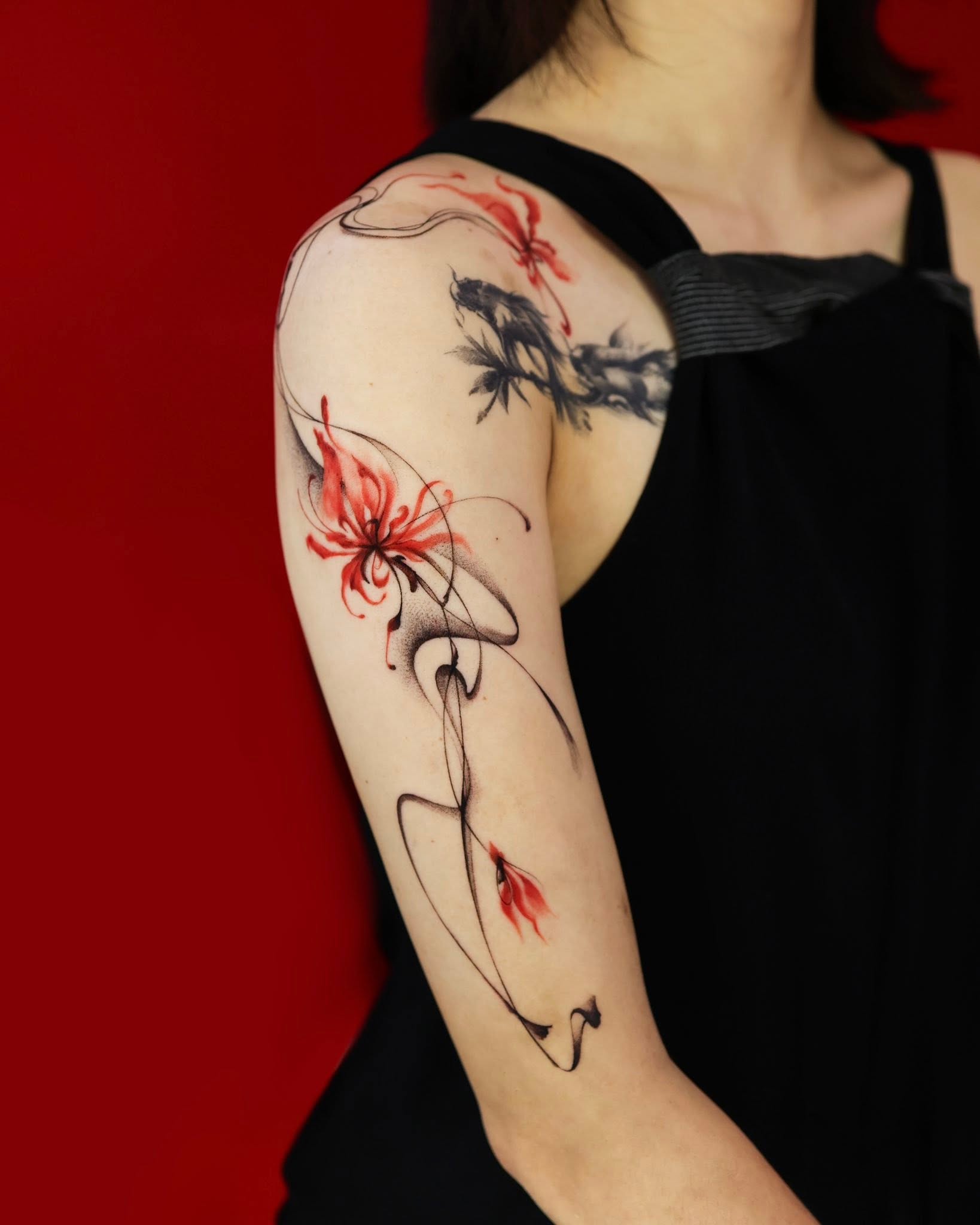
Red flowers and branch arm · Nerdy