Style guide · Traditional tattoos
Traditional tattoos in Da Nang
Bold lines, a short palette and images refined by generations of tattooers. Traditional tattooing is not one style but a family of them: the irezumi of old Edo, the sailor flash of Honolulu, Vietnamese dragons, the hand-tapped flowers of Borneo. This is our guide to the whole family, with the traditional pieces tattooed at our studio in An Thượng.
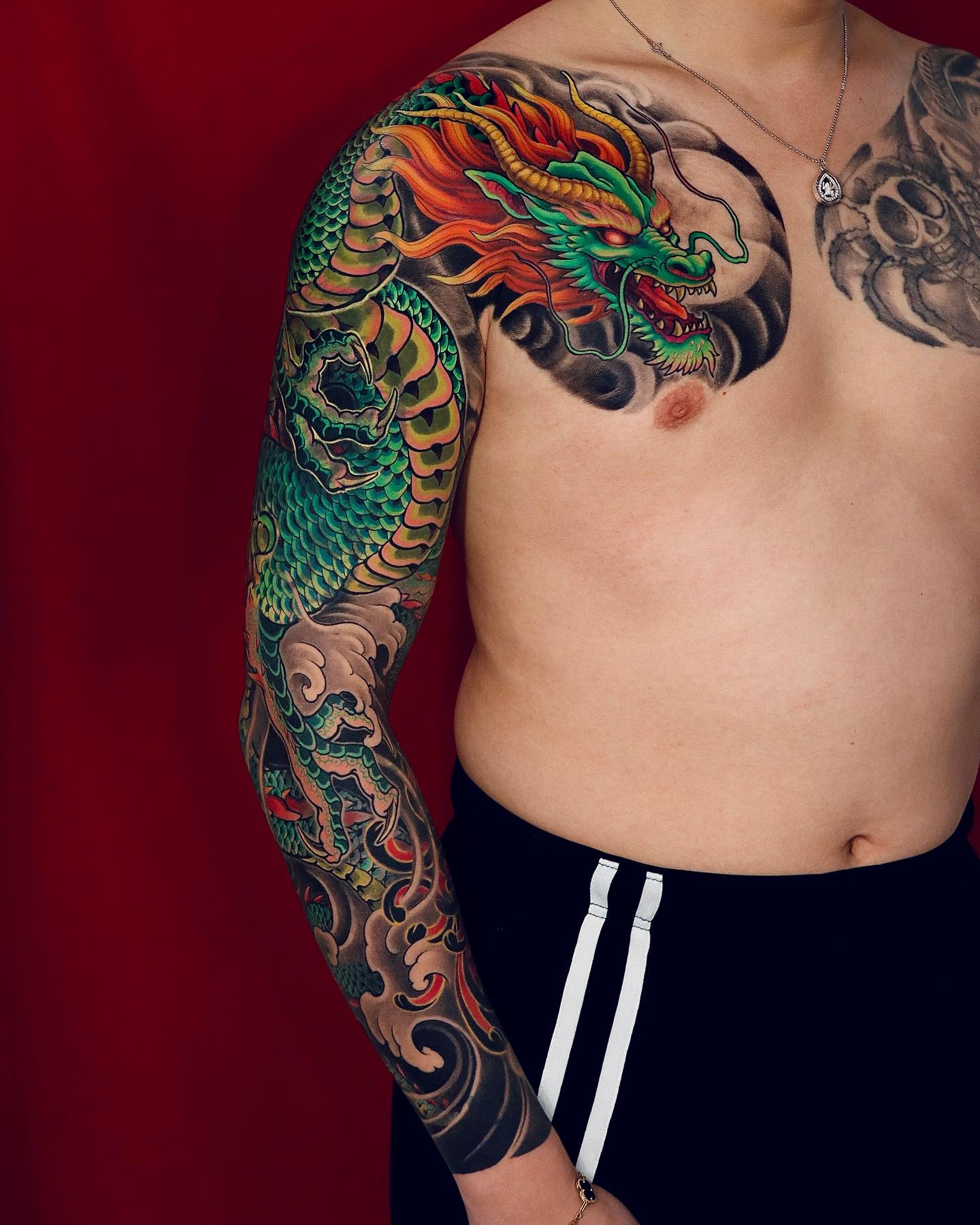
Japanese dragon · colour sleeve and chest
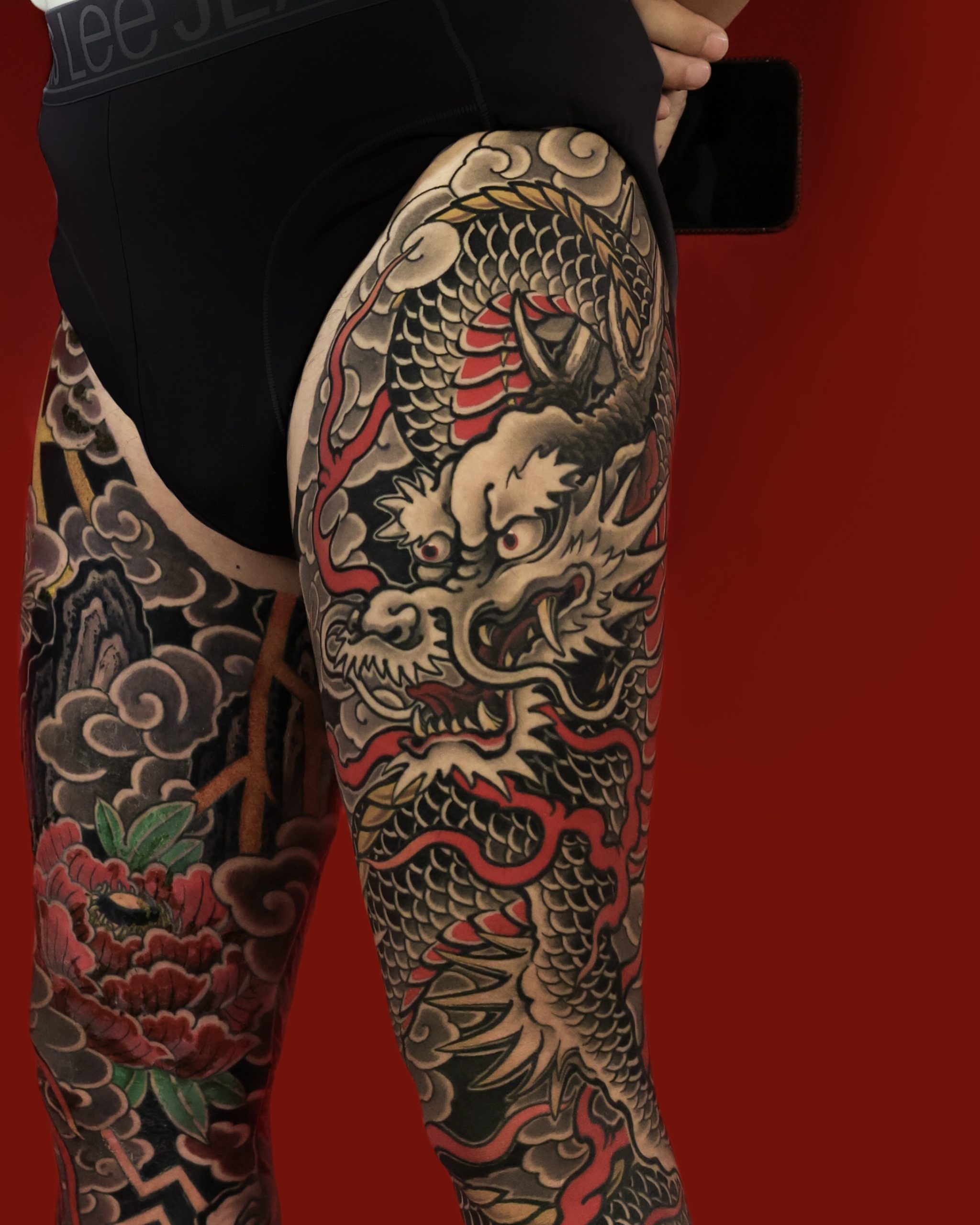
Japanese dragon · full colour sleeve
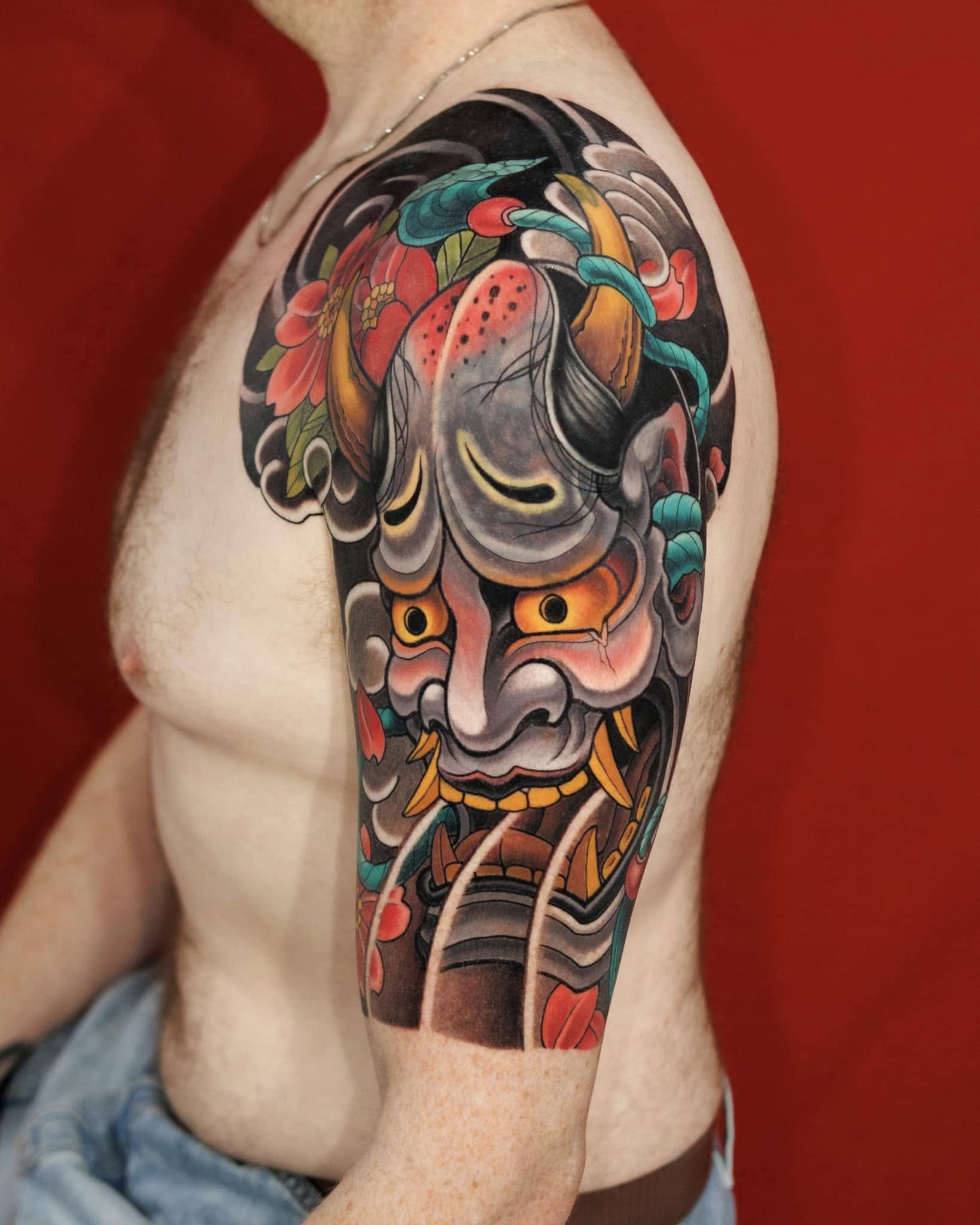
Hannya mask · colour shoulder piece

Vietnamese tiger · colour chest piece
Vietnamese tradional tiger tattoo made at Dragon City Ink Da Nang.

Dragon and chrysanthemums · cover-up sleeve
A big cover-up full sleeve tattoo with dragon and chrysanthemum made at Dragon City Ink Da Nang.
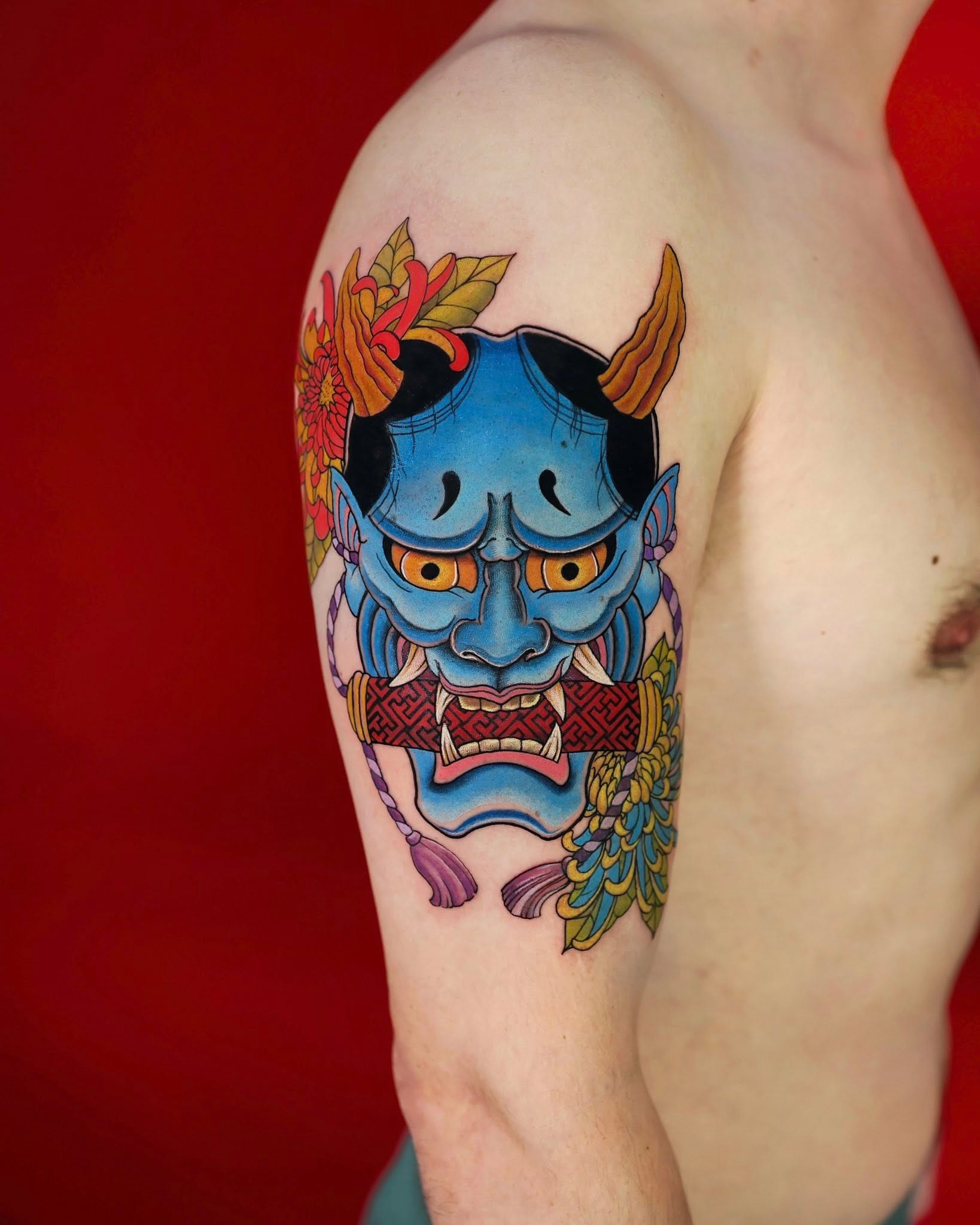
Blue hannya · Japanese traditional
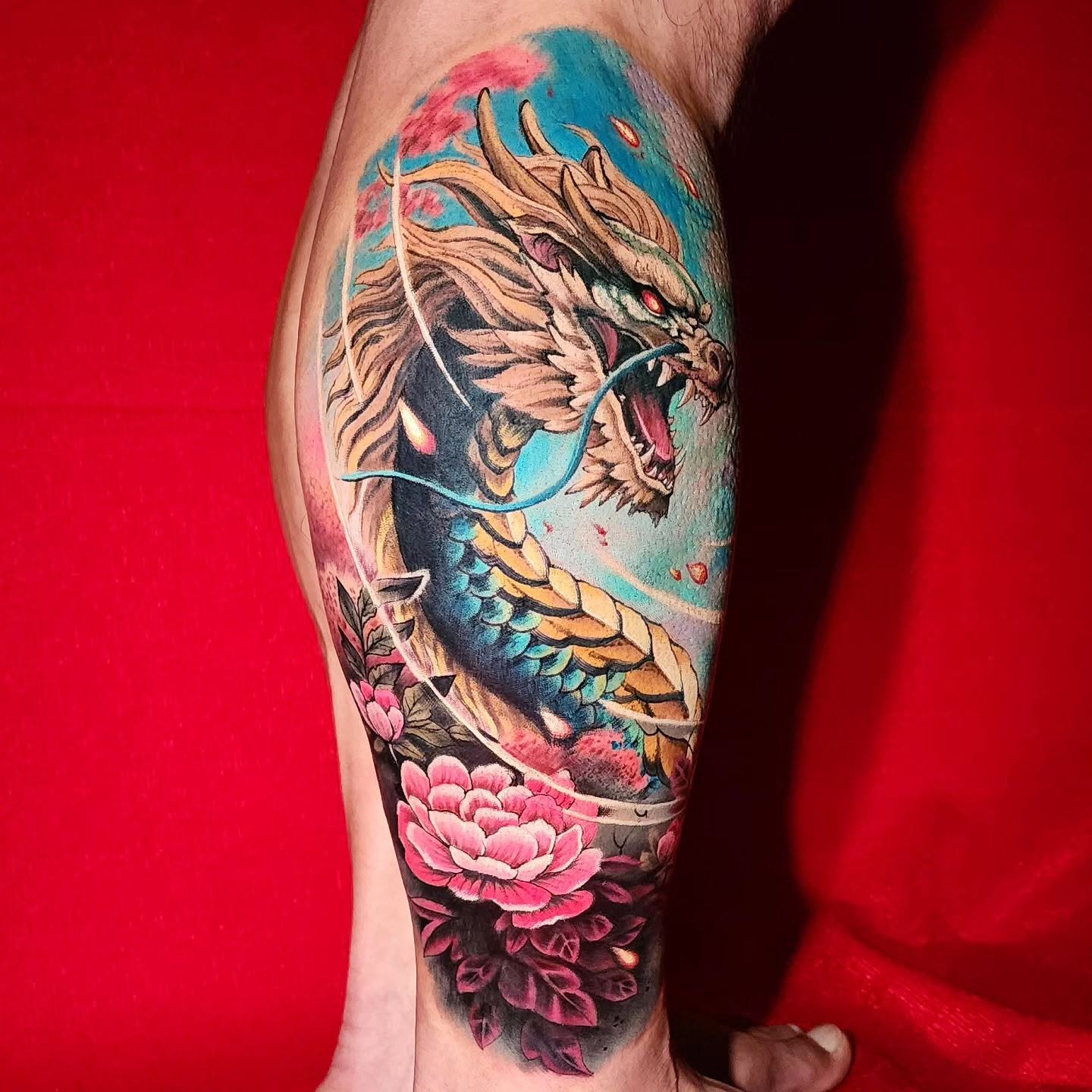
Dragon and peonies · calf
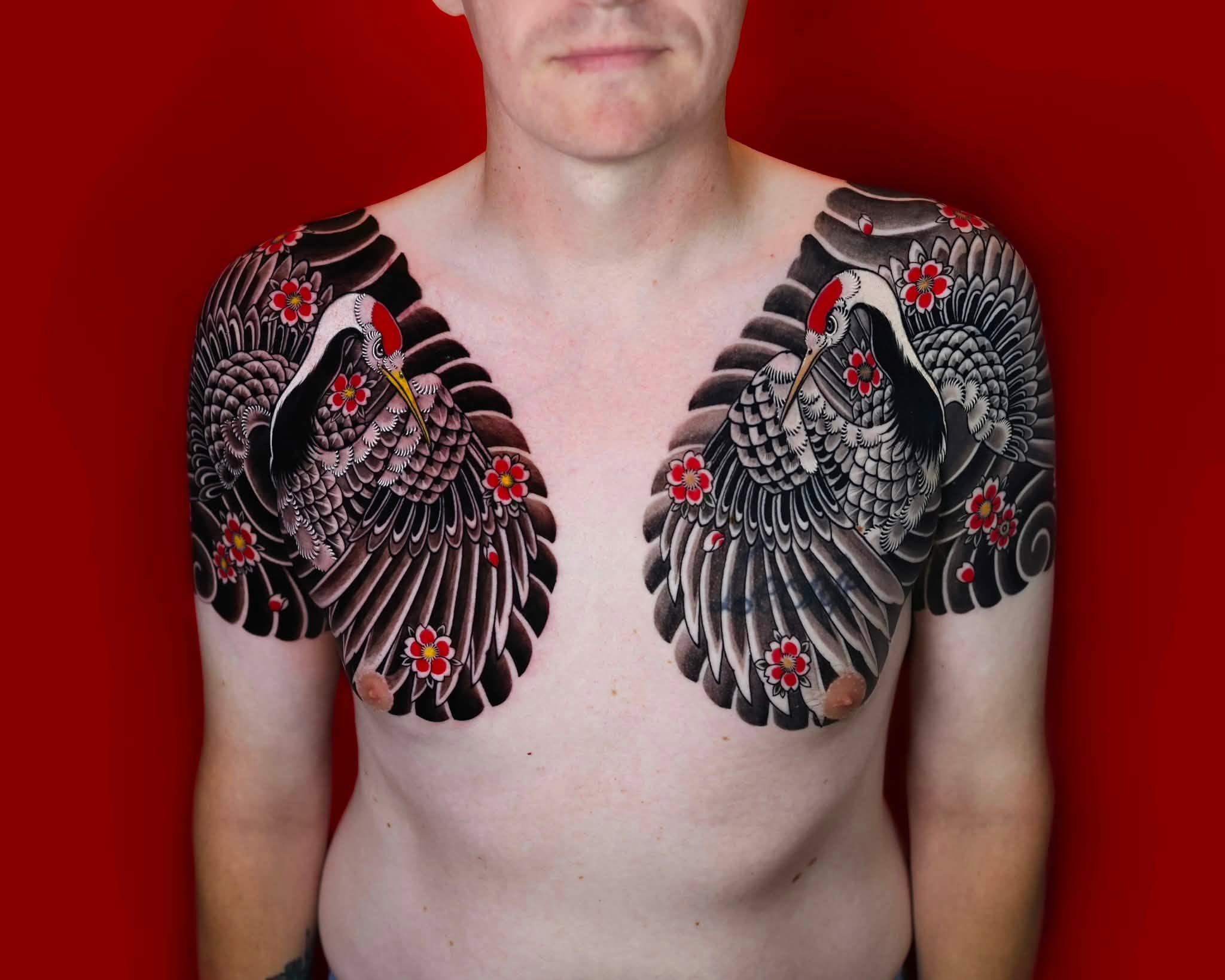
Japanese chest panels

Old school dragon
Oldschool dragon tattoo at Dragon City Ink Da Nang
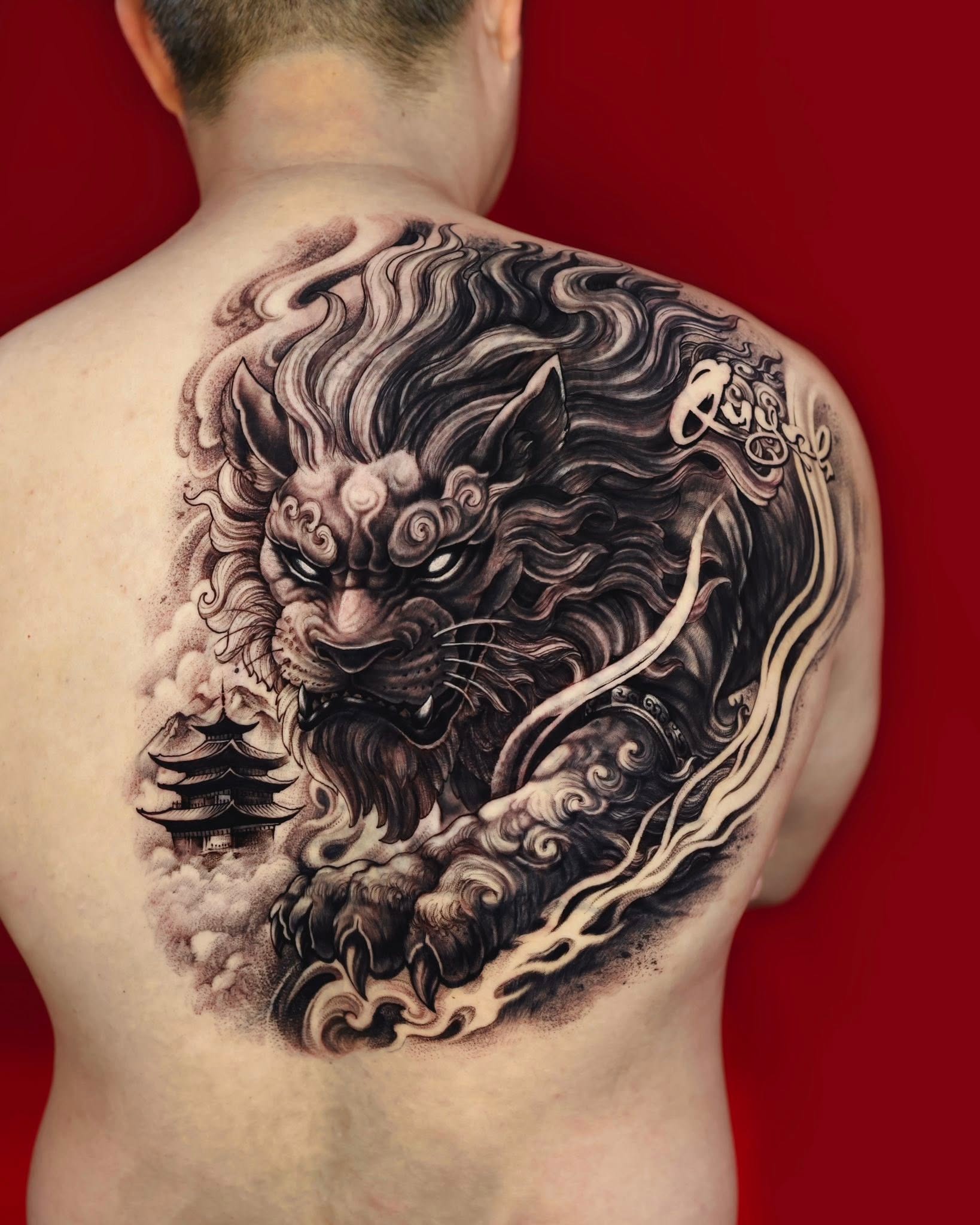
Foo dog · black and grey back piece
The idea
What makes a tattoo traditional
Every tattooing culture eventually settles on a visual language: a way of drawing a line, a handful of colours and a set of images that everyone recognises. When that language is handed down from master to apprentice for generations, and the designs are copied, refined and copied again, we call it traditional.
The traditions on this page grew up on opposite sides of the world, mostly without knowing about each other. Yet they ended up agreeing on a surprising number of things.
Lines you can read from across the room
A traditional outline is confident and heavy. It is drawn to be understood at a glance, and it is the reason traditional tattoos stay readable for decades.
A palette you can count on one hand
Black does the structural work. In the West, colour is laid in solid: red, yellow, green and blue. In Japan, the same few colours are graded smoothly into black.
Images everybody understands
A swallow, a koi, a tiger: each one carries a meaning that tattooers and collectors have shared for generations. You are not just wearing a picture, you are joining a conversation.
Drawn for the body
Traditional designs are made to sit on an arm, a back or a chest, not on paper. Japanese work goes further and plans a whole sleeve or back as one composition, held together by waves, wind and clouds.
Traditional does not mean old-fashioned. It means tested: these designs have survived because they look good on skin, and keep looking good.
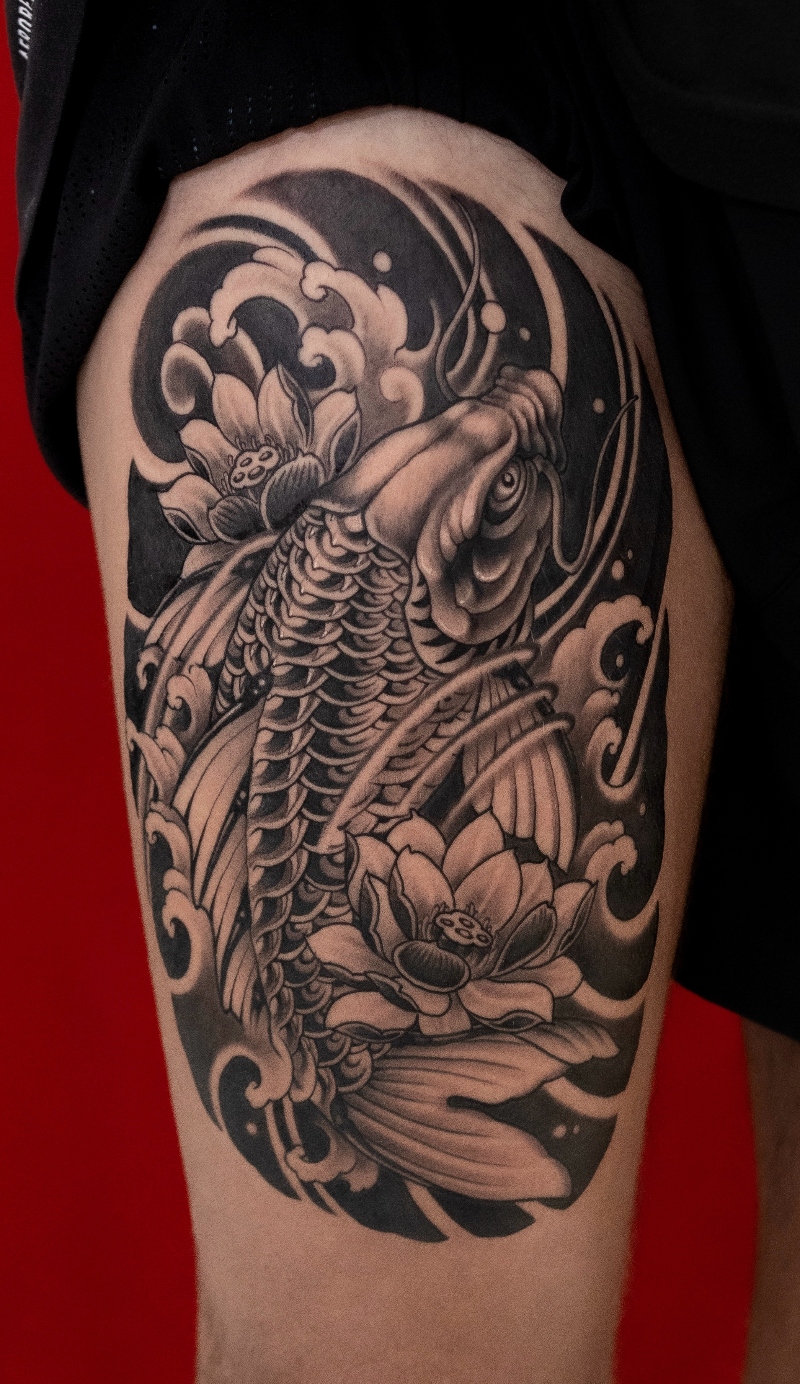
Koi · Japanese traditional
Koifish tattoo in Japanese style which made at Dragon City Ink Da Nang.
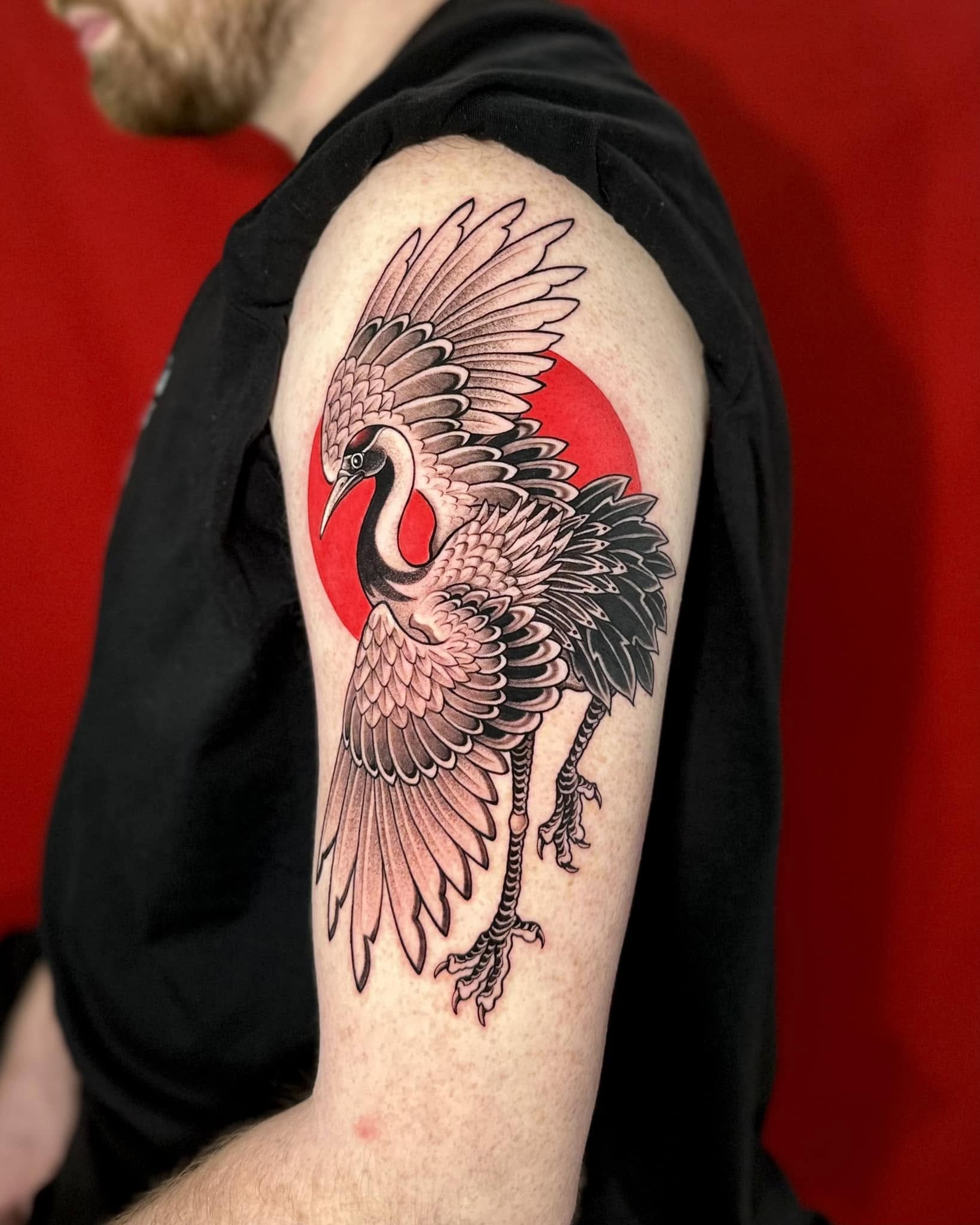
Crane and red sun
The great wave
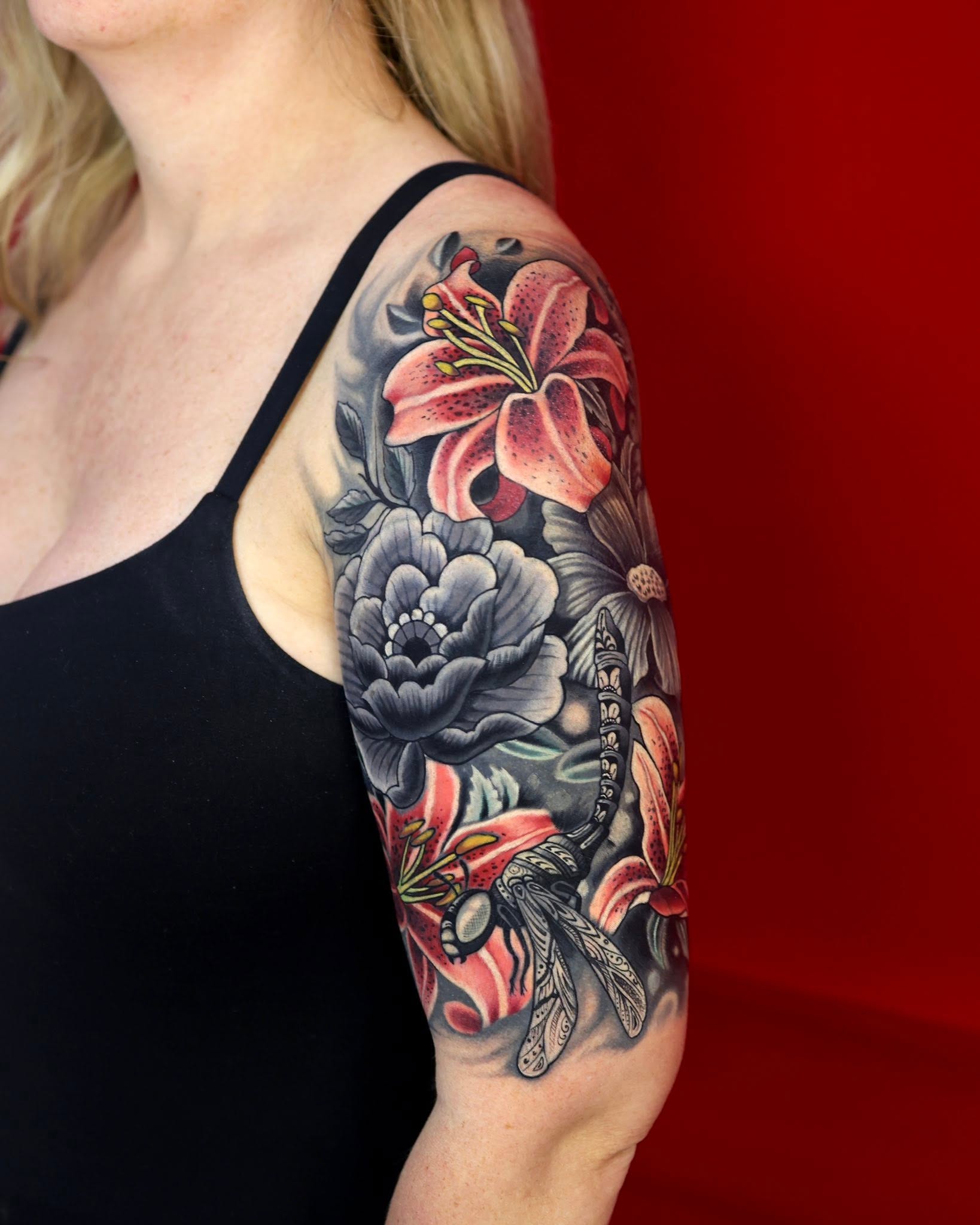
Peony and lilies · half sleeve

Lion dance head · colour
Colorful lion head tattoo made at Dragon City Ink Da Nang.
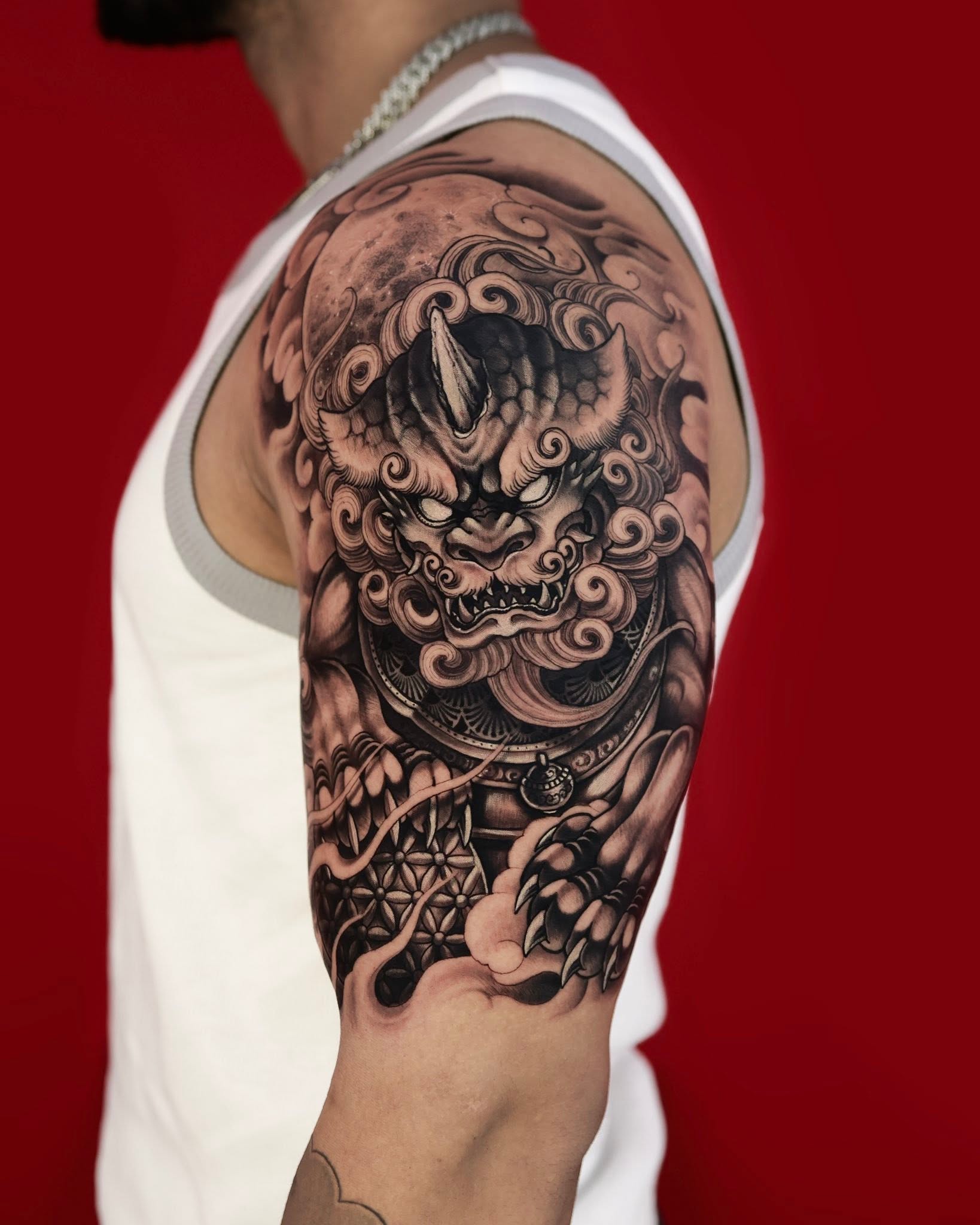
Foo dog · black and grey
Around the world
Six traditions, one family
Where the great traditional styles come from, how to recognise them, and what they have meant to the people who wore them.
Japanese traditional · irezumi
Japan’s great tradition took shape in Edo, today’s Tokyo. In 1827 Utagawa Kuniyoshi published his woodblock prints of the heroes of the Suikoden, a Chinese tale of noble rebels, and their tattooed bodies set off a craze. Firefighters wore dragons and carp as charms against fire, and the tattoo masters took their imagery from the prints. In 1872 the Meiji government banned tattooing to look “civilised” to the West, and the ban was only lifted in 1948. Look for one powerful figure, a background of waves, wind bars and clouds, and a design planned for the whole sleeve, back or body.
Vietnamese and Chinese traditional
Vietnam’s own tattoo story is older than any of these. According to the legends collected in the Lĩnh Nam chích quái, the Hùng kings taught their people to tattoo dragons on their chests, bellies and thighs to protect themselves from the monsters of the rivers. During the Mongol invasions of the 13th century, soldiers of the Trần dynasty tattooed two characters on themselves: Sát Thát, “kill the Mongols”. The images are shared with China: the long, wingless dragon, the phoenix, the tiger, the dancing lion and the carp. Vietnamese folk painting adds its own favourite, the Five Tigers, five colours guarding the five directions.
American traditional · old school
Sailors carried tattooing around the world, and in American ports it became a trade with its own rules. The electric tattoo machine arrived in 1891, and walls of ready-drawn designs, called flash, let a sailor on shore leave pick a tattoo in minutes. The style was perfected by Norman “Sailor Jerry” Collins (1911–1973) in Honolulu, where millions of servicemen passed through during the Second World War. Thick black outlines, solid red, yellow, green and blue, and a library of swallows, anchors, eagles, panthers, roses and pin-ups. In 1973 his student Ed Hardy went to Japan to study with the master Horihide, and East and West have been borrowing from each other ever since.
British traditional
Britain’s tattooers learned from the same ships: by the late 18th century, around a third of British sailors carried at least one tattoo. Sutherland Macdonald, a former soldier, is remembered as Britain’s first professional tattooist with a studio open to the public, and in 1894 he patented his own electric machine. His pupil George Burchett, the “King of Tattooists”, kept working on Mile End Road in London until he was 81. Tattoos reached the very top: in 1881 the future King George V had a blue and red dragon tattooed on his arm in Japan. British flash shares the American bones with its own accent: bulldogs, regimental crests, roses, swallows and hearts for Mum.
Bornean traditional · Iban
In the longhouses of Sarawak, Iban tattooing is a record of a life. A young man’s first tattoo is traditionally the bunga terung, the eggplant flower, placed on the shoulders before he leaves on bejalai, the journey to see the world and come home wiser. The throat tattoo was believed to protect its wearer in battle, and every motif has its place and its meaning. The designs are tapped into the skin by hand, outline first, then the black. Because a bunga terung marks a journey actually made, many people prefer to receive theirs from an Iban tattooer in Sarawak.
Thai traditional · sak yant
Sak yant are sacred designs: geometric diagrams, animals and rows of ancient script, tattooed by monks and masters called ajarn and believed to carry protection and luck. The best known is the Hah Taew, five rows of script across the shoulder blade, each one a blessing. Every March thousands of devotees gather at Wat Bang Phra, west of Bangkok, for the Wai Kru ceremony to have their tattoos blessed again. The magic, believers say, only works if you keep the precepts that come with it.

Rose, eye and butterfly · neo-traditional
A neo-traditional tattoo is also the 3rd tattoo of our customer at Dragon City Ink.

Milk snake and lilies
Colorful milk snake and lily flowers tattoo on the hip which made at Dragon City Ink Da Nang.
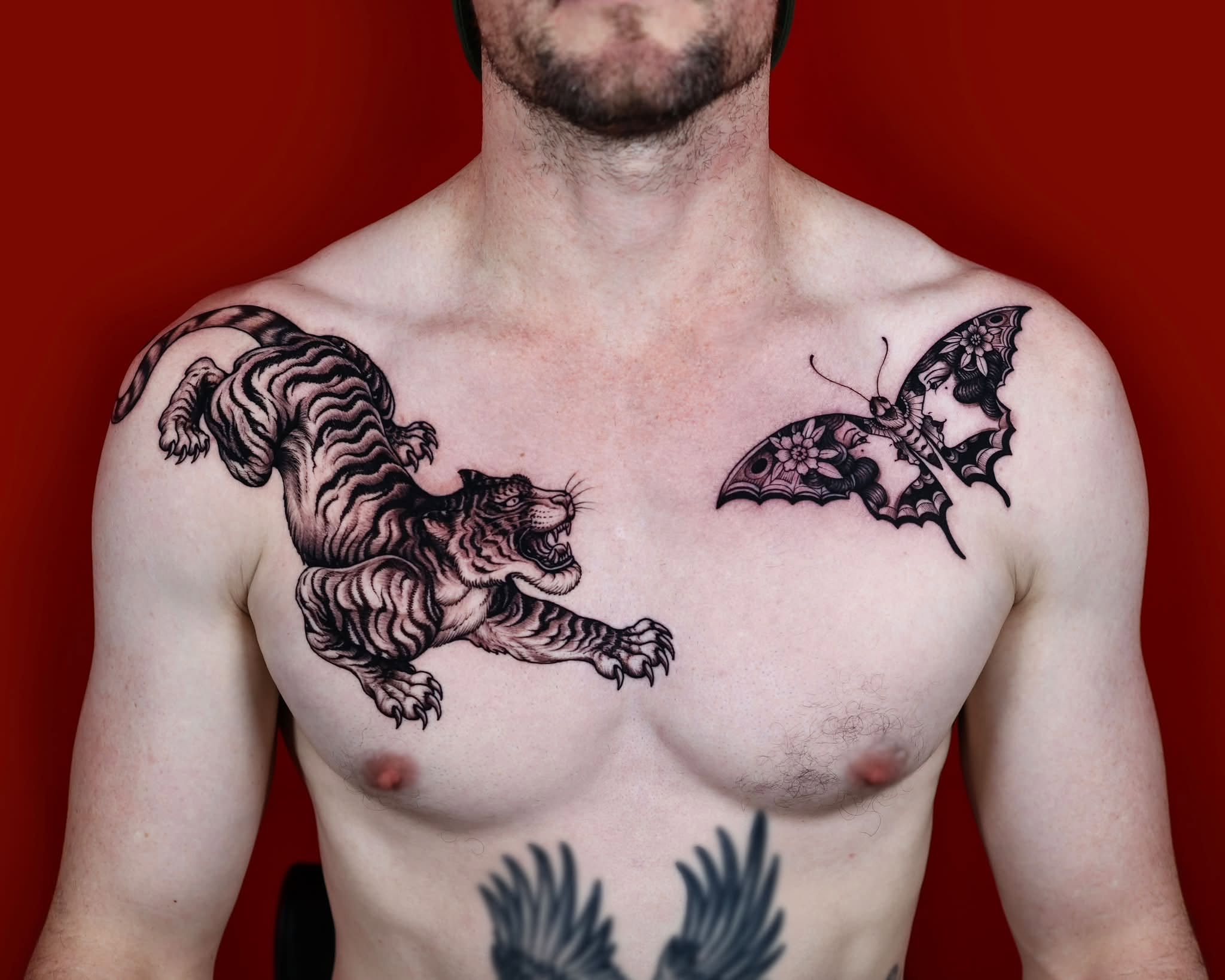
Tiger and butterfly · chest
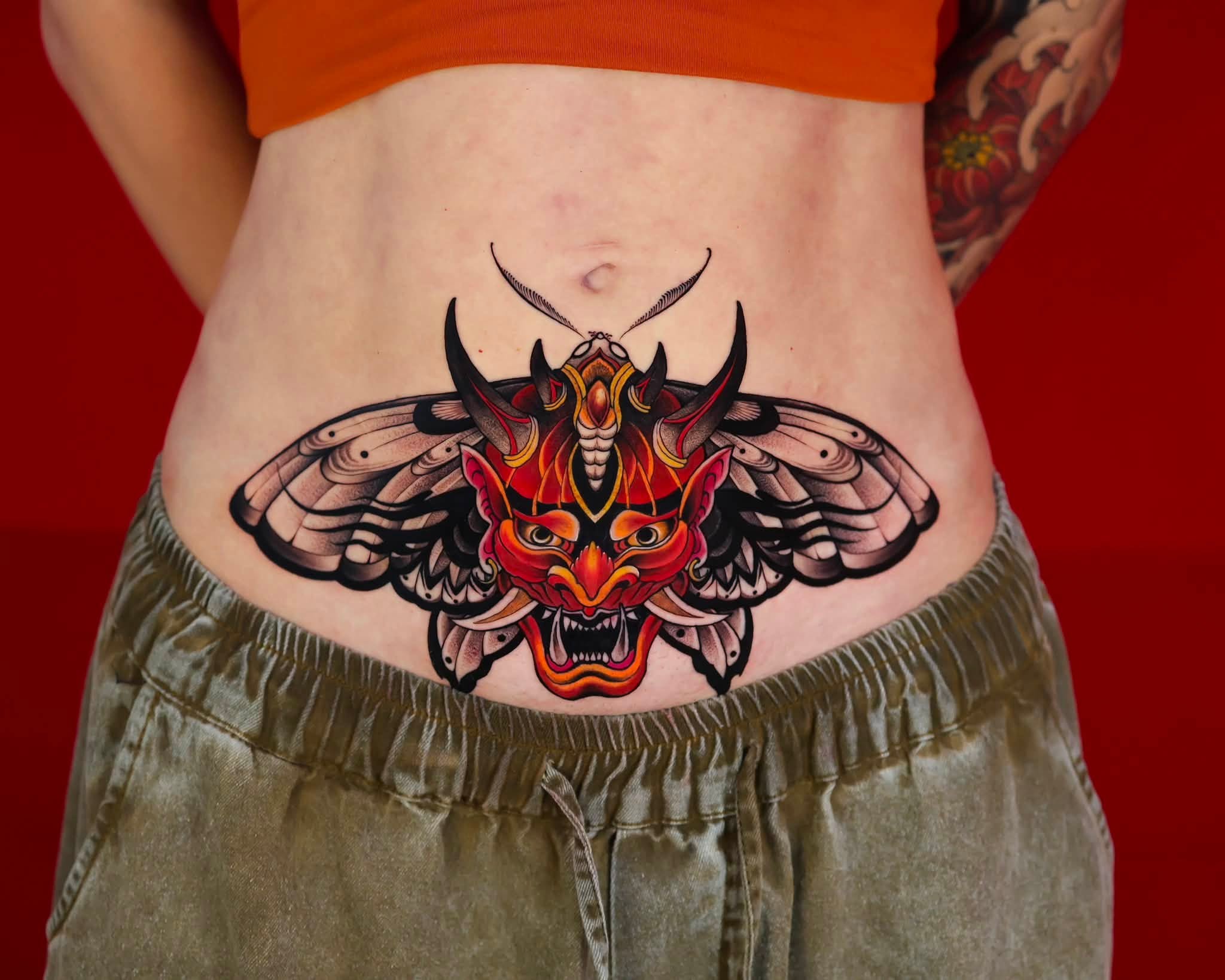
Hannya moth · stomach
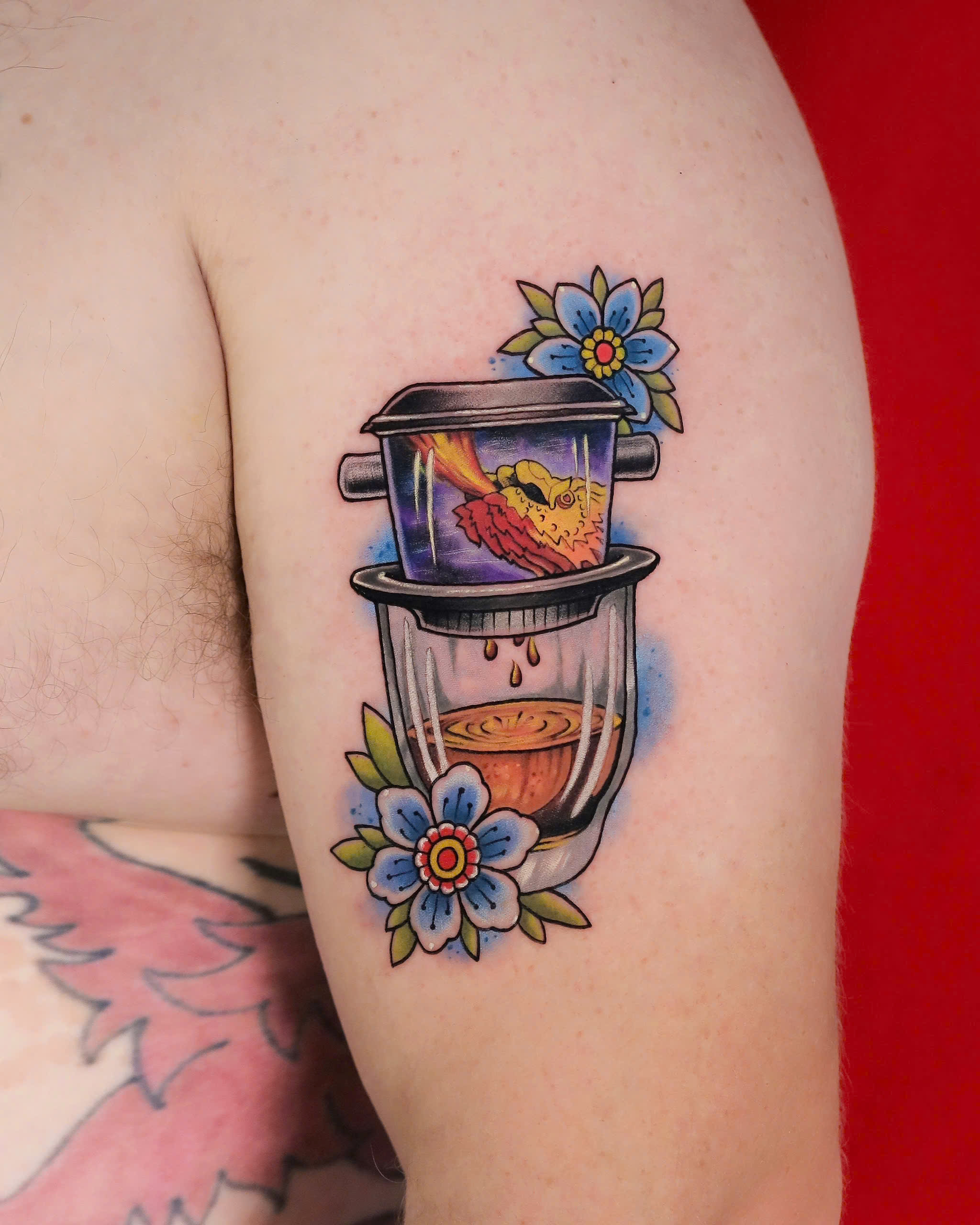
Vietnamese coffee phin · neo-traditional

Neo-traditional dragon head
Neo traditional dragon head tattoo on leg at Dragon City Ink Da Nang.
The library
The figures that keep coming back
Every tradition has its favourite images. These are the ones our clients ask about most, and what they have meant to the people who wore them before you.
From Asia
Dragon · rồng · ryū
Master of water and rain. In Edo, firefighters wore it as a charm against fire; in Vietnam it is an ancestor. Wisdom, protection and power.
Koi · cá chép
The carp that swims up the waterfall at the Dragon Gate on the Yellow River and becomes a dragon. Perseverance, and success earned the hard way.
Tiger · hổ · tora
Courage and protection. In Vietnamese folk belief the tiger became a guardian spirit, carved on communal houses and painted for Tết.
Phoenix · phượng · hōō
The bird of rebirth, often paired with the dragon: fire and water, two halves of one whole.
Hannya
A mask from Noh theatre: a woman consumed by jealousy and rage. Worn for the strength of feeling it carries.
Foo dog · karajishi
The guardian lion, almost always with peonies. Legend says the dew of the peony protected the lion, so the two are rarely apart.
Lion dance · múa lân
The joyful lion of Tết and Mid-Autumn, dancing bad luck out of the street. A favourite with travellers who want something unmistakably Vietnamese.
Peony, cherry blossom, chrysanthemum
Peony for wealth and good fortune, chrysanthemum for long life, falling cherry blossoms for the beauty of a life that does not last.
Waves, wind and clouds
Never just filler. The background holds a Japanese piece together and gives the main figure its weather: water for the koi, clouds for the dragon.
From the sea
Swallow
Traditionally one for every 5,000 nautical miles sailed. A swallow always finds its way home.
Anchor
The sailor’s emblem: steadiness, and the promise of a safe return to port.
Nautical star
A star to steer by, so the wearer always finds the way home.
Rose and dagger
Love and danger in one image: loyal enough to fight for something beautiful.
Panther
Toughness and nerve, usually crawling with its claws out. Sailor Jerry drew his especially fierce.
Eagle
Freedom and allegiance; for generations the badge of American servicemen.
Pig and rooster
Pig on the left foot, rooster on the right, to keep a sailor from drowning. On the old ships these animals travelled in wooden crates that floated.
Hold Fast
Letters across the knuckles of a deckhand, to keep a grip on the rigging in a storm.
Lady head and pin-up
A sweetheart far away, drawn with a wink. Still one of the most requested classics on any flash sheet.
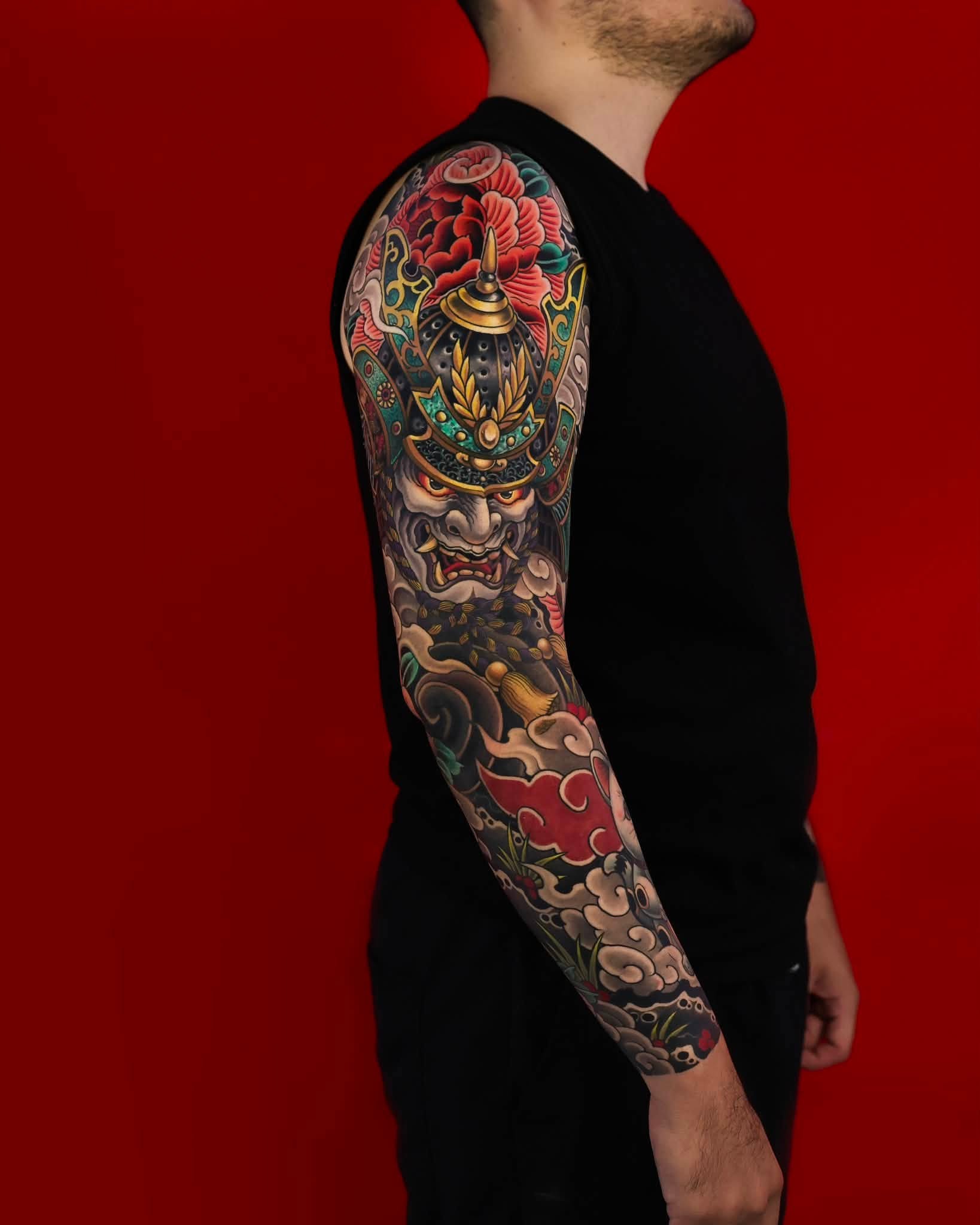
Japanese colour sleeve
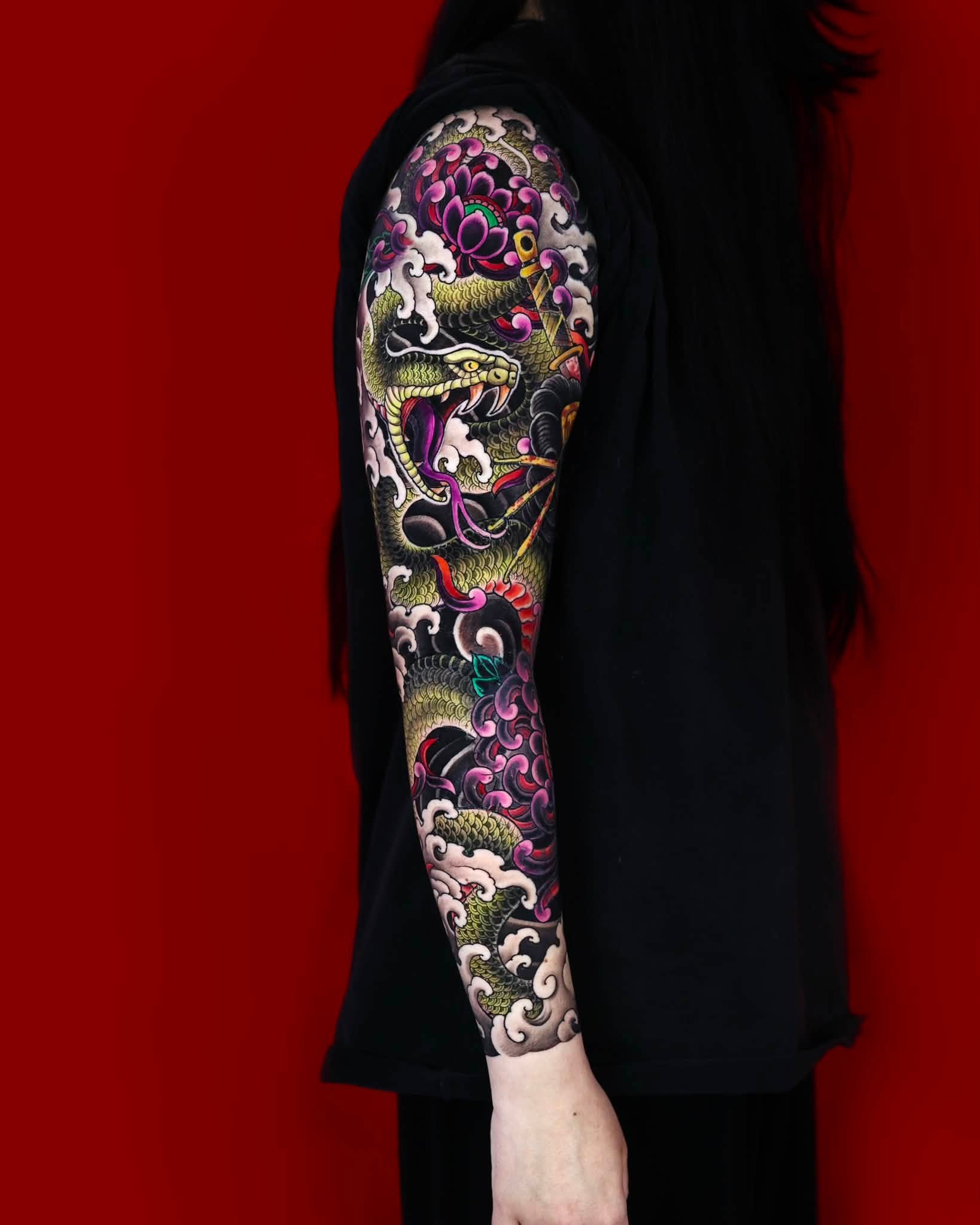
Japanese full sleeve
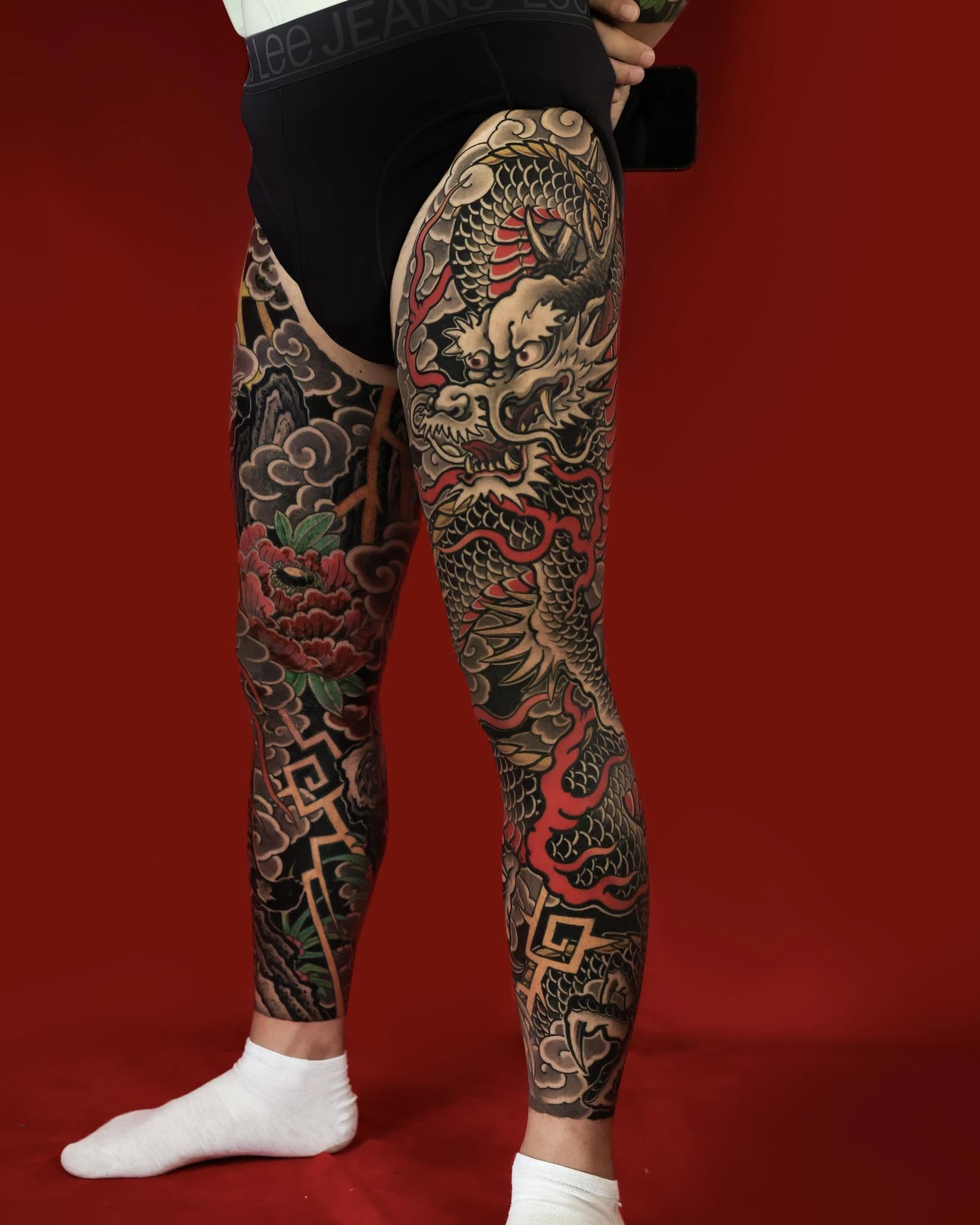
Japanese leg sleeves

Snake and peonies · colour sleeve
Colorful snake with peony flowers tattoo in newschool style on arm which was made at Dragon City Ink Da Nang.

Dragon and peonies · leg
Semi realistic color dragon tattoo with peonies on leg at Dragon City Ink Da Nang.
Turquoise dragon · detail

Dragon lantern
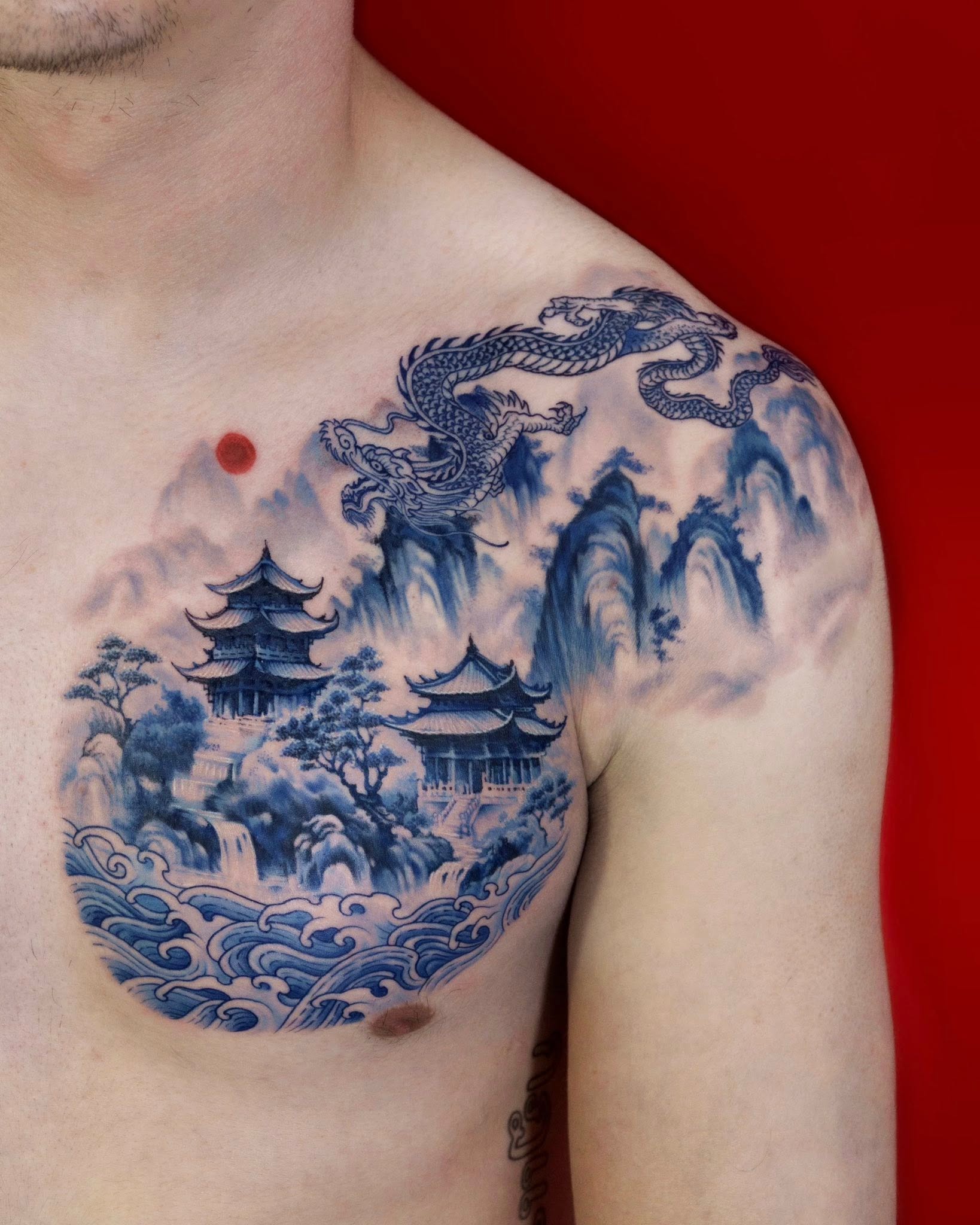
Blue ink-wash dragon and pagodas
In our studio
Traditional, the Dragon City Ink way
We are a studio in Vietnam, and many of our artists grew up surrounded by these images: dragons on temple roofs, tigers in Tết paintings, lion dancers in the street. Asian traditional work is the heart of what we do, and we are just as happy to tattoo a swallow or a panther straight off a classic flash sheet.
Phan Lợi, our first artist, is the one we hand the traditional Asian and Vietnamese dragons to. Mỹ Nguyễn builds the large colour Japanese pieces, sleeves and bodysuits. Trần Hải draws the smaller pieces rooted in Vietnamese culture.
Many of our clients mix traditions, which is how most of these styles were born in the first place: a sailor’s eagle with Japanese waves, a Vietnamese dragon drawn with Western boldness. Neo-traditional, which keeps the strong outlines but adds richer colour and detail, grew out of exactly that kind of mixing.
Traditional designs need room to breathe. A koi wants the length of a forearm or a calf, a dragon is happiest across a sleeve or a back, and a classic flash piece reads best at palm size or larger. Tell us where you want it and we will draw it to fit your body, not a sheet of paper.

Koi and lotus · black and grey thigh
Koifish tattoo in Japanese style which made at Dragon City Ink Da Nang.

Dragon head · Asian traditional
Asian dragon head traditional tattoo at Dragon City Ink

Crane · flash design by Phan Lợi
Crane Tattoo Flash
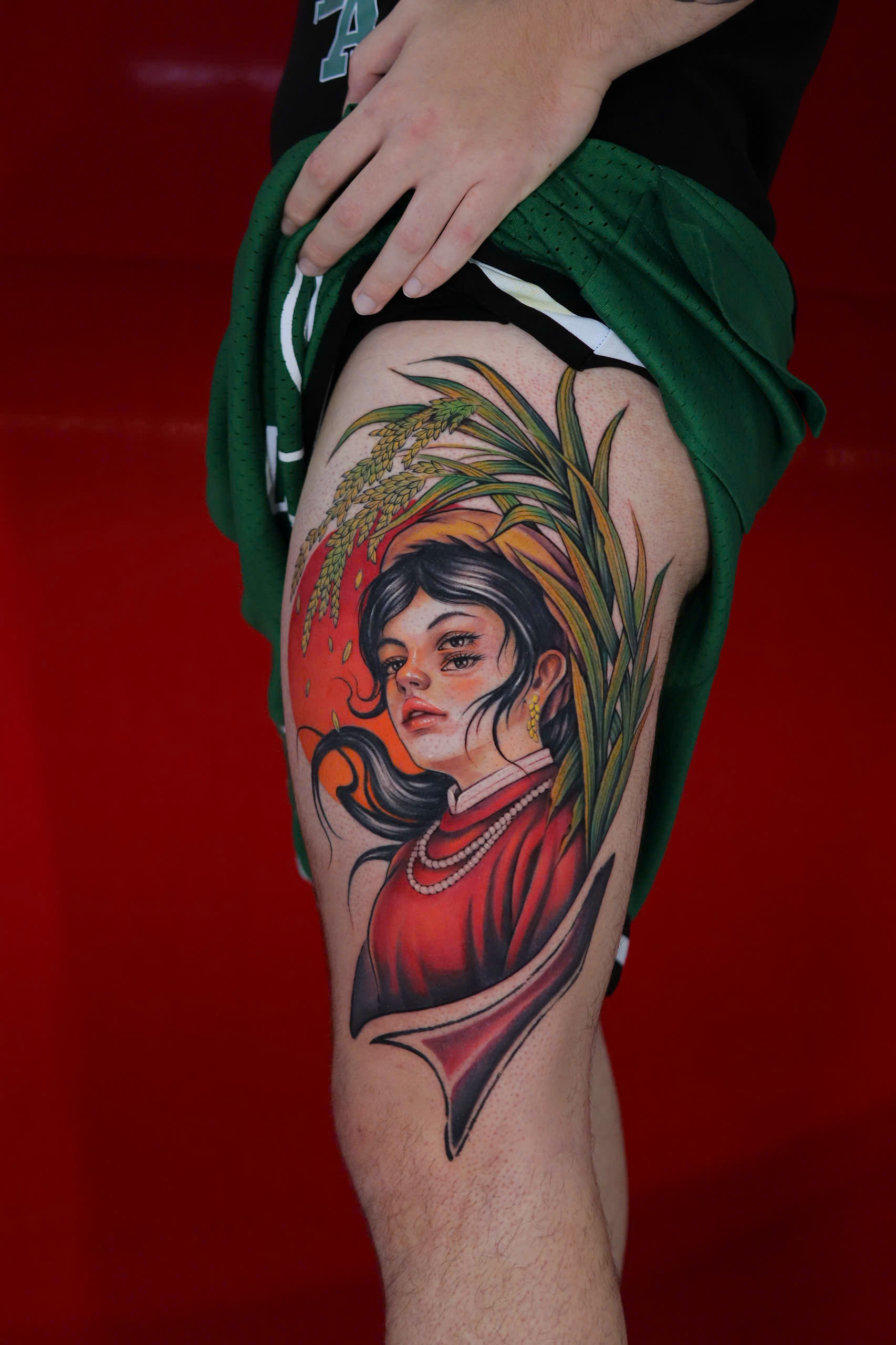
Lady head · neo-traditional

Lion dance · Vietnamese
A cartoonish Vietnamese lion dance tattoo which made at Dragon City Ink Da Nang.
